
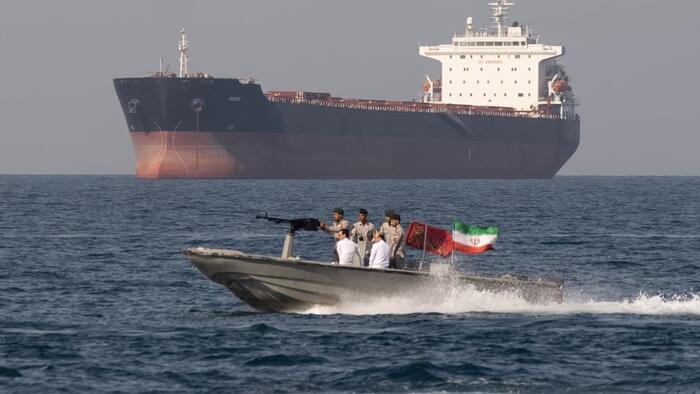

In a striking illustration of market forces at play during global crises, Greek shipping billionaire George Procopiou swiftly leveraged the unprecedented surge in tanker demand following the outbreak of a significant geopolitical conflict. His strategic deployment of at least five vessels through the highly volatile Strait of Hormuz, as reported by The Chosun Daily, underscores a calculated move to capitalize on both soaring freight rates and the burgeoning need for floating oil storage. This aggressive posture by one of the world’s leading maritime figures highlights the complex interplay of supply, demand, risk, and immense financial reward in a disrupted global energy landscape.
The Genesis of Opportunity: Conflict and Market Disruption
The catalyst for Procopiou’s bold maneuver was the sudden onset of hostilities in a crucial oil-producing region, an event that sent immediate shockwaves through international energy markets. Global oil prices experienced extreme volatility, and the security of supply routes, particularly through critical chokepoints, became paramount. Nations heavily reliant on oil imports scrambled to secure crude, leading to an exponential increase in demand for transport vessels. Concurrently, oil-producing countries, facing potential disruptions to their export infrastructure or a temporary glut due to market uncertainty, found their onshore storage facilities rapidly nearing capacity. This dual pressure created an extraordinary market dynamic: a desperate need for both rapid oil transit and temporary offshore storage, offering unprecedented financial incentives to those willing to navigate the associated risks.
Procopiou’s strategy was underpinned by two core calculations. First, the massive freight rates that oil-importing nations were willing to pay to secure the timely transport of crude. These rates escalated dramatically as the scarcity of available, willing tankers intensified. Second, the lucrative fees offered by oil producers for storing crude at sea when onshore facilities became saturated. This "floating storage" phenomenon transforms tankers from mere transporters into mobile warehouses, adding another layer of profitability to their operations.
Greek Shipping: A Dominant Force in Global Energy Transport
The prominence of Greek shipowners in this scenario is no coincidence. Greek-controlled entities command the world’s largest fleet of oil tankers, a testament to a long-standing maritime tradition, robust entrepreneurial spirit, and an advantageous operational framework. This formidable fleet, comprising everything from Aframaxes to Very Large Crude Carriers (VLCCs) and Ultra Large Crude Carriers (ULCCs), is the backbone of global oil trade, responsible for moving vast quantities of crude and refined products across oceans. Most of these vessels operate under long-term or spot charters to major energy companies, ensuring the continuous flow of energy that powers the global economy. However, in periods of market dislocation and heightened demand, these vessels can quickly pivot to serve as critical floating storage units, offering flexibility and capacity that land-based infrastructure cannot always match.
George Procopiou, with an estimated net worth around $4.7 billion, is a titan within this industry. His empire includes several prominent shipping firms, such as Dynacom Tankers Management, Sea Traders (C Traders), and Dynagas. Dynacom alone operates a substantial fleet of approximately 70 vessels, demonstrating the scale and reach of his operations. Shipping tycoons like Procopiou wield significant influence not only in the global oil trade but also maintain considerable political connections, particularly in key centers like Washington, D.C., reflecting the strategic importance of their industry.
Navigating the Perilous Strait of Hormuz: A Calculated Risk
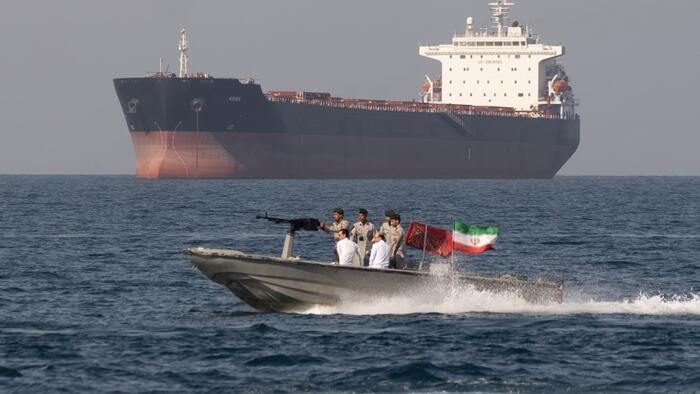
The decision to dispatch vessels through the Strait of Hormuz was particularly audacious. This narrow waterway, connecting the Persian Gulf with the Arabian Sea, is arguably the world’s most critical oil chokepoint. An estimated 20-30% of the world’s seaborne crude oil and petroleum products, along with a significant portion of global liquefied natural gas (LNG), transits through the Strait daily. Its strategic importance makes it a frequent flashpoint for regional tensions and a high-risk area for commercial shipping, particularly during periods of conflict. Historical incidents, including tanker attacks and seizures, underscore the inherent dangers.
To mitigate the heightened risk of Iranian attacks while transiting this fraught passage, Procopiou’s ships reportedly adopted extreme security measures. These included switching off their Automatic Identification System (AIS) transponders, a practice typically employed to evade detection but which also raises flags with maritime authorities and can complicate rescue efforts in an emergency. Additionally, armed guards were deployed on deck, a measure designed to deter potential boardings or small-boat attacks. However, as reporting by The Wall Street Journal highlighted, even with such precautions, the vulnerability of these massive vessels to sophisticated weaponry like missiles or drones remains a grave concern, with experts suggesting tankers could sink quickly if struck.
The human element of these high-stakes voyages also saw significant adjustments. Crews undertaking these perilous journeys were reportedly receiving "unusually high pay," reflecting the acute risks involved. While specific figures are often confidential, industry sources suggest that hazard pay for such routes can easily double or triple a seafarer’s standard wages, serving as both an incentive and compensation for the immense psychological and physical strain.
Record Rates and Market Dynamics
The financial rewards for assuming such risks were extraordinary. Industry sources quoted in the Chosun Daily report indicated that Procopiou’s companies offered charter rates as high as $440,000 per day. To put this into perspective, pre-war charter rates for a Very Large Crude Carrier (VLCC), the workhorse of long-haul oil transport, typically fluctuated between $40,000 and $100,000 per day, depending on market conditions. A rate of $440,000 per day represents a roughly four-fold increase, illustrating the extreme demand premium created by the conflict and the scarcity of willing operators.
This surge in rates is a classic example of supply and demand dynamics in an emergency. With fewer vessels willing or able to enter a high-risk zone, the available capacity became a premium commodity. Moreover, the dual function of transport and storage amplified revenue potential. When onshore storage facilities near major oil-producing hubs became saturated, floating storage became an indispensable solution, with producers willing to pay top dollar to avoid costly production shutdowns.
Beyond Procopiou: Other Beneficiaries and Broader Market Trends
Procopiou was not the sole beneficiary of this turbulent market. The report also identified Sinokor Merchant Marine as another company that capitalized significantly on the crisis. Sinokor had reportedly acquired dozens of crude tankers in the period leading up to the conflict, positioning itself strategically for an uptick in demand. Several of its newly acquired vessels were dispatched to the Gulf even before the conflict fully escalated. Sources indicated that Sinokor leased some of its vessels to the Abu Dhabi National Oil Company (ADNOC) specifically for offshore storage, earning freight rates that reached an astonishing $500,000 per day. This suggests a highly competitive environment where different players were vying for the most lucrative contracts, further driving up rates.
The broader market dynamics during such a crisis involve several factors:
- Insurance Premiums: War risk insurance premiums skyrocket, adding significant operational costs but also creating a barrier to entry for less capitalized or more risk-averse operators.
- Fuel Costs: While freight rates soared, fuel costs, often tied to global oil prices, also likely increased, impacting the net profitability.
- Port Congestion: Disruptions can lead to congestion at alternative ports or terminals, affecting turnaround times and vessel availability.
- Fleet Redeployment: Shipowners actively redeploy vessels from less lucrative routes to high-demand, high-risk areas, altering global shipping patterns.
Expert Perspectives and Industry Responses
Maritime security analysts, reflecting on such maneuvers, emphasize the inherent dangers. "Switching off transponders makes a vessel a ghost ship, invisible to standard tracking systems, but it also makes them incredibly vulnerable to misidentification or unprovoked attack," stated one maritime security expert, speaking anonymously due to the sensitive nature of operations. "While armed guards offer some deterrence against piracy or small-scale attacks, they are largely ineffective against state-sponsored missile or drone strikes."
Energy economists highlight the inevitable market response to such geopolitical shocks. "The shipping industry, by its very nature, is highly responsive to supply and demand imbalances," explained Dr. Elena Petrova, a senior energy market analyst. "In a crisis where energy security is paramount, the price mechanism acts as a rationing tool. Those who need the oil most, or need to store it most urgently, will pay the highest prices. This creates massive profit opportunities for those willing to bear the escalated risk and operational complexities."
While shipping associations typically advocate for freedom of navigation and the safety of seafarers, they also acknowledge the commercial realities. "Our members operate in a global market, responding to global needs," commented a spokesperson for a leading international shipping association. "When there’s a critical demand for energy transport or storage, especially in challenging environments, the industry steps up. The rates reflect the extraordinary circumstances, the heightened operational costs, and the immense risks taken by crews and owners alike."
Broader Implications: Geopolitics, Security, and Ethics
The rapid capitalization on wartime demand by shipping magnates carries significant broader implications across economic, geopolitical, and ethical dimensions.
- Economic Impact: The sky-high freight rates translate directly into higher costs for oil-importing nations, contributing to inflationary pressures and potentially impacting consumer prices for everything from fuel to manufactured goods. This underscores how disruptions in one part of the world can have ripple effects globally.
- Geopolitical Ramifications: The increased commercial activity in high-tension areas like the Strait of Hormuz inevitably raises the geopolitical temperature. It can be seen as both an essential service enabling global energy flows and a potential flashpoint for further conflict, drawing more attention and naval presence to already contested waters. The actions of private shipping companies can, in effect, become intertwined with international relations and security policies.
- Maritime Security Challenges: The adoption of practices like transponder shutdowns creates significant challenges for maritime authorities tasked with monitoring traffic, preventing accidents, and responding to emergencies. It also blurs the lines between legitimate commercial activity and potential illicit operations, complicating regional security efforts.
- Ethical Considerations: The substantial profits garnered during a period of conflict invariably spark debates around "war profiteering." While shipowners argue they are providing an essential service under extremely risky conditions, critics may question the morality of such massive financial gains at a time of global suffering and instability. This ethical dilemma highlights the tension between free-market principles and humanitarian concerns during crises.
- Future of Energy Transport: This episode also serves as a stark reminder of the fragility of global energy supply chains. It could accelerate discussions around diversifying energy sources, developing alternative transport routes, or investing in greater domestic energy resilience for nations heavily dependent on imports.
In conclusion, the actions of George Procopiou and other shipping magnates during this period of conflict exemplify the harsh realities of global energy markets in crisis. Their willingness to navigate extreme risks for unprecedented financial rewards underscores the critical role of private enterprise in maintaining global energy flows, even as it highlights the profound economic, geopolitical, and ethical questions that arise when profit and peril intersect on the high seas. The episode serves as a powerful testament to the adage that in times of disruption, opportunity often knocks loudest for those bold enough to answer.