
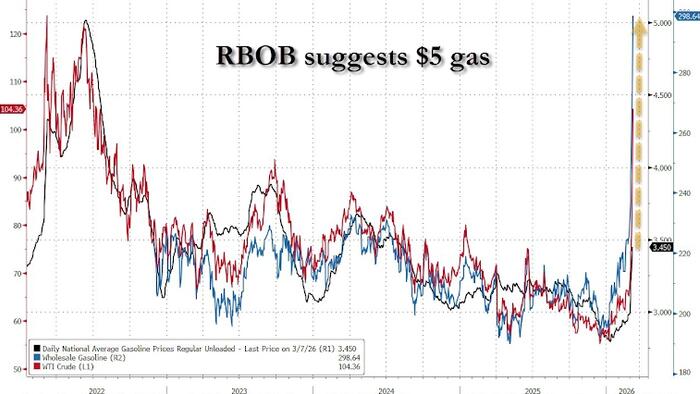

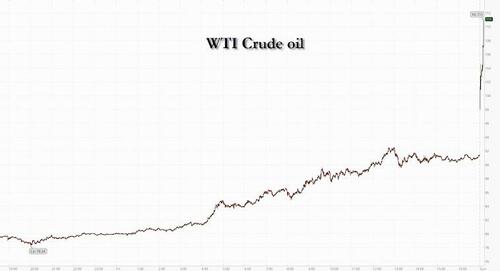
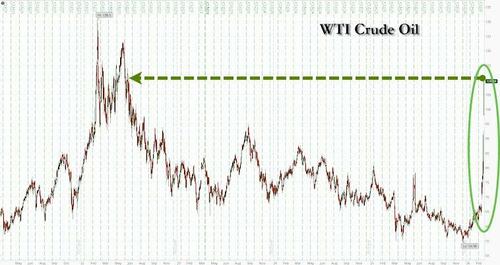
Global financial markets were jolted into a state of heightened volatility as oil prices experienced an explosive surge, with West Texas Intermediate (WTI) crude topping $110 per barrel for the first time since 2022. This dramatic escalation follows a weekend of unfulfilled hopes for de-escalation in geopolitical tensions, particularly concerning the persistent "Iran nuclear threat," which prompted an extraordinary statement from the President. In a post on X, the President declared that spiking oil prices are a "small price to pay" for world peace, optimistically adding that prices "will drop rapidly" once the Iranian nuclear threat is resolved. This pronouncement, delivered amidst a backdrop of burgeoning market anxiety and domestic political pressures, has sent ripples across energy and equity futures, underscoring the delicate balance between international diplomacy, energy security, and economic stability.
An Unsettled Weekend Ignites Market Volatility
The trading week commenced with palpable tension following a weekend that failed to deliver the anticipated calm. Instead, geopolitical anxieties simmered, primarily centered around the unspecified but widely understood "Iran nuclear threat." This lack of de-escalation was the immediate catalyst for the dramatic market movements observed. As trading opened, the WTI crude oil futures contract saw an explosive move higher, breaching significant psychological and technical resistance levels. The commodity’s ascent past $110 per barrel marks a critical juncture, recalling the inflationary pressures and economic uncertainties that characterized global markets in early 2022 when oil prices last reached such heights. At that time, geopolitical events also played a dominant role in driving commodity markets, creating a precedent for the current situation. The swiftness and magnitude of the current rally underscore the market’s sensitivity to supply-side risks and the perception of geopolitical instability.
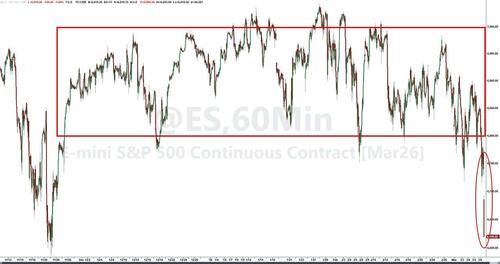
Concurrently, US equity futures reacted sharply to the unfolding situation, with major indices showing dramatic declines, characterized by analysts as having "broken the box"—a term suggesting a decisive break from established trading ranges and a shift into a new, more volatile paradigm. This synchronous downturn in equities and surge in oil prices is a classic indicator of increasing investor risk aversion, where concerns over potential economic slowdowns due to higher energy costs combine with fears of broader geopolitical conflict. Investors typically seek safe-haven assets in such environments, leading to capital flight from riskier equity markets.
The President’s Stance and Geopolitical Context
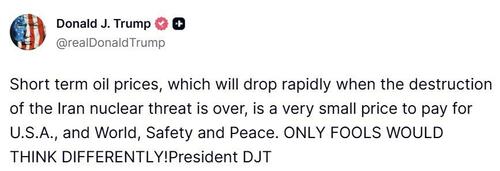
The President’s statement on X, framing the significant increase in oil prices as a "small price to pay" for world peace, represents a calculated, albeit controversial, articulation of strategic priorities. This declaration links the immediate economic burden of higher energy costs directly to a larger foreign policy objective: the resolution of the "Iran nuclear threat." While the specifics of this threat remain unelaborated in the immediate context of the President’s post, it generally refers to ongoing international concerns regarding Iran’s nuclear program, its potential for weaponization, and the broader implications for regional and global security. Historical tensions between Iran and various international powers, particularly the United States and its allies, have frequently manifested in disruptions or threats to oil supply routes in the Middle East, a region critical for global energy markets. Any perceived escalation or lack of resolution in this long-standing issue can trigger significant anxiety among oil traders and investors, leading to price spikes as a risk premium is factored in.
The President’s assertion that prices "will drop rapidly" once the threat is over suggests a belief in the transient nature of the current market disruption, contingent upon a diplomatic or strategic resolution. However, such an outcome is far from guaranteed and depends on a complex interplay of international negotiations, regional dynamics, and internal political considerations within all involved nations. The statement also highlights a difficult political calculus: balancing the immediate economic discomfort of citizens facing higher fuel costs against the perceived long-term benefits of enhanced global security. This strategic framing attempts to manage public expectations and justify the economic impact by linking it to a higher moral and security imperative.
Economic Ramifications: From Pump to Profits
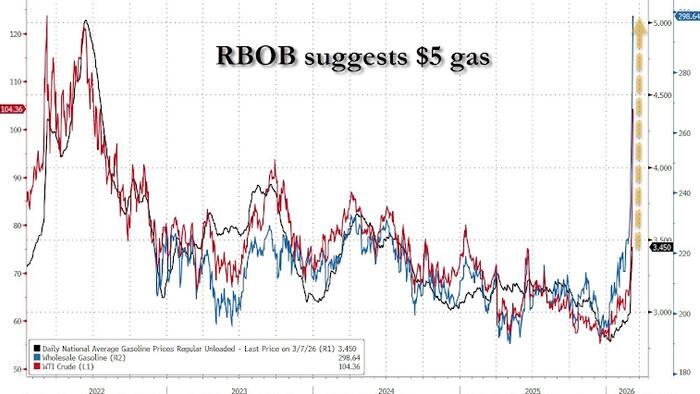
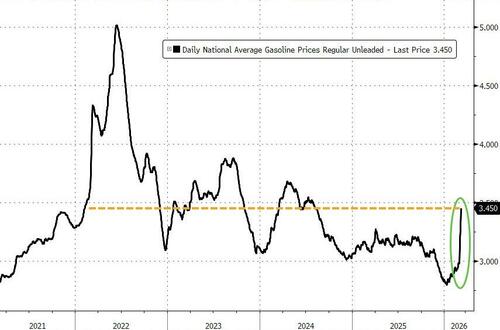
The surge in crude oil prices has immediate and far-reaching economic ramifications. Perhaps most acutely felt by the average citizen is the rapid increase in domestic gasoline prices at the pump. Charts depict a steep upward trajectory, with analysts now widely forecasting that $5 per gallon gasoline prices are "imminent." Such a threshold would represent a significant psychological and economic burden for millions of consumers, eroding disposable income and potentially dampening consumer spending across various sectors. The ripple effect extends to transportation costs for goods, impacting supply chains and contributing to broader inflationary pressures. For businesses reliant on fuel, particularly the logistics and airline industries, the outlook is grim.
Deutsche Bank, for instance, has issued a stark warning, characterizing the energy shock as an "existential threat" to airlines. Skyrocketing jet fuel costs, which represent a substantial portion of an airline’s operating expenses, could force some carriers to "ground fleets" or drastically reduce routes, leading to job losses and further disruptions to travel and trade. This sentiment is echoed across various industries, where rising energy costs squeeze profit margins, potentially leading to curtailed investments, reduced hiring, and even insolvencies for less resilient businesses. The specter of "demand destruction," a term used to describe a scenario where prices become so high that they significantly reduce consumer and industrial demand, looms large. Goldman Sachs analysts, who notably "nailed that call" on oil hitting $100 per barrel, have now reportedly warned of demand destruction levels, signaling a potentially severe economic slowdown if prices remain elevated.
Administration’s Policy Response and Constraints
Amidst the escalating crisis, the administration is reportedly reviewing a wide range of responses, from immediate steps to longer-term measures, to contain rising fuel costs. However, initial reports indicate a cautious approach. The Trump administration has stated it is "not prioritizing" using the US Department of the Treasury to trade oil futures. While officials have considered having Treasury buy or sell energy futures to influence prices, they believe the agency would have "limited ability to move such a large and active market." Daily trading volumes have surged significantly during the recent conflict, effectively diluting the potential impact any single participant, even the Treasury, could have. This pragmatic assessment acknowledges the sheer scale and liquidity of global oil markets, where even substantial government intervention might be insufficient to counteract fundamental supply-demand imbalances or geopolitical risk premiums.
Furthermore, the White House is reportedly "reluctant to immediately tap the Strategic Petroleum Reserve (SPR)." The SPR, intended for emergency situations, has seen heavy drawdowns under the former President Joe Biden, leaving the reserve about 60% full. Repeated withdrawals have also created maintenance issues, diminishing its effective capacity and readiness for deployment. While officials acknowledge that even a modest release could send a strong signal to calm markets, the current administration appears hesitant to further deplete a strategic asset, especially given the potential for prolonged instability. This reluctance reflects a recognition of the SPR’s finite nature and its critical role as a last resort in genuine supply emergencies, rather than a tool for managing transient price volatility.
The political dimension of rising gas prices cannot be overstated, especially with November’s midterm elections approaching. Doug Burgum, a prominent figure in the administration, confirmed that "everything is being considered," highlighting the dual pressures of geopolitical risks and domestic political implications. Historically, high gasoline prices have been a potent political issue, often directly impacting public approval ratings and influencing electoral outcomes. The prospect of $5 gas prices at the pump undoubtedly fuels political pressure on the administration to act decisively, even if the effectiveness of such actions is debated.
Expert Analysis and Broader Market Sentiment
The prevailing sentiment among market analysts reflects deep concern over the current environment. Goldman Sachs, a bellwether in financial markets, has been particularly vocal. Their "Goldman Flows Guru" has warned that a "relatively calm index belies a ‘fragile’ market with ‘poor tolerance for bad news’." This suggests that while headline indices might appear stable, underlying market mechanics are brittle, susceptible to sharp downturns with any adverse development. Another Goldman analyst referred to the recent market movements as "10 Sigma," a statistical term implying an event of extremely low probability, signaling that current market conditions are highly anomalous and unprecedented in recent history. These expert observations underscore a pervasive sense of uncertainty and fragility, where traditional market models and risk assessments may no longer fully apply.
Beyond the immediate Iran-related stress, analysts are also pointing to a constellation of other risks that could exacerbate market instability. Concerns over "private credit contagion" crushing insurance companies suggest a broader financial vulnerability that could unravel if economic conditions deteriorate further. The interlinkage of global finance means that stress in one sector, such as private credit, can rapidly spill over into others, creating systemic risks. The cumulative effect of these various pressures—geopolitical, economic, and financial—creates a complex and challenging environment for policymakers and investors alike.
Outlook: The Inevitability of Intervention?
Given the current trajectory of oil prices, the deepening market anxiety, and the mounting political pressure, the prevailing "laissez-faire attitude" from the administration regarding direct market intervention is widely expected to shift. The rapid escalation of events suggests that some form of intervention, whether through diplomatic initiatives aimed at de-escalation, targeted energy market measures, or a more forceful utilization of strategic reserves, is becoming increasingly imminent. The calculus will involve weighing the potential efficacy of such interventions against their long-term implications, both economically and geopolitically.
The coming days and weeks will be critical in determining whether the current spike in oil prices is a transient shock or the harbinger of a more sustained period of energy market volatility and economic uncertainty. The interplay between geopolitical developments, presidential pronouncements, and the inherent dynamics of global energy markets will define the path forward, with profound consequences for consumers, businesses, and the broader international order. The global community watches closely, anticipating not just the resolution of the "Iran nuclear threat" but also the immediate and strategic responses of major economic powers to safeguard stability in an increasingly interconnected and fragile world.