

The global liquefied natural gas (LNG) market has been thrust into an unprecedented crisis following the effective closure of the Strait of Hormuz and the critical halt in production from Qatar, a pivotal global supplier. While crude oil prices experienced an immediate surge on Monday, March 8, 2026, due to traffic disruptions in the vital maritime choke point, the longer-term ramifications for the LNG sector are projected to be far more severe and complex, primarily owing to the inherent difficulties in transporting natural gas and the highly concentrated nature of its production infrastructure.
A Choke Point Under Pressure: The Strait of Hormuz and Its Global Impact
The Strait of Hormuz, a narrow waterway connecting the Persian Gulf to the open ocean, is arguably the world’s most critical oil transit chokepoint, through which approximately one-fifth of global oil consumption and a significant portion of LNG passes. Its strategic importance cannot be overstated. Roughly 20% of the world’s LNG flows navigate this strait, with the overwhelming majority of these shipments originating from Qatar, making the country’s energy infrastructure and export routes indispensable to global energy security. The recent developments have seen traffic in the Strait brought to a near standstill, a direct consequence of escalating regional hostilities. This disruption, coupled with a targeted Iranian drone attack last week, specifically on March 2, 2026, which prompted Qatar’s state-owned energy company to halt all LNG output, has created a perfect storm for an already volatile global energy market. The image displayed at the Qatar Economic Forum on May 20, 2025, showing an LNG tanker on a digital screen, now serves as a stark reminder of the fragile supply chains that underpin global energy stability.
Chronology of Crisis: From Drone Attack to Market Turmoil
The crisis unfolded rapidly, beginning with the Iranian drone attack on Qatar’s energy facilities on March 2, 2026. This act of aggression led QatarEnergy, the nation’s state-owned energy giant, to make the critical decision to cease all LNG production activities. This immediate halt removed a substantial volume of supply from the global market. In the subsequent days, as regional tensions intensified, maritime traffic through the Strait of Hormuz became increasingly precarious, culminating in a near standstill by Monday, March 8, 2026. The cumulative effect was immediate and dramatic across global energy trading platforms.
European natural gas prices witnessed an astonishing 63% increase last week, marking their most significant percentage gain since March 2022, a period characterized by extreme volatility following Russia’s full-scale invasion of Ukraine. The impact on Asian markets was even more pronounced, with prices trading at an elevated $23.40 per million British thermal units (MMBtu) on Monday morning. This disparity is directly attributable to the fact that the bulk of Qatari LNG exports are typically directed towards Asian nations, making them acutely vulnerable to supply disruptions from the Gulf state.
Market Repercussions and Strategic Re-routing
The widening spread between European and Asian gas prices has triggered a frantic scramble for alternative supplies and an unusual phenomenon in global shipping. Several LNG vessels, initially destined for European ports, have reportedly executed U-turns mid-voyage, diverting their valuable cargo towards the higher-paying Asian markets. This tactical re-routing underscores the desperate measures being taken by energy importers to secure supplies and highlights the immense financial incentives at play in a market facing severe shortages.
While some crude oil flows from Saudi Arabia and the UAE have historically been rerouted through an extensive network of pipelines to bypass the Strait of Hormuz, such infrastructure simply does not exist for natural gas. LNG, by its very nature, requires specialized, cryogenic tankers for long-distance transport. This fundamental difference means that gas markets lack the inherent flexibility of oil markets to circumvent maritime chokepoints, amplifying the impact of the Strait’s closure on LNG supply.
Qatar’s Unique Vulnerability: The Ras Laffan Complex
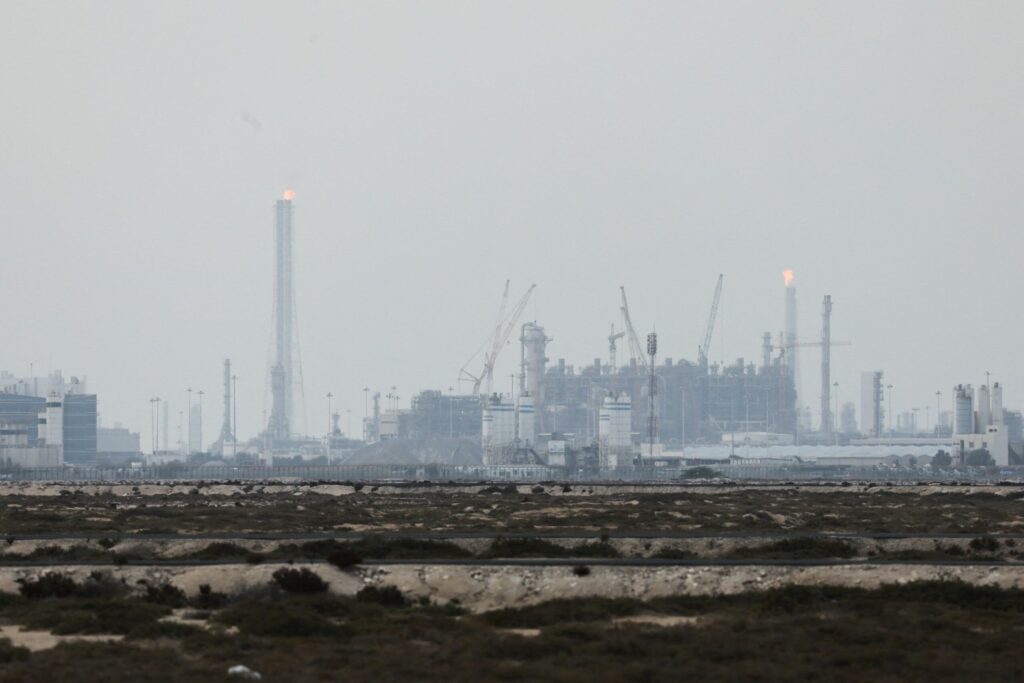
The core of the global LNG market’s vulnerability lies in the concentrated nature of Qatar’s production. Unlike oil, where numerous states across the Middle East contribute to global output from a multitude of fields and facilities, gas production in Qatar is predominantly centered at one colossal industrial complex: Ras Laffan Industrial City. This single, sprawling facility houses the majority of QatarEnergy’s liquefied natural gas production facilities, as depicted in images from March 2, 2026, amid the U.S.-Israeli conflict with Iran. This singular point of failure makes the global LNG market exceptionally susceptible to disruptions emanating from the region.
Alex Munton, director of global gas and LNG research at Rapidan Energy, emphasized this critical vulnerability. "I don’t think in the first few days of this conflict – we’re only a week in – that there is an appreciation for the length of time that Qatar is going to be offline and the effect it will have on global supply and the global markets," Munton stated. He further elaborated on the inherent difficulties in restarting Qatar’s vast LNG production operations at Ras Laffan once traffic through the Strait of Hormuz eventually resumes. Liquefying natural gas is a highly complex industrial process involving intricate cooling mechanisms and specialized infrastructure. Unlike oil production, which can often be ramped up or down with relative speed, the restart of an LNG liquefaction plant of Ras Laffan’s magnitude is a painstaking, weeks-long endeavor, not a matter of days. The entire plant has, in fact, never been taken offline before, adding an unprecedented layer of uncertainty to the recovery timeline.
Rapidan Energy predicts that LNG exports from the region will not recommence until there is absolute certainty regarding the safety of transit through the Strait. The financial stakes are enormous, with a single LNG tanker costing upwards of $250 million. Insurers are unlikely to underwrite voyages through a conflict zone, and the technical complexities of liquefaction mean that operations cannot be adjusted impulsively based on perceived de-escalations or re-escalations of regional hostilities. The need for 100% certainty is paramount for such high-value assets and intricate industrial processes.
Broader Implications: Energy Security and Geopolitical Ramifications
The current crisis underscores the delicate balance of global energy security, particularly for nations heavily reliant on LNG imports. The United States currently stands as the world’s largest LNG exporter, yet its production facilities are essentially running at maximum capacity, offering little flexibility to compensate for a prolonged absence of Qatari supply. With minimal additional output available worldwide, the market’s rebalancing mechanism will likely hinge on "demand destruction." This could manifest in various forms, including industrial curtailments, increased energy efficiency measures, or a significant shift towards alternative, potentially more carbon-intensive, fuels such as relatively inexpensive coal, despite global climate commitments.
Munton warned of even more profound long-term ramifications should hostilities escalate further, including additional direct attacks on Qatar’s critical LNG infrastructure. He characterized Iran’s prior attacks against Ras Laffan as a "warning shot that wasn’t the real deal," highlighting the immense vulnerability of the complex. "It’s a sitting duck," Munton asserted. "If Iran wanted to do major damage to Qatar’s LNG capacity, it could. … There is no way of defending completely against an Iranian attack if Iran was hell bent on damaging the plant."
This stark assessment highlights a fundamental difference between oil and gas infrastructure vulnerability. "It’s not like one node can take out all Middle East oil production, because there’s just too many fields, there’s too many countries, there’s too many plants and facilities… but with LNG it’s one facility. It’s a gigantic complex, but it’s just one facility." This singular point of failure presents an unparalleled risk to global energy stability.
Adding to the long-term concerns, Bloomberg reported that QatarEnergy is now delaying the expansion of its gas facilities until 2027, a direct consequence of the recent Iranian drone attack and the ensuing regional instability. This delay, if prolonged, will further tighten future global LNG supplies, exacerbating an already challenging outlook for energy security and potentially leading to sustained higher prices in the years to come. The crisis serves as a stark reminder of the interconnectedness of geopolitical stability and global energy markets, with far-reaching economic and political consequences for nations worldwide.