
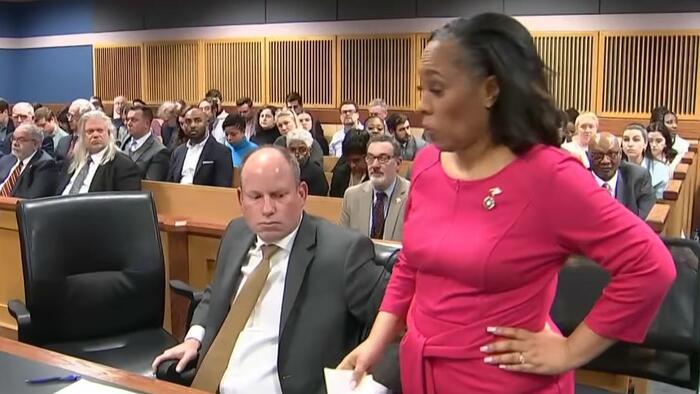

A significant legal development unfolded this week in Fulton County, Georgia, as Superior Court Judge Scott McAfee denied District Attorney Fani Willis’s motion to intervene in ongoing litigation concerning the reimbursement of legal fees. This ruling effectively clears the path for former President Donald Trump and several co-defendants to pursue claims for millions of dollars in legal expenses incurred during the now-dismissed Georgia election interference case. The decision further solidifies the financial and political repercussions stemming from the high-profile prosecution, which ultimately collapsed following Willis’s disqualification due to a romantic relationship with a special prosecutor.
Background to the High-Stakes Legal Battle
The genesis of this complex legal saga traces back to the aftermath of the 2020 presidential election. Following Joe Biden’s narrow victory in Georgia, then-President Donald Trump and his allies initiated numerous challenges to the election results, alleging widespread fraud. These efforts culminated in a phone call on January 2, 2021, where Trump urged Georgia Secretary of State Brad Raffensperger to "find" enough votes to overturn the election outcome. This call, among other actions, formed a central pillar of the subsequent criminal investigation.
In February 2021, Fulton County District Attorney Fani Willis launched an investigation into alleged efforts to unlawfully influence the election results in Georgia. The investigation progressed for over two years, utilizing a special grand jury to gather evidence and witness testimony. On August 14, 2023, the grand jury returned a sprawling indictment against Donald Trump and 18 co-defendants under Georgia’s Racketeer Influenced and Corrupt Organizations (RICO) Act. The indictment alleged a "criminal enterprise" that engaged in various unlawful acts, including making false statements, impersonating public officials, and computer trespass, all aimed at overturning Biden’s victory. The charges brought national attention to Fulton County and ignited a fierce legal and political firestorm.
The Disqualification Controversy and Case Collapse
The prosecution, however, soon faced an unexpected and ultimately fatal challenge. In January 2024, one of the co-defendants, Michael Roman, filed a motion seeking to disqualify District Attorney Willis and her office from the case. The motion alleged a romantic relationship between Willis and Nathan Wade, a special prosecutor she had hired to lead the investigation. Roman’s filing claimed that Willis financially benefited from Wade’s employment, as Wade allegedly used funds paid by the county to take Willis on vacations, creating an insurmountable conflict of interest.
The allegations led to an evidentiary hearing before Judge Scott McAfee in February 2024, which garnered widespread media attention. During the hearings, both Willis and Wade testified, acknowledging a romantic relationship but asserting it began after Wade was hired and denying any financial impropriety or conflict of interest. However, testimony from a former friend of Willis contradicted their timeline, suggesting the relationship began earlier.
On March 15, 2024, Judge McAfee issued a nuanced ruling. While he found "a significant appearance of impropriety" due to the romantic relationship and the "unprofessionalism" displayed, he stopped short of fully disqualifying Willis immediately. Instead, he presented an ultimatum: either Willis and her entire office would be disqualified, or Nathan Wade would have to withdraw from the case. Wade promptly resigned, allowing Willis and the remaining prosecutors in her office to continue with the case at that time.
However, the legal challenges did not end there. Trump and other co-defendants appealed McAfee’s decision to the Georgia Court of Appeals, arguing that the appearance of impropriety was so severe that Willis herself and her entire office should be removed. In May 2024, the Georgia Court of Appeals agreed to hear the appeal, effectively pausing the underlying criminal proceedings.
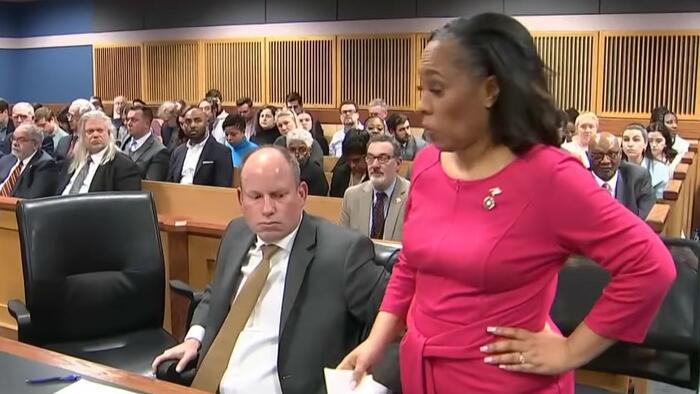
The ultimate blow to Willis’s involvement came on December 12, 2024. After extensive deliberation, the Georgia Supreme Court declined to review her appeal, upholding the Court of Appeals’ earlier decision that mandated her removal from the case. This decision left the Prosecuting Attorneys’ Council of Georgia responsible for appointing a new prosecutor to take over the complex and politically charged case. The appointed temporary district attorney subsequently decided to dismiss the case entirely, citing the extensive delays and the difficulties in reconstituting a prosecution team for such a large and intricate matter. This dismissal marked the end of the criminal proceedings in Fulton County against Trump and his co-defendants.
The Battle for Legal Fee Reimbursement
With the criminal case dismissed, the focus shifted to the significant legal expenses incurred by the defendants. A key provision in Georgia law, specifically O.C.G.A. § 17-10-1, became central to this new phase of litigation. This statute, enacted in 2025, allows defendants to recover attorney fees and costs if a prosecutor is disqualified from a case and the case is subsequently dismissed. The legislative intent behind this law was reportedly to provide a mechanism for recourse against overzealous or improperly conducted prosecutions, particularly when prosecutorial misconduct leads to a case’s unraveling.
Following the dismissal, Donald Trump and several co-defendants initiated legal actions to seek reimbursement under this statute. Trump alone is seeking over $6.2 million in attorney fees from the Fulton County District Attorney’s Office. The total amount sought by all eligible co-defendants is estimated to approach nearly $17 million, a sum that represents a substantial financial burden for any governmental entity.
District Attorney Fani Willis’s office attempted to intervene in this fee reimbursement litigation. Her primary arguments against the claims were twofold: first, she contended that the 2025 Georgia law permitting such reimbursements was unconstitutional. She argued that it potentially infringes upon the separation of powers or places an undue burden on prosecutorial offices. Second, Willis maintained that her disqualification was not the direct cause of the case’s dismissal. Instead, she suggested that the decision to dismiss was made by the temporary district attorney appointed after her removal, implying a different causal chain.
Judge McAfee’s Definitive Ruling
Judge Scott McAfee, who had presided over the disqualification hearings, was once again at the center of this new legal dispute. On Tuesday, he issued a ruling that decisively rejected Willis’s attempt to intervene in the fee litigation. McAfee’s decision highlighted that the district attorney’s office, under Willis, no longer had a legal basis to participate in the case, given that Willis herself had been disqualified from it. He noted that the state’s interests were already adequately represented by the temporary district attorney appointed following Willis’s removal, who now legally represents the prosecution’s side in matters pertaining to the dismissed case.
Crucially, while denying Willis’s office, Judge McAfee granted permission for Fulton County itself to intervene in the case. This distinction is vital because Fulton County funds most of the district attorney’s office operations and, more importantly, would ultimately be responsible for paying any reimbursement orders issued by the court. By allowing the county to intervene, McAfee ensures that the entity directly bearing the financial risk has a voice in the proceedings and can present its arguments regarding the reasonableness and applicability of the fee claims. This move underscores the significant financial implications for local taxpayers.
Reactions and Implications
The ruling was met with immediate reactions from the parties involved. Steve Sadow, Donald Trump’s attorney, praised McAfee’s decision in a statement posted to X (formerly Twitter). Sadow wrote that the judge had "properly denied DA Willis’ motion to intervene in POTUS’ action for reimbursement of attorney fees because her disqualification for improper conduct bars Willis and her office from any further participation in this dismissed, lawfare case." This statement reiterates the defense’s consistent position that Willis’s conduct was the root cause of the case’s downfall.
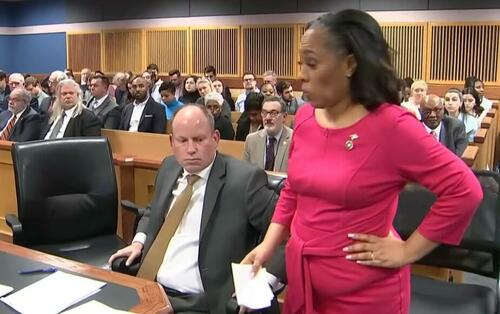
Trump himself has been vocal about Willis’s actions throughout the process. Following the Georgia Supreme Court’s decision not to hear Willis’s appeal against her removal, he told reporters last September, "What Fani Willis did to innocent people, patriots that love our country, what she did to them by indicting them and destroying them, she should be put in jail." These strong remarks underscore the highly politicized nature of the entire process.
For her part, Willis, speaking after her initial disqualification from the case, expressed hope that whoever took over the prosecution would "have the courage to do what the evidence and the law demand." This statement reflected her belief in the merits of the original case, despite the personal controversy that derailed it.
The financial implications for Fulton County are substantial. A potential payout of nearly $17 million in legal fees would represent a significant unbudgeted expense for county taxpayers. To put this into perspective, the annual budget for the Fulton County District Attorney’s office itself is approximately $40 million. A reimbursement order of this magnitude could necessitate budget reallocations, potentially impacting other county services or leading to increased taxes. Officials within Fulton County, while not issuing direct statements on ongoing litigation, are undoubtedly reviewing the potential fiscal impact and strategies to mitigate the burden, potentially through appeals or negotiations on the reasonableness of the fee requests.
Legal experts have weighed in on the ruling, emphasizing its importance. "Judge McAfee’s decision to deny Willis’s intervention but allow the county to step in is a critical distinction," noted Professor Eleanor Vance, a constitutional law expert at Georgia State University. "It acknowledges that while the DA’s office is out, the financial responsibility rests with the county, and they have a right to defend those taxpayer dollars. It also signals that the court is taking the fee reimbursement claims seriously under the 2025 statute." Others highlight the novelty of the 2025 law and the potential for further legal challenges regarding its application and constitutionality as the fee litigation proceeds.
Broader Impact and Future Outlook
This ruling carries broader implications beyond the immediate financial concerns. It sets a significant precedent for prosecutorial accountability in Georgia, particularly in cases where prosecutorial conduct leads to disqualification and subsequent case dismissal. The 2025 law, now being actively tested, could empower defendants in future cases to seek similar reimbursements, potentially leading to increased scrutiny of prosecutorial ethics and conduct across the state.
The controversy has also taken a toll on District Attorney Fani Willis’s public image and political standing. While she continues to serve as DA for other cases, her handling of the Trump election interference case, particularly the ethical questions surrounding her relationship with Nathan Wade, has drawn widespread criticism and scrutiny. The ongoing legal fee reimbursement battle ensures that the consequences of that saga will continue to resonate, both financially and politically, for the foreseeable future.
The next phase of this litigation will focus on determining the reasonableness of the requested reimbursements. A judge will meticulously evaluate each fee claim, including Trump’s substantial request exceeding $6.2 million. This process involves scrutinizing itemized bills, hourly rates, and the necessity of the legal work performed. Such an evaluation could take several weeks or even months, involving discovery and further evidentiary hearings. Given the high stakes, any decision on the reasonableness of fees is highly likely to be met with appeals from either side, potentially extending the legal battle for years. Ultimately, the outcome will not only determine the financial liability for Fulton County taxpayers but also serve as a landmark interpretation of Georgia’s relatively new prosecutorial accountability statute.