
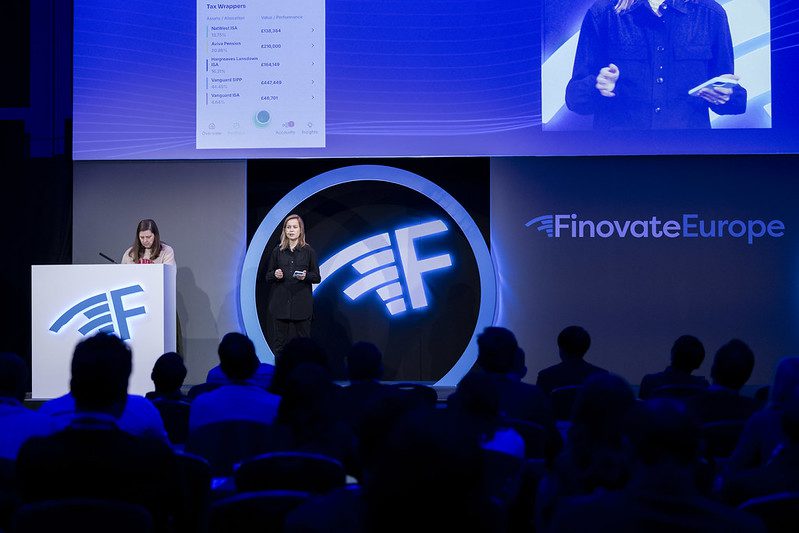

The global financial technology community has gained full digital access to the innovations showcased at FinovateEurope 2026, as the event organizers officially released the complete library of demo videos this week. Following the conclusion of the live conference held earlier this month in London, twenty-two distinct fintech organizations have had their seven-minute live demonstrations uploaded to the Finovate website and official YouTube channels. This digital archive serves as a critical resource for institutional leaders, venture capitalists, and industry analysts seeking to understand the immediate trajectory of European financial services. The release includes the highly anticipated presentations from the Best of Show winners, offering a granular look at the technologies that resonated most with an audience composed of high-level banking executives and technology influencers.
The transition from a physical-only event to a digital repository marks a significant phase in the Finovate lifecycle. By providing these demos free of charge, the organization ensures that the "operational reality" of current financial technology is accessible to a global audience, moving beyond the high-level theoretical discussions often found in keynote speeches. Each video adheres to the strict seven-minute, no-slides format that has become the hallmark of the Finovate brand, forcing presenters to focus on the functional utility and user interface of their products rather than marketing rhetoric. This year’s cohort of presenters navigated a landscape defined by rigorous regulatory changes in the Eurozone and the United Kingdom, alongside a maturing artificial intelligence sector that has shifted its focus from experimental generative models to practical, enterprise-grade applications.
Analysis of the Best of Show Winners
Among the twenty-two presenters, three companies distinguished themselves by securing the coveted Best of Show award, a recognition determined by the collective vote of the event’s attendees. These winners—R34DY, Serene, and Tweezr.io—represent diverse facets of the fintech ecosystem, yet they share a common thread of addressing complex systemic inefficiencies through streamlined digital interfaces.
R34DY’s presentation of its ABLEMENTS platform was particularly noted for its approach to institutional readiness and digital transformation. In an era where legacy banking systems are under immense pressure to integrate with modern API-driven architectures, ABLEMENTS provides a bridge that facilitates faster deployment of new services without compromising the integrity of core banking layers. Analysts observing the demo noted that the platform’s strength lies in its ability to reduce "time-to-market" for mid-tier financial institutions that lack the massive R&D budgets of global Tier-1 banks.
Serene entered the spotlight with a solution focused on the intersection of financial management and user well-being. As the cost-of-living crisis and economic volatility continue to impact consumer behavior across Europe, Serene’s platform aims to automate complex financial decisions, thereby reducing the cognitive load on the end-user. The demo showcased a sophisticated use of predictive analytics to anticipate cash flow disruptions and offer preemptive solutions, a feature that aligns with the growing trend of "autonomous finance" where software takes an active role in optimizing personal wealth.
The third winner, Tweezr.io, addressed the granular challenges of data precision in financial reporting and transaction monitoring. In a regulatory environment increasingly defined by the European Union’s Digital Operational Resilience Act (DORA) and the Markets in Crypto-Assets (MiCA) regulation, the ability to extract, clean, and analyze data with surgical precision is no longer a luxury but a requirement. Tweezr.io’s demonstration focused on the speed and accuracy of its data handling capabilities, suggesting a significant reduction in manual oversight for compliance and audit teams.
Chronology of FinovateEurope 2026
The release of these videos follows a structured timeline that began in late 2025 with the rigorous selection process for presenting companies. Unlike traditional trade shows, Finovate requires applicants to prove that their technology is either entirely new or represents a significant upgrade to existing services.
The event itself took place in the first half of February 2026, drawing thousands of delegates to London’s financial district. The first day was characterized by rapid-fire demos, where the initial twelve companies took the stage. This was followed by a second day of demos and a series of "post-show analysis" sessions where industry experts dissected the trends observed on stage. The announcement of the Best of Show winners occurred on the final afternoon of the conference, following a live tally of the digital ballots cast by the delegates.
Between the conclusion of the live event and this week’s video release, the Finovate editorial team conducted a deep-dive analysis into the themes of the conference. This period of reflection highlighted a pivot in the industry: while the 2024 and 2025 cycles were dominated by "AI hype," the 2026 demonstrations focused on "operational reality." The timeline concludes with the current digital launch, which bridges the gap between the London event and the upcoming FinovateSpring, scheduled for May 5 through 7 in San Diego, California.
Supporting Data and Market Context
The innovations showcased in the 2026 demos arrive at a pivotal moment for the European fintech sector. According to recent market data, while venture capital funding for early-stage fintechs saw a period of consolidation in 2025, the demand for enterprise-grade B2B solutions has surged. Investment in "RegTech" (regulatory technology) and "WealthTech" (wealth management technology) in the UK and EU grew by an estimated 14% year-over-year in the final quarter of 2025.
The attendee demographics at FinovateEurope 2026 further underscore this shift. Approximately 45% of the audience consisted of representatives from traditional financial institutions, a 5% increase from the previous year. This suggests that the "incumbent" banks are increasingly looking toward external fintech partnerships to accelerate their digital evolution. Furthermore, data collected during the event indicated that 68% of the demos featured some form of machine learning or artificial intelligence, but unlike previous years, nearly 90% of those features were integrated into back-end operational efficiencies rather than front-end chatbots.
The geographical diversity of the twenty-two presenters also reflects the expansion of the European fintech map. While London remains a dominant hub, significant representation was seen from startups based in Berlin, Stockholm, Paris, and the emerging tech corridors of Central and Eastern Europe. This regional spread is a testament to the success of the EU’s Passporting rights and the Single Euro Payments Area (SEPA), which allow fintechs to scale across borders with relative ease compared to other global markets.
Industry Implications and Future Outlook
The broader implications of the FinovateEurope 2026 demos suggest a maturation of the fintech industry. The "move fast and break things" ethos of the previous decade has been replaced by a more disciplined focus on resilience, compliance, and tangible ROI. The 22 videos now available for public viewing highlight a trend toward "invisible banking," where financial services are seamlessly embedded into non-financial platforms, and "hyper-personalization," where AI models are used to tailor products to the specific life stages of individual users.
Experts believe that the technologies debuted this month will play a crucial role in how banks navigate the high-interest-rate environment that has persisted into 2026. With the cost of capital remaining elevated, financial institutions are prioritizing efficiency and customer retention. The tools provided by companies like R34DY and Tweezr.io are designed to lower the operational overhead of these institutions, while platforms like Serene focus on deepening the relationship between the bank and the customer through value-added services.
Furthermore, the emphasis on operational reality signals that the "hype cycle" for Generative AI has reached a plateau, and the "utility cycle" has begun. Financial institutions are no longer satisfied with pilots or proofs-of-concept; they are looking for production-ready code that can be integrated into existing workflows without disrupting service or violating privacy laws.
Official Responses and Strategic Directions
While official statements from individual presenting companies varied, the consensus among participants was one of cautious optimism. Spokespersons for several presenting firms noted that the 2026 event felt more "pragmatic" than previous years. "The questions we received from the audience after our demo weren’t about what the technology could do in five years," noted one Best of Show winner. "They were about how it integrates with legacy systems today and how it handles the current regulatory requirements."
Finovate’s own leadership emphasized the importance of the digital release in maintaining the momentum of these innovations. In a post-show analysis, the organizers noted that the transition from AI hype to operational reality is a healthy sign for the ecosystem. By making the demos free and accessible, they aim to foster a more transparent environment where the merits of a technology are judged by its performance rather than its marketing budget.
As the industry looks toward the next major milestone—FinovateSpring in San Diego—the focus is expected to shift slightly toward the North American market’s specific challenges, such as real-time payments adoption and the evolving role of community banks. However, the lessons learned and the technologies displayed at FinovateEurope will undoubtedly influence the global discourse, as many of the presenters in London are already eyeing international expansion.
The release of the FinovateEurope 2026 demo videos provides a comprehensive snapshot of a financial sector in the midst of a sophisticated digital overhaul. For professionals across the banking, technology, and investment sectors, these videos offer a window into the tools that will likely define the competitive landscape for the remainder of the decade. The 22 companies showcased represent the vanguard of a movement toward a more resilient, efficient, and user-centric financial future.