


The global financial technology landscape in early 2026 has been characterized by a rapid transition from experimental artificial intelligence to deeply integrated, production-ready solutions that address long-standing structural inefficiencies. As the industry navigates this shift, the Finovate Podcast, hosted by Finovate Vice President Greg Palmer, has emerged as a critical forum for dissecting the strategies of the year’s most influential market participants. Throughout the first quarter of 2026, the program has featured a sophisticated array of guests, ranging from "Best of Show" winners at FinovateEurope to seasoned venture capitalists and grassroots fintech founders. These conversations have collectively mapped out a trajectory for the year, emphasizing the modernization of legacy infrastructure through Large Language Models (LLMs), the rise of behavioral intelligence in risk assessment, and the continued democratization of institutional-grade investment tools.
The Modernization of Financial Infrastructure through Generative AI
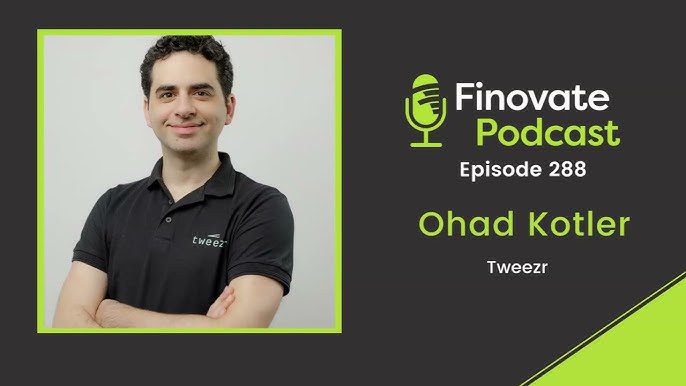
A primary theme of the early 2026 sessions focused on the persistent challenge of legacy systems within tier-one and tier-two financial institutions. In Episode 288, Greg Palmer interviewed the leadership team from Tweezr, a standout performer and "Best of Show" winner at FinovateEurope. The discussion centered on the technical debt that continues to hamper digital transformation efforts across the banking sector. Tweezr’s approach utilizes LLMs not merely as customer-facing interfaces, but as sophisticated tools for interpreting and updating archaic codebases and fragmented data silos.

Industry data suggests that by the start of 2026, nearly 70% of global banking institutions still relied on legacy core systems for at least half of their mission-critical operations. The integration of AI into these systems represents a paradigm shift; rather than undergoing the high-risk "rip and replace" strategies of the past decade, institutions are now leveraging AI to build "intelligent wrappers." This allows legacy environments to communicate seamlessly with modern cloud-native applications. The Tweezr interview highlighted how this technical evolution reduces operational overhead and enables traditional banks to compete with agile neobanks on product release cycles.
Behavioral Intelligence and the New Frontier of Risk Management
The evolution of risk assessment moved beyond traditional credit scoring in Episode 287, featuring Serene, another FinovateEurope Best of Show winner. The conversation with Palmer explored the growing importance of behavioral intelligence—the practice of using AI to analyze non-traditional data points to identify early risk indicators. As global markets remain sensitive to inflationary pressures and fluctuating interest rates in 2026, the ability to predict default or financial distress before it occurs has become a competitive necessity.
Serene’s platform focuses on "micro-behaviors" and transactional patterns that signal shifts in a consumer’s or business’s financial health. This methodology represents a significant departure from static, backward-looking credit reports. By implementing behavioral intelligence, lenders can offer more personalized interventions, potentially restructuring loans or providing financial counseling before a delinquency occurs. This proactive approach is being viewed by industry analysts as a cornerstone of "Ethical Fintech," where data is used to protect both the institution’s balance sheet and the customer’s long-term financial viability.
AI Integration in the Global Investment Space
The democratization of investment intelligence was a focal point of Episode 286, featuring Dor Eligula, co-founder and Chief Business Officer at Bridgewise. This segment addressed the "wisdom gap" that often exists between institutional investors and retail participants. Bridgewise utilizes proprietary AI to analyze thousands of global stocks, providing fundamental analysis that was previously only accessible to high-net-worth individuals or large hedge funds.
Eligula and Palmer discussed the evolution of AI from a "search and summarize" tool to a "reasoning and analysis" engine. In 2026, the investment landscape is increasingly defined by the ability to process unstructured data—such as earnings call transcripts, regulatory filings, and news sentiment—across multiple languages and jurisdictions in real-time. The implications for the market are profound: as AI lowers the barrier to institutional-grade insights, the volatility associated with "uninformed" retail trading is expected to decrease, replaced by a more fundamental-driven market participation.
Venture Capital Perspectives and the 2026 Funding Environment
To provide a broader market context, Episode 285 featured Matt Ober, Managing Partner at Social Leverage. This interview offered a vital look at the venture capital (VC) perspective on fintech investment trends for 2026. Following the market corrections of 2023 and 2024, the VC landscape in 2026 has moved toward a "quality over quantity" mandate. Ober emphasized that while "dry powder" (unallocated capital) remains significant, the criteria for investment have become increasingly rigorous.

According to Ober, the most successful fintechs in the current climate are those demonstrating clear paths to profitability and "defensible AI"—technologies that are not easily replicated by larger incumbents or generic AI models. The discussion provided a roadmap for founders, suggesting that the era of "growth at all costs" has been permanently replaced by a focus on unit economics and sustainable scaling. For fintechs looking to stand out in a crowded market, the advice was clear: solve a specific, high-friction problem with a clear ROI for the end-user.
Human-Centric Fintech and Policy Influence
The series of interviews concluded with a deep dive into the social and policy-driven aspects of finance in Episode 284. Greg Palmer sat down with Joel Blake, OBE, the founder and CEO of GFA Exchange. Blake’s journey from grassroots entrepreneurship to influencing policy tables provided a unique perspective on the democratization of finance. The conversation centered on the "human-centric" journey into fintech, arguing that technology should serve as an enabler for broader economic participation rather than an end in itself.
GFA Exchange focuses on improving access to finance for small and medium-sized enterprises (SMEs), a sector that remains underserved by traditional banking models. Blake highlighted the importance of transparency and inclusivity in algorithmic lending. As regulators in the UK, EU, and US increase their scrutiny of AI-driven decision-making, the insights provided by leaders like Blake are essential for ensuring that fintech innovation does not inadvertently lead to financial exclusion.

Chronology of Early 2026 Podcast Releases
The release schedule for these episodes reflects a strategic cadence designed to cover the most pressing issues in the industry during the first quarter of the year:
- January 2026: Launch of the season with Episode 284, focusing on democratization and policy with Joel Blake (GFA Exchange).
- February 2026: A dual focus on investment trends and VC perspectives with Episode 285 (Social Leverage) and Episode 286 (Bridgewise).
- March 2026: Deep dives into technical innovation and risk management following the FinovateEurope conference, featuring Best of Show winners Serene (Episode 287) and Tweezr (Episode 288).
Broader Impact and Industry Implications
The insights gathered from these five conversations suggest that the fintech industry in 2026 is entering a "maturity phase" for artificial intelligence. The hype cycles of previous years have been replaced by a focus on pragmatic application. The primary implications for the remainder of 2026 include:
- Infrastructure Resilience: The success of companies like Tweezr indicates that the "legacy problem" is finally being addressed through intelligent automation rather than total replacement, potentially saving the banking industry billions in transformation costs.
- Predictive Accuracy: The move toward behavioral intelligence (as seen with Serene) will likely lead to more stable credit markets, as lenders gain the ability to anticipate and mitigate risks in real-time.
- Globalized Investment: Platforms like Bridgewise are contributing to a more efficient global market where geographic and linguistic barriers to investment information are becoming obsolete.
- Equity in Finance: The focus on democratization by leaders like Joel Blake ensures that the benefits of fintech innovation reach SMEs and underserved populations, aligning technological progress with social governance goals.
As the Finovate Podcast continues its 2026 season, these early conversations serve as a benchmark for the industry’s progress. The recurring theme is clear: the most successful financial technologies are those that combine cutting-edge computational power with a deep understanding of human behavior and institutional needs. Under the guidance of Greg Palmer, the podcast remains an essential resource for professionals seeking to navigate the complexities of a rapidly evolving global financial ecosystem.