
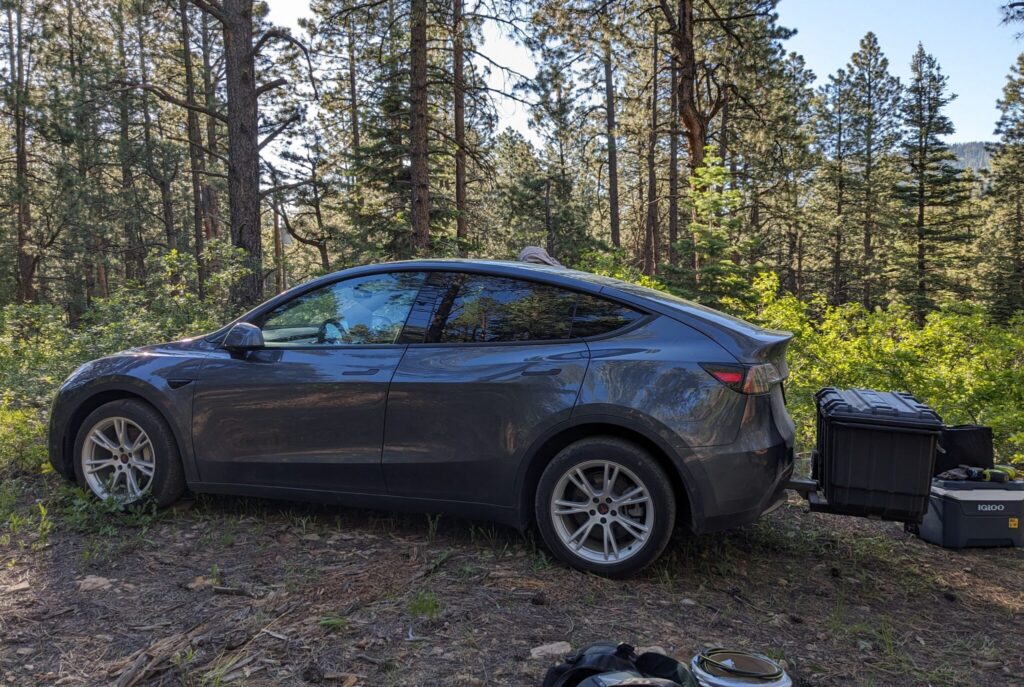

In a notable departure from his long-championed ethos of extreme frugality, Peter Adeney, widely known as Mr. Money Mustache, has announced the acquisition of a 2023 Tesla Model Y. This purchase, a high-performance electric crossover valued at approximately $52,000 after federal tax credits and state incentives, signals a significant philosophical evolution for one of the financial independence movement’s most influential figures. The move shifts the focus from strict accumulation and minimal expenditure to a more nuanced approach to wealth utilization, particularly for those who have already achieved financial independence and early retirement.
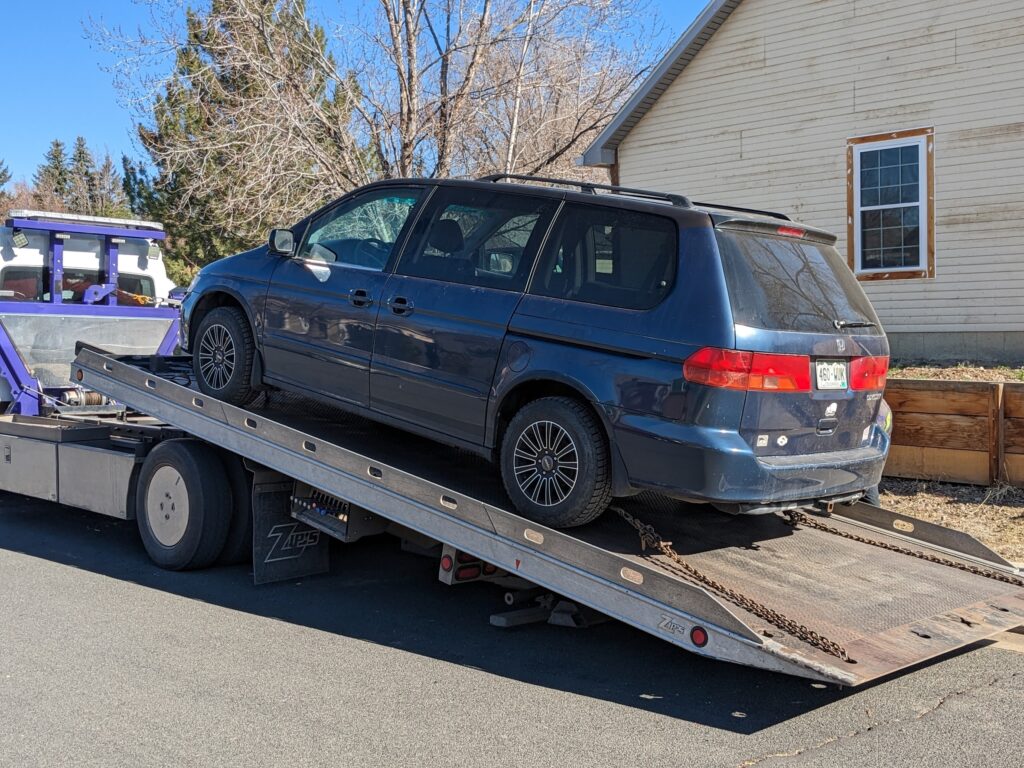
For over a decade, Mr. Money Mustache has been a leading voice in the Financial Independence, Retire Early (FIRE) movement, advocating for aggressive savings rates, minimalist living, and a deep skepticism towards consumerism, especially car culture. His blog, launched in 2011, quickly became a foundational resource for millions seeking to escape the traditional employment paradigm through disciplined financial habits. Adeney himself achieved early retirement at the age of 30, eighteen years ago, by meticulously adhering to these very principles. His previous primary vehicle, a Honda van purchased for $4,500 twelve years ago, stood as a tangible symbol of his commitment to practical, low-cost transportation, enduring countless cross-country trips and local utility tasks until its recent mechanical failure.
The decision to invest in a Tesla, a vehicle described by Adeney himself as "absolutely loaded to the gills with excess" – featuring all-wheel drive, acceleration comparable to some high-end sports cars, seven-person capacity, and advanced computing capabilities – represents a stark contrast to his past pronouncements. It reflects a deliberate re-evaluation of how accumulated wealth can and should be enjoyed, particularly in the later stages of a financially independent life. This philosophical pivot is encapsulated by the adage, "What got you here, won’t get you where you’re going," suggesting that the same rigid austerity instrumental in wealth accumulation may inadvertently hinder the enjoyment of a long, free retirement.
The Evolution of a Frugal Icon
Mr. Money Mustache’s influence on the FIRE community stems from his candid and often humorous approach to personal finance, demystifying complex concepts and making extreme frugality seem not only achievable but desirable. His teachings have inspired countless individuals to question conventional spending habits, reduce their ecological footprint, and prioritize financial freedom over material possessions. The core tenets of his philosophy revolve around maximizing savings rates, minimizing fixed expenses, and embracing DIY solutions for nearly every aspect of life, from home maintenance to transportation.
However, as individuals progress through the FIRE journey from accumulation to decumulation (or simply enjoying their newfound freedom), the psychological landscape often changes. The habits of extreme frugality, once empowering, can become ingrained to the point of self-deprivation, even when financial abundance makes such strictness unnecessary. This phenomenon, which Adeney and his peers are exploring, highlights a critical, yet often overlooked, phase in financial independence: learning how to spend joyfully and intentionally.
The New Vehicle: A Deep Dive into the Tesla Model Y
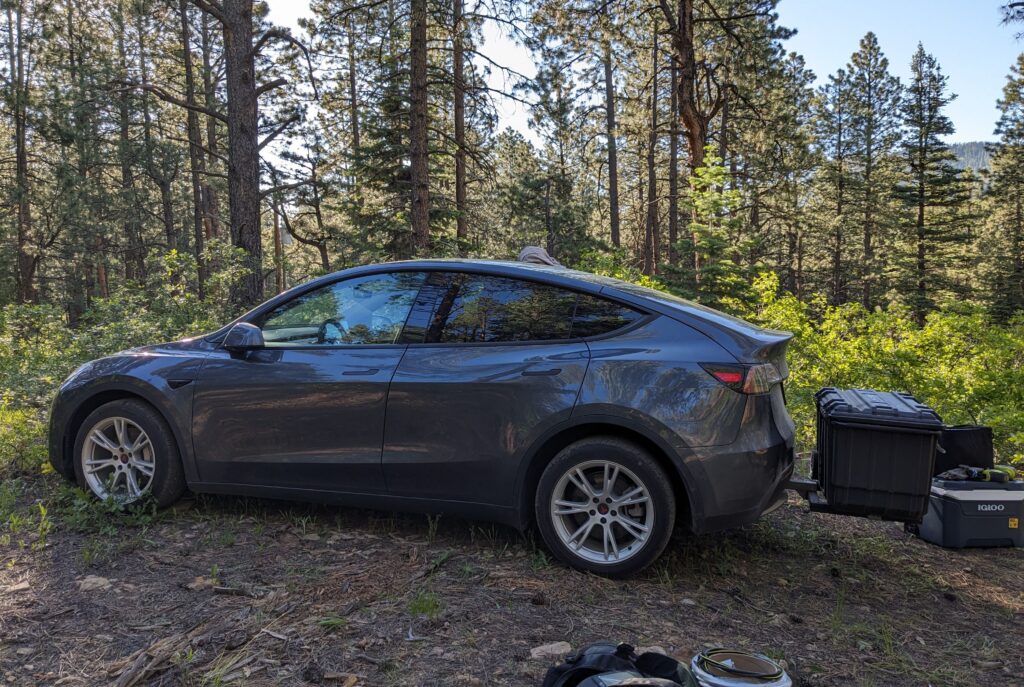
The 2023 Tesla Model Y, a key player in the rapidly expanding electric vehicle market, offers a compelling blend of performance, cutting-edge technology, and environmental benefits. With a starting price for the Long Range All-Wheel Drive model typically ranging between $45,000-$55,000 before incentives (depending on configuration and market fluctuations), its acquisition by a prominent frugality advocate underscores the evolving perception of electric vehicles as both a luxury and a practical, future-oriented choice. The vehicle’s advanced features, such as its sophisticated Autopilot system, expansive digital interface, and over-the-air software updates, represent a significant technological leap from conventional internal combustion engine (ICE) vehicles. Its range, typically exceeding 300 miles on a single charge for the Long Range variant, addresses a critical concern for long-distance travel, a factor important for Adeney’s renewed interest in extensive road trips.
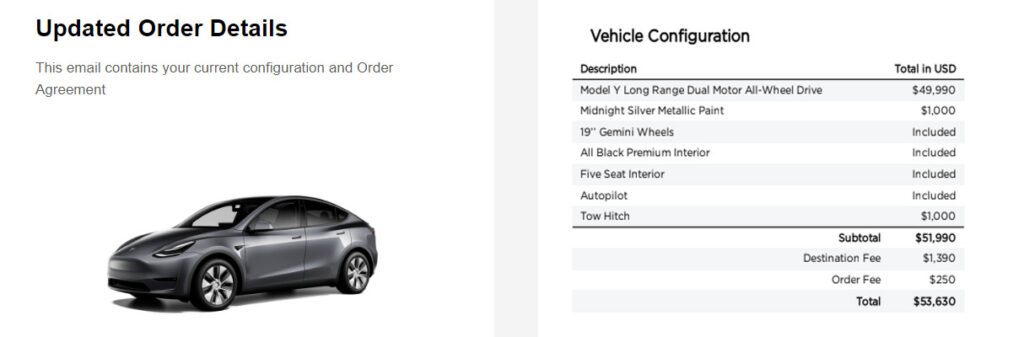
The net cost to Adeney, after all applicable taxes and federal tax credits (which can be up to $7,500 for qualifying EVs), is approximately $52,000. This figure stands in stark contrast to his previous vehicle, the $4,500 Honda van, representing an eleven-fold increase in vehicle expenditure. The van, affectionately nicknamed "Vanna," had served him dutifully for over a decade, crisscrossing mountains and deserts and assisting in numerous home renovation projects. Its eventual retirement, prompted by increasing unreliability and a final transmission failure on a mountain pass, provided the impetus for the Tesla purchase.
The Frugal Paradox: Psychological Barriers to Spending
Adeney’s personal journey to this purchase was marked by significant internal conflict, a sentiment he openly shares as common among those who have rigorously practiced frugality. He describes a pervasive psychological hurdle: the difficulty in "loosening up" and spending on oneself, even when financially abundant. This "frugal paradox" is vividly illustrated by his anecdote of grappling with the $6.99 price of a loaf of specialty bread at a grocery store, a minor expense that triggered an intense internal debate over perceived wastefulness. This mental battle, which he terms "Grocery Shopping With Your Middle Finger," highlights the deeply ingrained habits of optimization and cost-cutting that, while instrumental in achieving financial freedom, can persist as an unnecessary burden once that freedom is attained.
This psychological barrier is not unique to Adeney. He recounts a conversation with a similarly wealthy, financially independent friend who, despite a net worth several times higher than his own and a history of generous charitable giving, still struggles with minor "splurges" like opting for an Uber to the airport instead of enduring a lengthy bus ride. This shared experience led them to formulate three guiding principles designed to help financially independent individuals embrace a more balanced and joyful approach to their accumulated wealth:
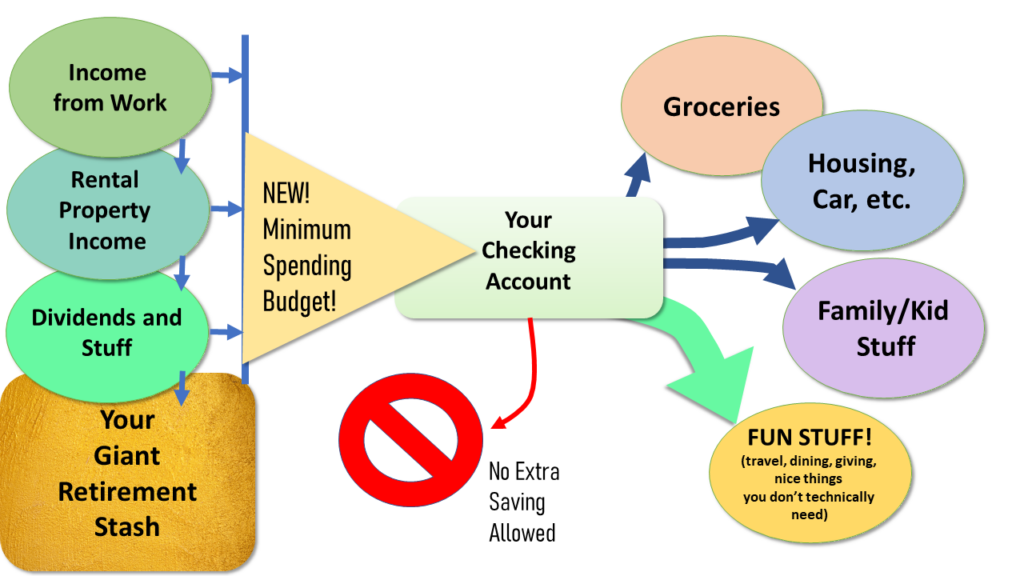
Principle #1: The Minimum Spending Budget
This principle posits that individuals who have accumulated substantial wealth, such as a $2 million investment portfolio, often continue to live on a fraction of what they could comfortably spend. Citing the widely accepted 4% rule of retirement spending, which suggests a sustainable annual withdrawal of approximately $80,000 from a $2 million portfolio, Adeney argues for establishing a "minimum spending level." Even with a more conservative 3% withdrawal rate, this hypothetical individual could safely spend $60,000 annually, not including additional income sources like side gigs, future inheritances, or social security. Yet, many "Mustachians" continue to live on $40,000 or less, often foregoing desired upgrades or experiences due to ingrained frugal habits. The "minimum spending budget" serves as a mental reset, encouraging them to acknowledge their actual capacity for spending and allocate funds towards life enrichment without guilt. This principle acknowledges that while saving aggressively is vital for accumulation, a different mindset is required for distribution and enjoyment in retirement.
Principle #2: The Dedicated Money Wasting Account
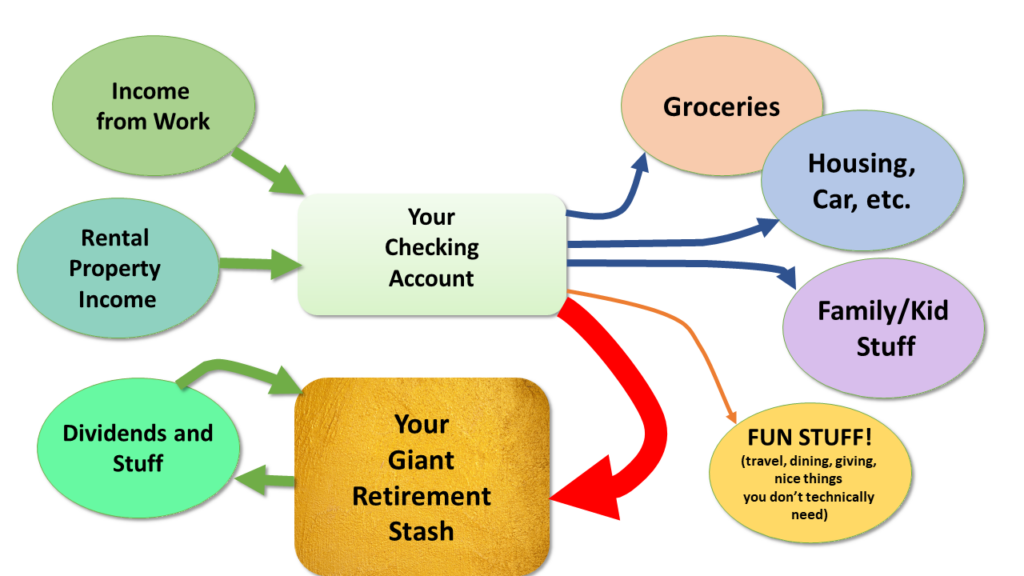
Recognizing the psychological difficulty of spending "hard-earned money" on perceived frivolities, this principle proposes a creative solution: making one’s own money feel like "somebody else’s." This concept draws parallels to how individuals might spend freely on a business trip where the bill is not directly presented to them. By creating a separate, dedicated fund specifically for "wasting" or "frivolous" spending, individuals can mentally compartmentalize these expenses, reducing guilt and encouraging enjoyment. This account, symbolically distinct from the core investment portfolio or emergency savings, provides psychological permission to indulge in desired experiences or items without feeling like one is compromising their long-term financial security. It is a structured way to break the habit of constant optimization when it is no longer necessary, fostering a sense of freedom in spending.
Principle #3: The Splurge Accountability Buddy
The communal aspect of the FIRE movement extends to this new philosophy of conscious spending. Adeney emphasizes the benefit of teaming up with like-minded friends who are also navigating the challenges of transitioning from extreme saving to mindful spending. These "splurge accountability buddies" can provide mutual support, challenge ingrained cheapness when it becomes counterproductive, and celebrate intentional splurges. He cites examples of friends who have successfully adopted this approach, including his wealthy friend who now invests in quality home goods and travel, and Carl of "Mr. 1500 Days," who recently upgraded his beaten-down minivan to a new Chevrolet Bolt EV. This peer support system helps overcome individual resistance and fosters a collective shift towards enjoying the fruits of their financial labor, proving that social reinforcement can be particularly powerful for changing deeply ingrained habits.
Contextualizing the Shift: Life Changes and Environmental Imperatives
The catalyst for Adeney’s personal shift extends beyond psychological introspection. A recent life change – becoming a co-owner of a fixer-upper vacation rental compound in Salida, Colorado – has reignited his passion for travel, outdoor activities like mountain biking, and communal gatherings. This venture, dubbed "Friends Mountain Resort," necessitates reliable long-distance transportation. His old Honda van, "Vanna," after 23 years on the road (12 years under his ownership), had become increasingly unreliable, culminating in a transmission failure on a mountain pass. This final breakdown served as the decisive nudge, transforming a persistent source of "negative stress" into an opportunity for a significant lifestyle upgrade that aligns with his renewed zest for adventure.
From an environmental standpoint, the adoption of an electric vehicle by a prominent public figure like Mr. Money Mustache also carries broader implications. As an advocate for sustainable living and reduced consumption, his choice of an EV reinforces the growing mainstream acceptance and desirability of electric transportation. The shift from a gasoline-powered van to an electric Tesla underscores a commitment to reducing his carbon footprint, aligning personal choices with environmental values. The rapid growth of the EV market, supported by government incentives and increasing charging infrastructure, reflects a global movement towards cleaner energy and sustainable mobility. Tesla, as a market leader, continues to drive innovation and expand charging networks, making long-distance EV travel increasingly viable and appealing.
Addressing Criticisms and Philanthropy
Adeney proactively addresses potential criticisms regarding his wealth and charitable giving. He acknowledges the importance of philanthropy, stating that he has personally donated over $500,000 to various causes during his blogging career. However, he also pushes back against the notion that all personal spending by wealthy individuals is inherently selfish or that constant self-deprivation is a moral imperative. He argues that an extreme scarcity mindset, even for the affluent, can be counterproductive, leading to undue stress and a diminished quality of life. His point is that there is a "happy medium" where one can be a responsible steward of savings, give generously, and still allow for "frivolous spending" on oneself and loved ones without guilt. Examples include opting for a slightly more expensive airline seat for comfort or buying groceries at a premium store to save time, rather than always optimizing for the absolute lowest cost.

The financial implications of the Tesla Model Y, while substantial, are presented within the framework of his expanded spending philosophy. The car is estimated to add approximately $10,000 per year to his expenses, primarily through depreciation, insurance, and electricity costs. This figure, however, is significantly less than his substantial financial reserves and previous "spending deficit." The car’s role is not merely transportation but an enabler of experiences: "epic camping trips, dream dates, and long adventures around the country," which will, in turn, encourage further spending on travel, accommodations, and dining out. This strategic investment in a vehicle that enhances quality of life and facilitates cherished experiences aligns with his new emphasis on deriving joy from wealth.
Logistical Details and Future Tracking
The old Honda van, "Vanna" (model years 1999-2023), was efficiently sold through an online car salvage service called Peddle for $715 cash. Adeney specifically allocated this money to "splurges" like dinners out, further demonstrating his commitment to the new spending philosophy. This practical advice on disposing of an old vehicle also provides a valuable resource for his readers. He has also highlighted the return of Tesla’s referral program, offering $1000 off new vehicles to buyers using a referral code, while gifting points to the referrer for Tesla freebies.
To document this transition and provide ongoing insights, Adeney has launched "The Model Y Experiment," a dedicated tracker page on his blog. This initiative will offer continuous updates on the ownership experience, including reliability, customer service, modifications, and quirks. This transparency ensures that his journey, while personal, remains an educational resource for his community, offering real-world data and reflections on living with a modern EV after a lifetime of extreme frugality.
In conclusion, Mr. Money Mustache’s acquisition of a Tesla Model Y is more than just a car purchase; it represents a significant evolution in his financial philosophy. It is a public declaration that while frugality is a powerful tool for achieving financial independence, a different, more flexible mindset is essential for maximizing well-being and experiences during a long and abundant retirement. His new principles for intentional spending – the Minimum Spending Budget, Dedicated Money Wasting Account, and Splurge Accountability Buddy – offer a framework for others navigating the complex psychological transition from relentless saving to mindful enjoyment, reinforcing the idea that true wealth lies not just in accumulation, but in its judicious and joyful deployment. This shift is likely to spark continued discussion within the FIRE community, influencing how adherents define and pursue their own versions of a financially free and fulfilling life.