
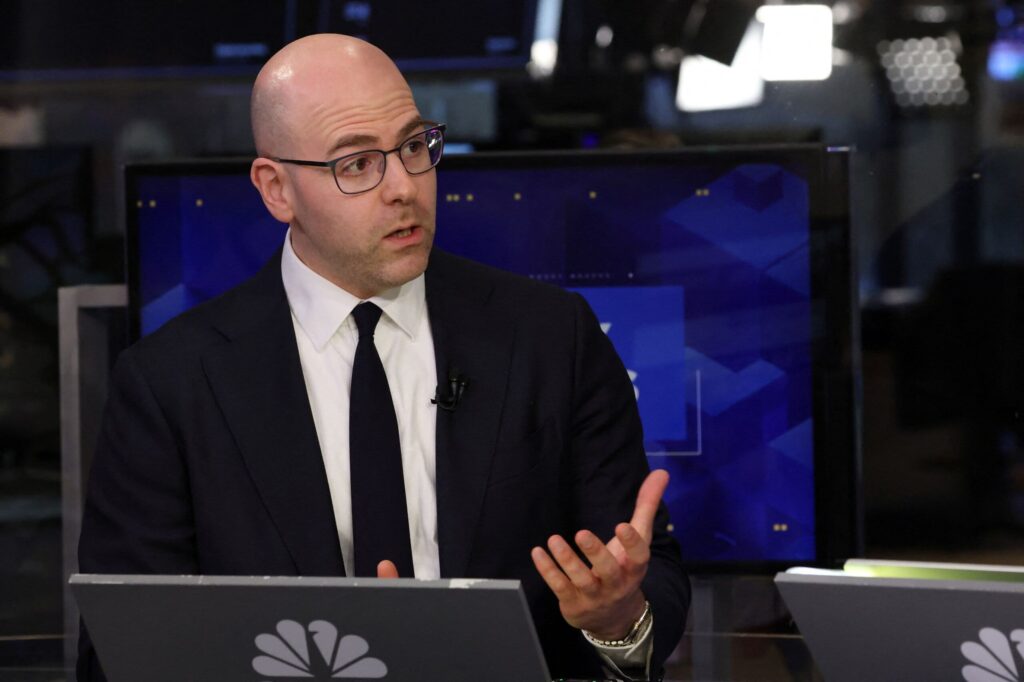

Federal Reserve Governor Stephen Miran intensified his call for more aggressive interest rate reductions on Friday, asserting that the latest jobs report from February 2026 provides compelling evidence that the central bank’s monetary policy remains too restrictive. Speaking just hours after the Bureau of Labor Statistics released data showing a significant drop in nonfarm payrolls, Miran articulated a vision for monetary policy more acutely focused on fostering labor market strength rather than an inflation threat he believes is largely overstated. His remarks underscore a growing divergence within the Federal Open Market Committee (FOMC) as the U.S. economy navigates a complex period of geopolitical tensions and evolving domestic economic indicators.
The February Jobs Report: A Catalyst for Dovish Calls
The Bureau of Labor Statistics (BLS) reported on Friday, March 6, 2026, a surprising and concerning drop of 92,000 in nonfarm payrolls for February. This figure starkly contrasted with consensus economist expectations of a modest gain, sending ripples through financial markets and reigniting debates about the true health of the U.S. labor market. Alongside the payroll decline, the unemployment rate edged up to 4.3%, from 4.1% in January, and average hourly earnings growth decelerated to 2.8% year-over-year, marking the slowest pace in over two years. The participation rate also saw a slight dip, suggesting some discouraged workers might be exiting the labor force.
For Governor Miran, these numbers were not merely a blip but a clear signal. In an interview on CNBC’s "Money Movers" show, he stated unequivocally, "I think that the labor market can use more accommodation from monetary policy." He argued that the current stance, with the federal funds rate targeted between 3.5% and 3.75%, is "modestly restrictive" and inappropriate. Instead, Miran advocated for a position closer to "neutral," a theoretical rate that neither stimulates nor constrains economic growth, which he estimates to be about a full percentage point lower than the current target. This perspective positions him as a leading voice for a more dovish approach within the Fed, emphasizing the employment leg of the central bank’s dual mandate.
Miran’s Dissenting Voice: Prioritizing Labor Over Perceived Inflation Risks
Miran’s persistent advocacy for lower rates is rooted in his conviction that the U.S. economy does not face a genuine inflation crisis. "I think that we don’t have an inflation problem," he declared, challenging the prevailing narrative that has often guided the FOMC’s more cautious approach to rate cuts. His argument centers on the idea that much of the reported inflation is either transitory, driven by supply-side shocks, or a function of measurement methodologies rather than demand-driven overheating.
This viewpoint stands in contrast to some of his colleagues, who, while acknowledging recent progress on inflation, remain wary of cutting rates too quickly, fearing a potential resurgence of price pressures. These "hawkish" members often point to historical precedents where premature easing led to a second wave of inflation, necessitating even more aggressive tightening later. However, Miran’s interpretation of the economic landscape suggests that the risks of an overly tight monetary policy – specifically, stifling job growth and potentially tipping the economy into recession – now outweigh the risks of inflation.
Deconstructing Inflation: The Nuance of Measurement
A cornerstone of Miran’s argument against pervasive inflation concerns has been his detailed critique of how inflation is measured by government agencies. He has consistently argued that certain components of the Consumer Price Index (CPI) and Personal Consumption Expenditures (PCE) index, particularly those related to services, can create an exaggerated picture of underlying price pressures.
One specific example he frequently cites is portfolio management fees. These fees, often structured as a percentage of assets under management, naturally increase in dollar terms when asset markets, such as the stock market, perform well. For instance, if the S&P 500 experiences a robust year, as it did in 2025 with a gain of nearly 18%, the nominal value of these fees rises, contributing to measured inflation even if the rate charged for the service remains constant. Miran posits that such increases do not reflect genuine inflationary pressures on consumers’ purchasing power for goods and services, but rather a statistical artifact of market performance.
For example, while the headline CPI might have registered around 3.2% year-over-year in January 2026, Miran’s analysis likely focuses on core PCE, which excludes volatile food and energy prices, showing a more benign figure, perhaps closer to 2.3% to 2.5%. He would argue that once adjusted for these measurement anomalies and transitory factors, the true underlying inflation rate is already at or below the Fed’s 2% target, thereby removing the primary justification for a restrictive monetary stance.
The "Neutral Rate" Debate and Current Policy Stance
The concept of a "neutral rate" – the theoretical interest rate that allows the economy to grow at its potential without accelerating inflation or unemployment – is central to Miran’s position. The consensus estimate among Fed officials at their December 2025 meeting pegged this neutral rate, often denoted as R*, around 3.1%. With the current federal funds target range at 3.5% to 3.75%, Miran argues that policy is clearly above neutral, thus acting as a brake on economic activity.
The journey to the current rate target has been significant. Throughout much of 2024 and early 2025, the Fed had aggressively raised rates to combat a post-pandemic surge in inflation, pushing the federal funds rate to a peak of 5.5% to 5.75% by mid-2025. As inflation showed signs of cooling and labor market momentum began to moderate, the FOMC initiated a series of three consecutive quarter percentage point cuts in the latter part of 2025, bringing the rate down to its current level. These cuts, implemented in October, November, and December, were designed to prevent a sharp economic downturn while still ensuring inflation remained on a downward trajectory. However, for Miran, these moves were insufficient, and the February jobs report only strengthens his argument for a more substantial downward adjustment. His preferred path would see the federal funds rate fall closer to 2.5% to 2.75%, aligning with his view of a truly neutral and accommodative stance.
Oil Prices and Geopolitical Shocks: A Transitory Concern?
Adding another layer of complexity to the economic outlook is the recent surge in global oil prices, largely attributed to escalating geopolitical tensions following the Iran war. This conflict has disrupted supply chains and stoked fears of broader regional instability, pushing Brent crude futures above $95 a barrel in early March 2026 and leading to higher costs at the pump for consumers. While such developments typically fuel headline inflation concerns, Miran reiterated his belief that the Federal Reserve should largely look past these commodity-driven spikes.

"Typically, the Federal Reserve doesn’t respond to higher oil prices like that," he explained. "It [boosts] headline inflation, but it tends to be a one-off shock." Miran emphasized the importance of distinguishing between headline inflation, which includes volatile energy and food prices, and core inflation, which strips these out. He noted, "When you think about core inflation, it tends to be more predictive of where inflation is going over the medium term than headline inflation." This distinction is critical for policymakers, as responding to transient supply-side shocks with broad monetary tightening risks damaging demand in the broader economy without effectively addressing the root cause of the price increase. His stance suggests that even with the ongoing geopolitical uncertainty, the Fed’s focus should remain on domestic demand and underlying price pressures, which he views as subdued.
A History of Dissent: Miran’s Consistent Advocacy for Accommodation
Governor Stephen Miran’s call for deeper rate cuts is not an isolated incident but rather a consistent theme throughout his tenure at the Federal Reserve. Appointed by President Donald Trump to fill the unexpired term of Adriana Kugler in August 2025, Miran has quickly established himself as a prominent "dove" on the FOMC. His term technically expired in January 2026, but he has continued to serve, as is customary, until a successor is approved by the Senate.
Since joining the committee, Miran has dissented at every Federal Open Market Committee meeting he has attended. For the three quarter-percentage-point rate cuts approved in late 2025, he consistently argued for more aggressive half-percentage-point reductions, believing the economy needed a stronger stimulus. In January 2026, when the FOMC voted to hold rates steady, Miran again dissented, preferring a quarter-point cut to signal the Fed’s commitment to supporting the labor market. This consistent pattern of dissent underscores his deep conviction regarding the necessity of a more accommodative monetary policy. Asked if he anticipated another dissent at the upcoming meeting, Miran expressed hope, "I hope not, but that would be up to my colleagues. I hope that we vote to cut."
The Federal Reserve’s Shifting Landscape and Future Leadership
Miran’s presence on the FOMC, even in a temporary capacity, highlights the ongoing political dynamics shaping the Federal Reserve’s leadership. His initial appointment in August 2025 to complete Kugler’s term was followed by President Trump’s subsequent nomination of Kevin Warsh to a new position. This nomination is widely seen as a strategic move to potentially replace current Fed Chair Jerome Powell, whose term is set to expire in May 2026. Warsh, a former Fed Governor himself, is known for his generally more hawkish leanings and his experience navigating financial crises.
The potential leadership change at the helm of the Fed introduces an element of uncertainty regarding the future trajectory of monetary policy. Should Warsh be confirmed as Chair, or even as a Governor, his influence could shift the committee’s consensus. For now, Miran continues to participate in key policy deliberations. "I will be at the meeting in a couple weeks, and after that I will take it a day at a time," he remarked, acknowledging the provisional nature of his continued service. This transitional period adds an extra layer of scrutiny to every statement and every economic data point, as market participants and policymakers alike try to discern the future direction of the world’s most influential central bank.
Market Reactions and Economic Implications
The February jobs report, combined with Miran’s forceful advocacy for deeper rate cuts, sent mixed signals through financial markets. Initially, the weak jobs data triggered a sell-off in equity futures, as investors interpreted the news as a sign of an economy losing momentum, potentially heading towards a recession. Bond yields, however, saw a corresponding dip, reflecting increased demand for safe-haven assets and expectations of earlier or larger rate cuts. The yield on the benchmark 10-year Treasury note, for instance, fell to 3.85% from 3.98% earlier in the week.
Miran’s comments, while generally welcomed by those anticipating lower borrowing costs, also highlighted the growing division within the FOMC. A deeply divided Fed can sometimes create uncertainty, as it makes future policy actions less predictable. Economists are now grappling with the implications of persistent job losses and slowing wage growth on consumer spending, which has been a resilient pillar of the U.S. economy. If the labor market continues to weaken, it could lead to a broader deceleration in economic activity, potentially validating Miran’s concerns about the risks of an overly tight monetary policy. Conversely, some analysts worry that rapidly cutting rates in response to a single weak jobs report, especially with geopolitical risks still elevated, could ignite inflationary pressures if underlying demand proves more robust than Miran suggests.
The Dual Mandate Under Scrutiny: Balancing Employment and Price Stability
The Federal Reserve operates under a "dual mandate" established by Congress: to promote maximum employment and stable prices. Miran’s arguments represent a strong emphasis on the maximum employment component, contending that the current policy is actively hindering job creation and wage growth. He believes that the risk of undershooting on employment is now greater than the risk of inflation, especially when accounting for methodological nuances in inflation measurement.
This perspective stands in stark contrast to more inflation-averse members of the FOMC who might argue that while the labor market is softening, it remains relatively tight by historical standards, and that inflationary pressures, particularly in the services sector, have yet to be fully vanquished. For these members, maintaining a slightly restrictive stance is a prudent hedge against the potential for inflation to re-accelerate, particularly given the recent oil price shock. The tension between these two interpretations of the dual mandate will likely define the Fed’s policy debates in the coming months, forcing the committee to weigh the immediate needs of the labor market against the long-term goal of price stability.
Looking Ahead: The Path for Monetary Policy in 2026
The upcoming FOMC meeting will be closely watched for any shifts in sentiment, particularly following the weak February jobs report. While Miran has made his preferences clear, the consensus of the committee will dictate the actual policy adjustments. The trajectory of the U.S. economy in 2026 will heavily depend on how the Fed balances these competing concerns. Further weak labor market data could push more members towards Miran’s dovish stance, increasing the likelihood of significant rate cuts. Conversely, a rebound in employment or an unexpected spike in core inflation could strengthen the hand of those advocating for patience.
The evolving leadership at the Fed, with Chair Powell’s term nearing its end and Kevin Warsh’s nomination in play, adds another layer of complexity to the policy outlook. The collective wisdom and the ultimate voting decisions of the FOMC will determine whether the U.S. economy receives the monetary accommodation Miran believes it urgently needs, or if a more cautious approach prevails in the face of persistent, albeit debated, inflation concerns and geopolitical uncertainties.