
Newly disclosed Justice Department documents have brought to light a series of troubling revelations concerning Tova Noel, a federal correctional officer assigned to monitor Jeffrey Epstein, the convicted sex offender who died by suicide in federal custody in August 2019. The documents indicate that Noel conducted internet searches about Epstein just moments before his body was discovered and, in the weeks and months leading up to his death, received thousands of dollars in unexplained cash deposits into her bank account. These findings add significant new layers of complexity to the enduring mystery surrounding Epstein’s death, further fueling questions about the circumstances within the Metropolitan Correctional Center (MCC) in Manhattan and the actions of the staff responsible for his custody.
The Alarming Internet Searches and Breach of Duty
According to a forensic analysis conducted by the FBI on Bureau of Prisons computers, Tova Noel initiated a search for "latest on Epstein in jail" at 5:42 a.m. on August 10, 2019. She repeated this exact query ten minutes later, at 5:52 a.m. Less than 40 minutes after her final search, at 6:30 a.m., her fellow officer, Michael Thomas, discovered Epstein hanging in his cell. This timeline places Noel’s focused inquiries into Epstein’s status remarkably close to the moment of his confirmed death, raising immediate questions about her motivation and potential prior knowledge or suspicion.
During her overnight shift, Noel, then 37, was reportedly engaged in activities entirely unrelated to her critical responsibilities. Prosecutors stated that instead of performing the mandatory welfare checks on inmates every half hour, she browsed furniture websites and slept. Her colleague, Michael Thomas, was similarly distracted, spending time looking at motorcycle listings online. This dereliction of duty by both officers was a critical factor in the failure to monitor Epstein, who was considered a high-risk inmate following a previous suicide attempt just weeks prior.
When confronted with the FBI’s findings during sworn questioning by Justice Department officials in 2021, Noel disputed the accuracy of the federal records. "I don’t remember doing that," she stated in the transcript, adding, "I don’t recall looking him up." Her denial stands in stark contrast to the precise digital timestamps and specific search terms documented by federal investigators in their 66-page forensic report, which highlighted this particular Epstein-related query as the sole search of note.
Unexplained Cash Deposits and Financial Scrutiny
Adding another dimension of suspicion to Noel’s conduct are newly released Justice Department files detailing a "suspicious activity report" (SAR) filed by Chase Bank with the FBI in November 2019. The SAR flagged a series of cash transactions into Noel’s account, commencing in April 2018. A total of 12 deposits were documented, with the most significant single transaction being a $5,000 cash deposit made on July 30, 2019 – a mere 11 days before Epstein’s death.
Further examination of available bank records, specifically those beginning in December 2018, reveals seven distinct cash deposits totaling $11,880. These deposits occurred during a period when Noel began her assignment in the Special Housing Unit (SHU), where Epstein was held, on July 7, 2019 – approximately one month before his death. The sudden influx of cash, particularly the substantial $5,000 deposit so close to Epstein’s demise, naturally raises red flags regarding potential illicit payments or undeclared income.
Despite the gravity of these financial irregularities, the DOJ interviewers never questioned Noel about the cash transactions, according to the documents. This omission is a significant point of concern, given the established financial scrutiny often applied in investigations involving correctional officers and inmate deaths. Records further indicate that Noel operated a 2019 Land Rover Range Rover, a luxury vehicle valued at approximately $62,000, suggesting a lifestyle potentially inconsistent with a correctional officer’s salary without additional, unexplained income.
The "Orange Figure" and Contradictory Accounts
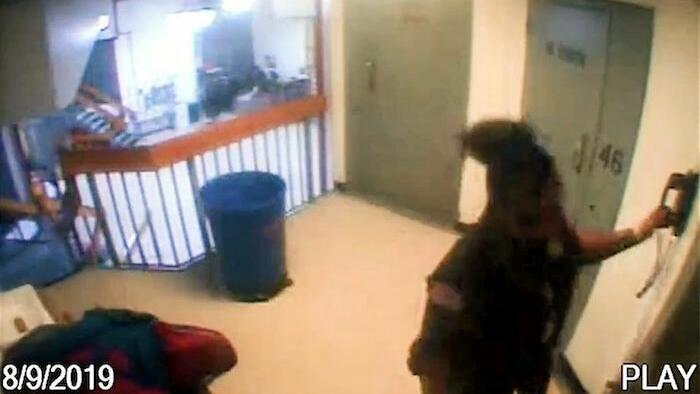
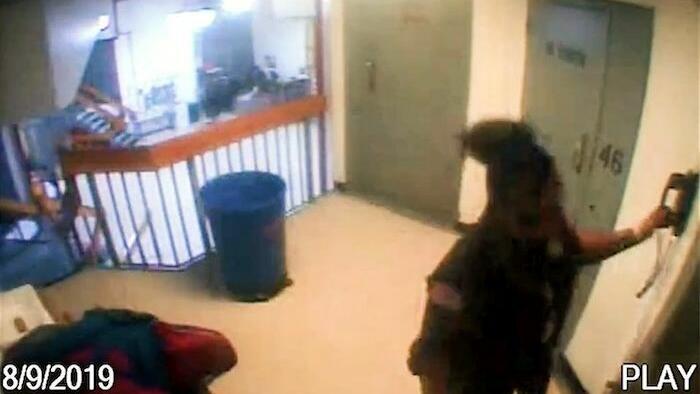
The narrative surrounding Epstein’s final hours has long been clouded by grainy security camera footage that captured an unidentified "orange figure" near his cell. This figure, observed at approximately 10:40 p.m. on the night before his death, was seen carrying linen or inmate clothing. An internal FBI briefing contained within the recently released files now definitively concludes that Noel was "most likely" this unidentified orange figure, making these documents the first official record to connect a specific name to the image.
Investigators determined that Epstein ultimately used strips of orange fabric to hang himself, a detail that lends profound significance to the FBI’s identification of Noel carrying "linen or inmate clothing" in that critical timeframe. The federal agents documented, "At approximately 10:40 pm, a correctional officer, believed to be Tova Noel, carried linen or inmate clothing up to the L-Tier, last time any correctional officer approached the only entrance to the SHU tier."
However, Noel, in her sworn testimony, offered a conflicting account. Having worked consecutive shifts that day, she stated she last observed Epstein alive "somewhere around after 10" that evening. Crucially, she maintained that she "never gave out linen, ever" or clothing to inmates, asserting that such distributions occurred during earlier shifts. This direct contradiction between the FBI’s forensic assessment of the video footage and Noel’s sworn testimony deepens the mystery and raises questions about her veracity. She also stated she could not explain why Epstein possessed additional bedding in his cell, despite the FBI identifying her as potentially providing it.
Further complicating the events of that night, Noel noted that Michael Thomas, the other officer on duty, was reportedly asleep from 10 p.m. until midnight. This detail, combined with facility protocols prohibiting staff members from entering the cell area without accompaniment, underscores the critical lapse in security and oversight during Epstein’s final hours.
Systemic Failures at the Metropolitan Correctional Center
Noel’s actions and statements also shed light on broader, systemic failures within the Metropolitan Correctional Center, a facility that has since gained notoriety for its operational deficiencies and was ultimately closed in 2021. Noel openly admitted during her questioning that the failure to conduct proper monitoring was widespread at the Manhattan detention facility. "I’ve never worked in the Special Housing Unit and actually done rounds every 30 minutes," she informed investigators, suggesting that the fabricated logs were part of a larger, ingrained culture of non-compliance.
Both Noel and Michael Thomas were initially accused by authorities of fabricating logs claiming they had conducted the required welfare checks on Epstein throughout the overnight hours leading up to his August 10, 2019, death. Both guards lost their jobs, and criminal charges were filed against them for falsifying records. However, prosecutors eventually dismissed these criminal charges in 2021, a decision that drew criticism from Epstein’s victims and public transparency advocates, who argued that accountability for the catastrophic failure of oversight was insufficient. The dismissal of charges, while not exonerating the officers of their duties, left many questions unanswered regarding the institutional failures that allowed Epstein’s death to occur in federal custody.
An Inspector General report from 2023 had previously described the "orange figure" only as "unidentified correctional officers," underscoring the significance of these newly released FBI documents in providing a specific name and direct link to the events preceding Epstein’s death. The MCC, designed for high-security inmates, had faced years of scrutiny for overcrowding, understaffing, and lax security protocols, making it a fertile ground for the type of oversight failures that characterized Epstein’s final detention.
Timeline of Critical Events
To provide a clearer picture of the unfolding events and the new revelations, a chronological overview is essential:
- April 2018: The first of 12 documented cash deposits into Tova Noel’s bank account begins.
- December 2018: Available bank records document the start of seven separate cash deposits amounting to $11,880 into Noel’s account.
- July 7, 2019: Tova Noel is assigned to the Special Housing Unit (SHU) where Jeffrey Epstein is held.
- July 30, 2019: A $5,000 cash deposit, the largest single transaction, is made into Noel’s account, just 11 days before Epstein’s death.
- August 9, 2019, 10:40 p.m.: A correctional officer, now believed by the FBI to be Tova Noel, is captured on grainy security footage carrying linen or inmate clothing near Epstein’s cell.
- August 9, 2019, 10:00 p.m. – Midnight: Michael Thomas, the other officer on duty, is reportedly asleep, a critical lapse in monitoring.
- August 10, 2019, 5:42 a.m.: Tova Noel conducts her first internet search for "latest on Epstein in jail."
- August 10, 2019, 5:52 a.m.: Noel repeats the internet search.
- August 10, 2019, 6:30 a.m.: Jeffrey Epstein is discovered hanging in his cell by Michael Thomas.
- November 2019: Chase Bank submits a "suspicious activity report" to the FBI regarding the cash transactions in Noel’s account.
- 2021: Tova Noel is questioned under oath by Justice Department officials, where she denies remembering the internet searches and denies ever distributing linen. Criminal charges against her and Thomas are dismissed.
- Summer 2023: The FBI footage showing the "orange figure" is made public.
- Recently: New Justice Department documents are released, explicitly identifying Noel as the likely "orange figure," detailing her internet searches, and the suspicious cash deposits.
Implications and Lingering Questions
The newly released Justice Department documents do not offer definitive answers to the overarching question of how Jeffrey Epstein died while under federal custody, but they undoubtedly deepen the existing skepticism and fuel further questions. The confluence of Noel’s internet searches minutes before the discovery of the body, the unexplained cash deposits, and her conflicting account regarding the "orange figure" carrying linen directly challenges the narrative of a mere oversight and incompetence, introducing elements of potential impropriety.
The lack of questioning by DOJ interviewers regarding the substantial cash deposits into Noel’s account remains a significant investigative gap. This omission suggests either an incomplete inquiry or a deliberate decision to bypass a potentially critical line of investigation that could have shed further light on the circumstances surrounding Epstein’s death.
Noel’s direct denial of any role in Epstein’s death – "no" – when questioned by investigators, stands against a backdrop of compelling circumstantial evidence pointing to her compromised position and duties. Her legal representatives have offered no comment on these latest revelations.
The broader impact of these findings extends beyond Noel herself. They highlight persistent issues within the Bureau of Prisons, the effectiveness of internal investigations, and the accountability mechanisms for correctional staff. The public’s trust in the federal justice system, already strained by the Epstein case, is further eroded by these revelations, which suggest a pattern of negligence, if not something more sinister.
Furthermore, Noel currently faces a separate civil lawsuit in Westchester County Supreme Court, alleging assault while employed as a medical office assistant at Montefiore Einstein Advanced Care. While unrelated to the Epstein case, this legal challenge contributes to a profile of an individual with ongoing legal entanglements and questions surrounding her professional conduct.
The new documents ensure that the saga of Jeffrey Epstein’s death will continue to be a subject of intense scrutiny, leaving the public to ponder the true extent of the failures, and whether all relevant facts have truly come to light. The revelations surrounding Tova Noel’s conduct, particularly the proximity of her internet searches to the discovery of Epstein’s body and the unexplained financial transactions, will undoubtedly reignite calls for renewed investigations and greater transparency into one of the most controversial deaths in modern American legal history.