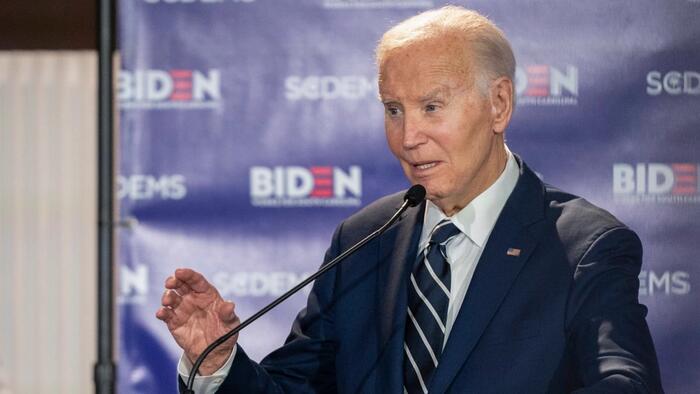

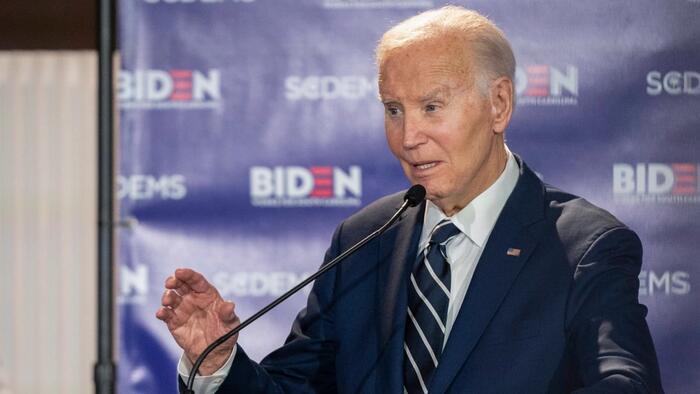
A recent commentary has drawn attention to statements attributed to President Joe Biden, particularly focusing on his administration’s record concerning border security and economic management. The commentary, which presents a narrative of Biden as a "former president" who "left the White House" and was "supplanted as the primary candidate for the 2024 elections," cites a speech reportedly delivered at a South Carolina Democratic Party event in Columbia. In this speech, President Biden reportedly asserted specific achievements, prompting calls for a detailed fact-check against official data and historical context regarding his actual term in office. This analysis aims to dissect these claims, providing a factual basis for understanding the complex issues surrounding U.S. border policy and economic trends from the end of the Trump administration through President Biden’s current tenure.
President Biden’s Assertions and Their Context
During the aforementioned speech, President Biden reportedly made two primary claims that have garnered significant scrutiny. First, addressing border security, he stated: "Despite the fact that Covid drove migration to record levels all around the world, the day I left office, border crossings in the United States were lower than the day that I entered the office I inherited from Trump. That’s just a fact." Second, regarding the economy, he asserted that he left his predecessor with the "strongest economy in the world" when he exited office. These statements, presented within a narrative suggesting his presidency had concluded, diverge significantly from the current political reality where President Biden is the incumbent seeking re-election. Therefore, a factual examination must consider these claims against the actual timeline and data of his active presidency, from January 20, 2021, to the present.
Fact-Checking Border Security Claims: A Detailed Chronology
President Biden’s assertion about border crossings requires a thorough review of U.S. Customs and Border Protection (CBP) data. When President Biden took office on January 20, 2021, the U.S. southern border was operating under a different policy landscape than it would later experience.
The Trump Administration’s Legacy and Initial Biden Policies
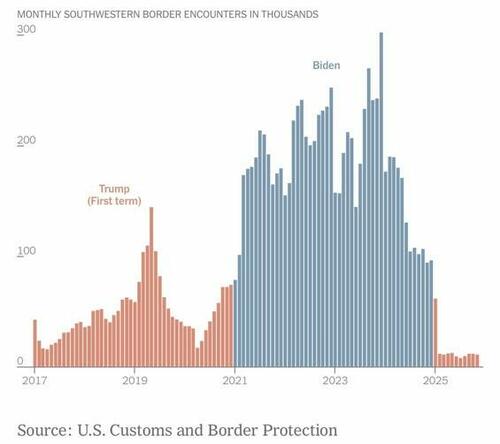
At the end of the Trump administration, policies like Title 42 of the Public Health Safety Act, implemented in March 2020 due to the COVID-19 pandemic, were in effect. Title 42 allowed border agents to rapidly expel migrants without offering them a chance to claim asylum, significantly reducing the processing time and acting as a deterrent for some. Additionally, the "Remain in Mexico" policy (Migrant Protection Protocols, MPP) required asylum seekers to wait in Mexico for their court hearings. In December 2020, the month before Biden’s inauguration, CBP reported approximately 73,994 encounters at the southwest border. This figure represented an increase from earlier in 2020 but was still lower than the peaks seen in mid-2019 under Trump.
Upon entering office, the Biden administration immediately began to unwind some Trump-era policies. It halted new enrollments in MPP and later sought to end the policy, though legal challenges led to its temporary reinstatement. The administration also adopted a more humanitarian approach to asylum processing. These shifts, coupled with ongoing regional instability, economic hardship in migrants’ home countries, and perceptions of more lenient U.S. immigration policies, contributed to a significant increase in border encounters.
The Surge in Border Crossings (2021-2022)
Following Biden’s inauguration, border encounters surged dramatically. By March 2021, monthly encounters surpassed 173,000, and by July 2021, they exceeded 213,000. This upward trend continued, with Fiscal Year (FY) 2022 recording an unprecedented 2.38 million encounters, the highest annual total on record. These figures directly contradict the narrative that border crossings were in decline or lower than at the start of his term during the majority of his presidency.
The claim that "Covid drove migration to record levels all around the world" is partially true regarding global migration trends, as the pandemic exacerbated economic and social distress in many countries. However, the specific explosion in U.S. border crossings under Biden was influenced by a confluence of factors beyond just COVID-19, including the policy changes, regional economic conditions, and the perception of altered enforcement priorities. Title 42, which the Biden administration initially kept in place for expulsions but later sought to end, was eventually lifted in May 2023. Its expiration was widely anticipated to trigger another surge, which it did to some extent, though not as dramatically as some predicted, partly due to new enforcement measures implemented concurrently.
The Role of State-Level Intervention: Operation Lone Star
While federal policies and international dynamics played a significant role, the assertion that a decline in crossings, if any, was not due to federal policy warrants examination of state-level actions. The original commentary points to Texas’s "Operation Lone Star" as a primary driver of any recent reduction in crossings. Launched in March 2021 by Governor Greg Abbott, Operation Lone Star deployed state National Guard troops and Department of Public Safety (DPS) officers to the border. The initiative involved building physical barriers, including razor wire and shipping container walls, and increasing arrests for state-level crimes.
Texas officials have claimed significant success, citing a 74% decline in crossings in areas covered by Operation Lone Star in early 2024. For instance, according to Texas DPS, encounters in the El Paso sector dropped from a peak of nearly 50,000 in December 2022 to under 10,000 in January 2024, attributed in part to state efforts. However, federal authorities and immigration advocates have often criticized these state actions, arguing they interfere with federal immigration enforcement and raise humanitarian concerns. Legal battles, including Supreme Court interventions regarding the removal of razor wire, highlight the ongoing tension between state and federal authority over border management. While state actions may have had localized impacts, attributing broad national trends solely to them without acknowledging federal policy shifts or broader migratory patterns would be an oversimplification.
Recent Trends and the CBP One Application
More recently, particularly in the latter half of 2023 and early 2024, CBP data has shown a notable decrease in overall southwest border encounters after peaks in late 2023. For example, after reaching approximately 302,000 encounters in December 2023 (a new monthly record), figures dropped to around 124,000 in January 2024 and approximately 189,000 in February 2024. This decline is attributed by federal officials to a combination of increased enforcement efforts, expanded legal pathways for asylum (such as the CBP One mobile application), and enhanced cooperation with Mexico.
The CBP One app, introduced in January 2023, allows migrants to schedule appointments at ports of entry to present their asylum claims, aiming to streamline processing and reduce irregular crossings between ports. While initially controversial, the app has become a key tool for the administration to manage migrant flows. The claim in the original commentary that the "shut down of the Democrat’s CBP One mobile application" was crucial for reducing crossings is factually incorrect; the app remains operational and is integral to the current strategy.
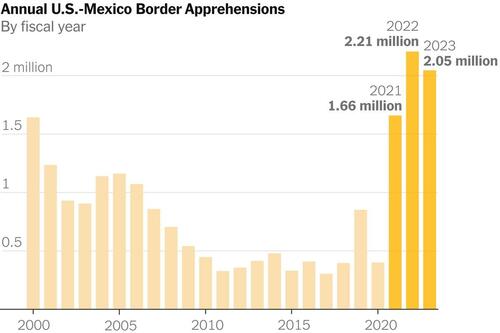
Therefore, President Biden’s claim that "the day I left office, border crossings… were lower than the day that I entered" does not align with the historical data of his actual presidency, which has seen unprecedented highs in border encounters for the majority of his term, with only recent, specific periods showing significant declines influenced by a mix of federal and state actions. The assertion that "migrant camps in Mexican towns just across the southern border disappeared" and implied that this disproved migrants’ claims of "fleeing poverty, war and persecution" lacks supporting evidence. The dynamic nature of migration means camps can disperse for various reasons, including changes in U.S. policy, increased Mexican enforcement, or shifts in cartel control, without necessarily invalidating the underlying drivers of migration.
Fact-Checking Economic Claims: "Strongest Economy in the World"
President Biden’s assertion that he "left Trump with the ‘strongest economy in the world’" when he exited office presents another significant area for fact-checking. This claim directly contradicts the timeline of his actual presidency and the economic conditions he inherited and subsequently managed.
Economic Inheritance from the Trump Administration
When President Biden took office in January 2021, the U.S. economy was in the midst of recovering from the severe shock of the COVID-19 pandemic. While the Trump administration oversaw a period of sustained economic growth and low unemployment prior to the pandemic, the global health crisis triggered a sharp recession in early 2020. By the end of 2020, significant recovery had occurred due to massive fiscal stimulus (e.g., CARES Act) and the initial rollout of vaccines, but the economy was still grappling with elevated unemployment and disruptions.
In the fourth quarter of 2020, real Gross Domestic Product (GDP) grew at an annualized rate of 4.3%. The unemployment rate stood at 6.3% in January 2021, down from a peak of 14.7% in April 2020 but still considerably higher than the pre-pandemic low of 3.5%. Inflation, as measured by the Consumer Price Index (CPI), was relatively low, at 1.4% year-over-year in December 2020. The economy was on a path to recovery, but it was not without significant challenges, and certainly not "the strongest in the world" in the context of global economic comparisons post-pandemic.
Economic Performance During the Biden Administration
Under President Biden’s tenure, the U.S. economy has experienced robust job growth, historically low unemployment rates, and significant GDP expansion, but also a surge in inflation.
- Job Growth and Unemployment: The economy added millions of jobs, bringing the unemployment rate down to a 50-year low of 3.4% in early 2023 and sustaining rates below 4% for an extended period, reflecting a tight labor market.
- GDP Growth: The U.S. economy demonstrated resilience, with strong GDP growth in various quarters, notably 4.9% annualized in Q3 2023 and 3.4% in Q4 2023, surpassing expectations and outperforming many other major developed economies.
- Inflation: A major challenge was the significant rise in inflation, peaking at 9.1% year-over-year in June 2022. This was attributed to a combination of strong consumer demand fueled by fiscal stimulus, supply chain disruptions, and the war in Ukraine. While inflation has since moderated, it remained above the Federal Reserve’s 2% target for much of his term.
- Wages: Wage growth also increased, though often lagging behind inflation for a period, eroding purchasing power for many households.
Therefore, the claim that President Biden "left Trump with the strongest economy in the world" is a reversal of the actual chronology and the economic conditions. President Biden inherited an economy recovering from a pandemic-induced recession and has overseen its continued growth and job creation, alongside battles with inflation.
Chronology of Key Events and Policy Shifts (2020-Present)
Understanding the context of these claims requires a clear timeline of events:
- March 2020: Trump administration implements Title 42 border policy due to COVID-19.
- November 2020: Joe Biden wins the presidential election.
- January 2021: Joe Biden inaugurated as 46th President. His administration begins reviewing and eventually unwinding "Remain in Mexico" policy. Border encounters begin to rise.
- March 2021: Texas launches "Operation Lone Star."
- FY 2021 (Oct 2020 – Sep 2021): CBP records over 1.7 million encounters at the southwest border.
- FY 2022 (Oct 2021 – Sep 2022): CBP records over 2.38 million encounters, an all-time high.
- January 2023: Biden administration launches CBP One mobile application for asylum processing.
- May 2023: Title 42 officially expires. The administration implements new asylum restrictions and expanded legal pathways. Initial post-Title 42 surge is smaller than anticipated.
- December 2023: Monthly border encounters peak again at over 302,000.
- January-February 2024: Significant drop in monthly border encounters following increased federal and Mexican enforcement. Texas continues legal battles over its border initiatives.
Official Responses and Perspectives
The White House and Department of Homeland Security (DHS) have consistently framed their border management strategy as a comprehensive approach involving increased enforcement, expanded legal pathways, and regional partnerships. They acknowledge the challenges posed by record global migration but emphasize efforts to create a more orderly and humane process, contrasting it with previous policies. They often highlight the decrease in irregular crossings after the implementation of new policies post-Title 42 expiration and attribute it to their strategy, not solely to state actions.
Texas state officials, led by Governor Abbott, maintain that federal inaction necessitated Operation Lone Star. They argue that their measures, including physical barriers and increased arrests, are essential to protect the state from what they term an "invasion" and to deter illegal crossings where federal authorities have allegedly failed. These differing perspectives underscore the ongoing federal-state conflict over immigration policy and enforcement.
Economically, the Biden administration has touted its record on job creation, unemployment, and investment in infrastructure and clean energy as evidence of a strong and growing economy, often contrasting it with what they describe as inherited challenges. Critics, however, frequently point to the inflation spike as a significant negative outcome, arguing that administration spending policies contributed to rising prices.
Broader Impact and Implications
The debate over border security and economic performance carries significant implications for the upcoming 2024 presidential election. Public perception of these issues heavily influences voter sentiment.
- Political Implications: The narrative surrounding border security is a central theme in Republican campaigns, which frequently criticize the Biden administration’s handling of the issue. The administration, in turn, defends its policies while also seeking bipartisan solutions, often blaming congressional inaction for the lack of comprehensive reform.
- Economic Implications: The health of the economy, particularly inflation and job prospects, remains a top concern for voters. The administration’s ability to demonstrate continued economic stability and manage inflation will be crucial.
- Social and Humanitarian Impact: The sustained high levels of migration have placed immense strain on border communities and urban centers receiving migrants. There are ongoing humanitarian concerns regarding migrant welfare, as well as debates about the integration of new arrivals into society and the strain on social services.
- Federal-State Relations: The heightened tension between the federal government and states like Texas over border control highlights fundamental questions about constitutional authority and the division of powers in immigration enforcement, leading to ongoing legal and political confrontations.
In conclusion, President Biden’s reported statements regarding border crossings and economic conditions, particularly within the context of his "leaving office," do not align with the verifiable data and the actual chronology of his presidency. While the U.S. economy has shown considerable resilience and growth under his administration, it was inherited during a recovery phase, not "left" by him as "the strongest in the world." Similarly, border encounters experienced unprecedented highs for much of his term, with recent declines influenced by a combination of federal policy adjustments and significant state-level interventions, rather than a continuous downward trend since his inauguration. The public discourse surrounding these issues remains highly charged, emphasizing the need for factual accuracy in evaluating the performance of any administration.