
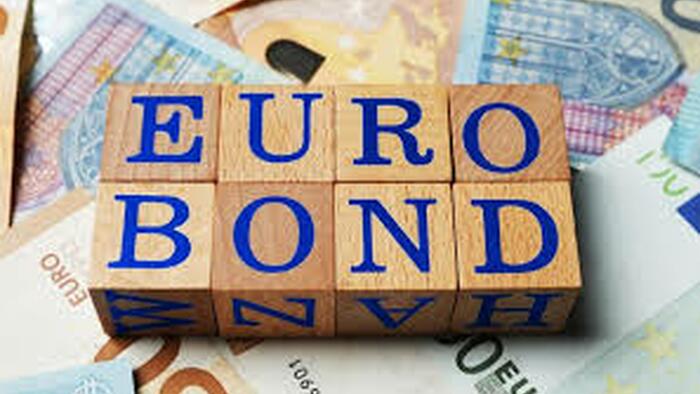

The European Taxpayers’ Association (TAE) has issued a significant warning against the burgeoning trajectory of joint European debt issuance, commonly known as Eurobonds, and the European Commission’s increasing assertion of fiscal powers. This intervention challenges the long-standing perception of Eurobonds as a distant possibility, suggesting that plans for standardized EU bond issuances might be more advanced than widely recognized, prompting critics of Brussels’ central authority to reconsider their previous dismissals.
The European Taxpayers’ Association: A Critical Voice
The TAE, an umbrella organization representing national European taxpayers’ associations, operates as an independent, market-liberal private law foundation. Its stated mission is to serve as a critical observer of the fiscal "power plays" emanating from Brussels. When the TAE speaks out decisively on complex fiscal matters, particularly those touching upon the core principles of national sovereignty and budgetary discipline, it typically does so with a well-researched rationale and a clear intention to influence public debate and policy direction.
In response to what it perceives as an accelerating push towards fiscal centralization, the TAE has launched a dedicated campaign titled "Stop EU Taxes. Stop EU Debt." This initiative outlines a fiscal policy agenda that aligns closely with the tenets of economically liberal parties across Europe, advocating for a return to or preservation of national control over budgetary affairs. The campaign fundamentally warns against what the TAE identifies as a critical deficit in the European Commission’s democratic mandate, expressing concern that Brussels’ powerful central body is systematically arrogating ever more tax and spending powers. This, the TAE argues, risks transforming the European Union into a "state above the states," eroding the foundational principle of national fiscal autonomy.
From this perspective, the advocates for European taxpayers derive their unequivocal demand: "There must be no joint debt issuance within the EU." This stance is firmly rooted in the subsidiarity principle, consistently championed by its largest member organization, the German Taxpayers’ Association. Subsidiarity, a cornerstone of EU governance, dictates that decisions should be taken at the lowest possible level of government, closest to the citizens, unless higher-level action is more effective. For the TAE, budgetary policy is unequivocally a national matter, best managed and accounted for within the national capitals.
The Evolution of EU Fiscal Integration and the Eurobond Debate
The debate surrounding joint European debt has a long and contentious history, resurfacing periodically in response to economic crises. Early proposals for some form of common debt date back decades, notably the Mascart Plan in the 1970s and subsequent discussions during the Delors Commission era in the late 1980s. However, these ideas largely remained conceptual, facing strong resistance from member states wary of assuming financial responsibility for others’ debts.
The global financial crisis of 2008 and the subsequent eurozone sovereign debt crisis that began in 2010 brought the concept of Eurobonds back to the forefront. Proponents, including figures like then-ECB President Mario Draghi and various economists, argued that common bonds could provide a safe asset for the eurozone, deepen capital markets, reduce borrowing costs for weaker economies, and facilitate a more robust and unified response to economic shocks. They contended that a common bond market would enhance the euro’s international standing and foster greater financial integration.
However, these proposals faced staunch opposition, particularly from fiscally conservative northern European states like Germany and the Netherlands. Critics primarily raised concerns about "moral hazard," arguing that joint debt would disincentivize individual member states from maintaining strict fiscal discipline, as they could rely on the collective guarantee of the Union. They also feared the creation of a "transfer union," where wealthier nations would perpetually subsidize less disciplined ones, and viewed it as an unacceptable erosion of national sovereignty over budgetary policy. Instead, instruments like the European Stability Mechanism (ESM) were established to provide conditional financial assistance to member states in acute crisis, explicitly avoiding generalized joint debt issuance. The ESM, founded in 2012, has the capacity to issue bonds itself to raise funds for its lending operations, but its mandate is strictly focused on crisis resolution under stringent conditionality, not general debt mutualization.
COVID-19: The Catalyst for NextGenerationEU
The unprecedented economic shock of the COVID-19 pandemic in 2020 served as a pivotal moment, shifting the long-standing deadlock on joint debt. Faced with a continent-wide crisis requiring a swift and massive response, the European Commission, under Ursula von der Leyen, embraced the motto: "Never let a crisis go to waste." This sentiment paved the way for the creation of NextGenerationEU (NGEU), an ambitious recovery instrument that marked a significant departure from previous EU fiscal policies.
Launched in July 2020, NGEU represented the first true large-scale joint European bond issuance. The European Commission was authorized to raise approximately €800 billion (in 2018 prices) on the capital markets, primarily through the issuance of long-term bonds. These funds were then distributed to member states in the form of grants and loans to support reforms and investments aimed at making their economies more resilient and sustainable. The repayment of these bonds is backed by the EU budget, meaning ultimately by future contributions from member states or new EU own resources. Germany, with its robust economy and strong credit rating (a national debt of around 65% of GDP at the time of NGEU’s conception, compared to the eurozone average of over 90%), effectively acted as the main rating anchor, providing credibility and stability to these new European instruments in the capital markets.
The TAE and other critics argue that NGEU, despite its stated purpose of crisis recovery, constitutes a "great original sin" – a political innovation born out of an emergency that fundamentally altered the EU’s fiscal landscape. They contend that this move initiated a "slow, erosive process" whereby the EU is increasingly penetrating capital markets, always implicitly or explicitly backed by the guarantees of major economies and, ultimately, European taxpayers.
Beyond NGEU, other crisis financing instruments have also been established or expanded. The aforementioned European Stability Mechanism (ESM) remains a critical tool for intervention in acute sovereign debt crises, issuing its own bonds. Similarly, the SURE (Support to mitigate Unemployment Risks in an Emergency) instrument, set up during the pandemic to mitigate regional unemployment, also involved the issuance of bonds by the EU, channeling financial assistance to member states for short-time work schemes. While distinct from NGEU in their specific mandates, these instruments collectively illustrate the EU’s growing role as a significant player in the capital markets.
The Intersection of Ideology and Debt: EU Green Bonds
A particularly vivid example of this evolving trend, as highlighted by the TAE, is the issuance of EU Green Bonds. These bonds are specifically designed to finance investments related to the European Green Deal and the EU’s climate objectives. While proponents laud them as a vital tool for mobilizing capital for sustainable transition, critics like the TAE view them with deep skepticism.
The TAE argues that in the case of Green Bonds, the ideology of the "green transformation" has merged with the practical implementation of joint debt issuance, creating a mechanism that directs capital into what they term a "green crony economy." This, they contend, has already heavily damaged the overall economic structure by distorting market incentives. The concern is that government- or institution-guaranteed minimum returns for certain "green" investments, often exceeding market rates and perceived as risk-free, attract productive private capital away from other potentially more efficient or innovative sectors. This phenomenon, they suggest, can be observed across nearly all levels of European economic policy under the ambitious program name Green Deal, establishing a massive redistribution mechanism that inadvertently stifles broader productive forces.
Economic Implications and the Subsidiarity Principle Under Strain
The TAE’s warning extends to the practical economic consequences of this expanding fiscal centralization. The association points to the allocation of NGEU funds, noting that large portions of the borrowed debt were immediately funneled into the public budgets of member states like Italy and Spain. The stated purpose was to mitigate precarious national fiscal conditions and stimulate recovery. However, critics argue this effectively masked national budgetary challenges rather than fostering structural reforms.
Spain, for instance, is cited as a clear example where President Pedro Sánchez’s socialist government has financed significant portions of its state budget through these programs, enabling substantial public sector employment growth. This, according to the TAE, mirrors a concerning trend observed in other EU states, including Germany, where labor markets appear to be shifting from a struggling private sector towards an expanding public sector. The public sector, in this view, acts as a final safety net for a gradually eroding middle class, but at the cost of long-term economic dynamism.
From a market-liberal perspective, this European statism is considered a costly and economically disastrous project. The influx of public funds, particularly through debt, can crowd out private investment, making credit access increasingly difficult for small and medium-sized businesses (SMEs) as fewer funds are available in the private capital market. This "draining" of the capital market by the public sector stifles entrepreneurial activity and innovation, ultimately hindering overall economic growth.
The TAE firmly adheres to the subsidiarity principle, asserting that budgetary policy remains a national prerogative. They argue that the significant budget deficits recorded by key EU pillars like Germany and France – both projected to exceed five percent this year – are intrinsically national problems. These issues, they contend, must be resolved within the national capitals through domestic fiscal responsibility, rather than being mutualized or indirectly funded through EU-level debt. The core argument is that it is unacceptable to distribute money to the public with one hand while simultaneously taking it from European taxpayers with the other through higher taxes or future debt, potentially exacerbated by inflation.
Excessive centralization of political power, in the TAE’s view, inherently leads to inefficiencies, opacity, and the potential for corruption and systematic mismanagement by an increasingly powerful central apparatus. Such a system, they warn, may eventually lose the capacity to effectively control the flow of its own funds, creating a disconnect between decision-making and accountability.
Future Trajectories and Broader Political Debates
The TAE does not explicitly state it, but their analysis strongly implies that if the EU Commission, particularly under its current leadership, continues to expand its fiscal powers unchecked, this path could accelerate Europe into an "economic third-class status." This dire prediction underscores the profound concerns about the long-term competitiveness and financial stability of the Union under a more centralized fiscal regime.
Historically, major crises have indeed offered Brussels opportunities to expand and consolidate its fiscal power. From the aftermath of the Dotcom bubble a quarter-century ago to the sovereign debt crisis of fifteen years ago (which critics argue was largely "drowned" in fiat credit by former ECB President Mario Draghi), each event eventually contributed to the conditions that culminated in the first large-scale European joint bond, NextGenerationEU.
The TAE views NGEU as the foundational step in a potentially irreversible process. With the European response patterns to crises in mind, they suggest that any looming EU sovereign debt crisis will inevitably be leveraged to further advance the Eurobond project. This, they predict, will spawn additional "political innovations" that could reshape the very fabric of European society and economy.
Among these potential future developments, critics anticipate the introduction of a digital euro, which some fear could be designed not merely as a modern payment instrument but also as a tool for capital flow control, potentially preventing capital flight or enforcing specific economic policies. Alongside this, concerns are raised about the implementation of a digital identity system, which some fear could be used for broader monitoring, including public discourse. Furthermore, plans for a minimum tax regime across the EU are seen by the TAE as an attempt to finally eliminate tax competition among member states, which they view as a vital mechanism for fiscal discipline and economic dynamism.
From the perspective of the European Taxpayers’ Association, these developments cumulatively point towards the emergence of a highly centralized "hyperstate" in Brussels. This envisioned entity, they warn, risks producing little more than escalating debt, pervasive behavioral control over citizens and businesses, and persistent inflationary pressures, ultimately undermining the individual’s right to self-determination and national sovereignty. The TAE’s recent warning thus serves as a critical alarm bell, urging a re-evaluation of the EU’s fiscal trajectory and a robust defense of subsidiarity and national budgetary autonomy.