
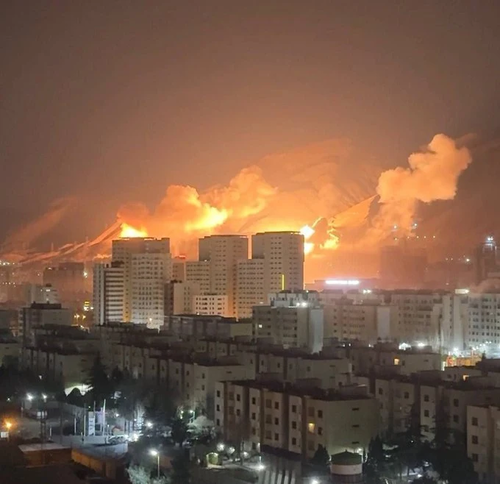

On the third day of ‘Operation Epic Fury,’ Americans awoke to a stark reality as images of US fighter jets crashing over Kuwait circulated, accompanied by the rare and disquieting sight of pilots parachuting with expressions of disbelief. The incidents, confirmed by US Central Command (CENTCOM) following a statement from the Kuwaiti government, involved three U.S. F-15E Strike Eagles, which went down at 11:03 p.m. ET on March 1, 2026. CENTCOM attributed the loss to an "apparent friendly fire incident" involving Kuwaiti air defenses. This explanation, however, immediately faced scrutiny, particularly as Iran swiftly claimed responsibility for shooting down at least one US F-15 fighter jet, adding a layer of complexity and contention to an already volatile situation.
The Kuwaiti Incident: Conflicting Narratives
The loss of three advanced F-15E Strike Eagles in a single event marks a significant setback for ‘Operation Epic Fury,’ raising immediate questions about operational coordination and the inherent risks of modern warfare. CENTCOM’s fuller narrative stated, "During active combat—that included attacks from Iranian aircraft, ballistic missiles, and drones—the U.S. Air Force fighter jets were mistakenly shot down by Kuwaiti air defenses. All six aircrew ejected safely, have been safely recovered, and are in stable condition. Kuwait has acknowledged this incident, and we are grateful for the efforts of the Kuwaiti defense forces and their support in this ongoing operation."
While the safe recovery of all six aircrew provided a measure of relief, the "friendly fire" explanation sparked intense debate. The F-15E Strike Eagle is a highly sophisticated, all-weather multirole fighter designed for air-to-air and air-to-ground missions, equipped with advanced identification friend or foe (IFF) systems. The failure of such systems or severe breakdowns in communication that would lead to allied forces targeting these aircraft are exceptionally rare and point to profound systemic issues amidst the chaos of combat. Military analysts suggest that such incidents often arise from a confluence of factors, including congested airspaces, rapid engagement timelines, misidentification in high-stress environments, or technical malfunctions.
Iran, through its state news agency TASNIM, quickly seized on the opportunity to offer a contrasting narrative, asserting that its forces had successfully downed at least one US F-15. This claim, if substantiated, would represent a significant propaganda victory for Tehran and a severe blow to US air superiority, fundamentally altering the perception of Iranian capabilities. The discrepancy between the US/Kuwaiti "friendly fire" explanation and Iran’s "shoot down" claim further obscures the truth in the thick "fog of war," making it challenging for international observers to ascertain the precise circumstances of the crashes. This narrative battle itself becomes a crucial front in the broader conflict.
Operation Epic Fury: Origins and Objectives
‘Operation Epic Fury’ was launched with the stated objective of regime change in Iran, a highly ambitious and controversial undertaking ordered by President Donald Trump. This operation follows years of heightened tensions between Washington and Tehran, exacerbated by the US withdrawal from the Joint Comprehensive Plan of Action (JCPOA), the imposition of crippling sanctions, and a series of provocative incidents in the Gulf region. The Trump administration had long pursued a "maximum pressure" campaign against Iran, aiming to curb its nuclear ambitions, ballistic missile program, and support for regional proxies. However, the shift from economic and diplomatic pressure to direct military intervention for regime change marked a dramatic escalation that many foreign policy experts had warned against.
Critics of the operation pointed to President Trump’s campaign rhetoric, where he often vowed to end "regime-change wars" and challenge neoconservative foreign policy doctrines. His decision to launch ‘Operation Epic Fury’ appeared to contradict these earlier promises, drawing parallels to the 2003 Iraq War, which also began with undefined objectives and an optimistic timeline that proved wildly inaccurate. Just days before the operation’s full-scale escalation, Trump had reportedly expressed willingness to talk with Tehran, telling The Atlantic that "They want to talk, and I have agreed to talk, so I will be talking to them." However, this diplomatic overture quickly evaporated, replaced by aggressive military action, leading many to believe that the "Iranian genie is out of the bottle" or, as some termed it, "Pandora’s Box Persian-style," potentially eclipsing the complexities and costs of the Iraq conflict.
Expanding Conflict: Regional Fronts and Targets
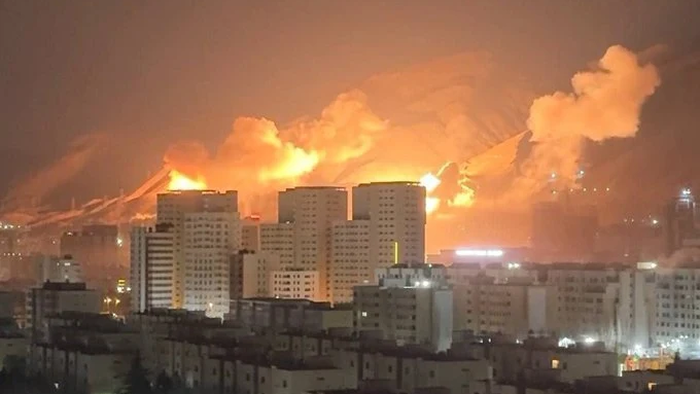
The conflict has rapidly metastasized beyond initial expectations, engulfing the wider Middle East. Iran’s response to ‘Operation Epic Fury’ has been robust and sustained, utilizing its significant arsenal of ballistic missiles and drones to target US interests, allied nations, and key infrastructure across the region.
- Israel: A major Iranian warhead struck a town near Jerusalem, resulting in at least 9 civilian deaths and dozens wounded. This direct targeting of Israeli population centers represents a severe escalation, pushing the conflict into a perilous new phase. Israel, a steadfast US ally, has responded by intensifying its pounding of southern Lebanon and Beirut, following the entry of Hezbollah into the war. Hezbollah, a powerful Iranian-backed proxy, poses a significant threat to Israel’s northern border, opening a dangerous new front.
- Gulf Nations: Major international airports in the Gulf, particularly in the UAE, have been hit by Iranian missiles and drones. US military bases across the Gulf, including those in Kuwait, Qatar, Bahrain, and the UAE, have been under sustained attack. These assaults have resulted in casualties among Gulf nations’ defense forces and have disrupted critical civilian infrastructure, underscoring the broad reach of Iran’s retaliatory capabilities.
- European and British-US Bases: Even British-US bases on Cyprus, far from the immediate Iranian border, have come under drone attack, demonstrating Iran’s willingness and capability to strike at a broader array of targets and indicating the widening geographical scope of the conflict. European bases in the region have also reported coming under fire.
- Northern Iraq: American bases in northern Iraq, a historically contested region, have been heavily targeted in Iran’s retaliation waves. These attacks, often involving ballistic missiles and armed drones, highlight the precarious position of US forces stationed in countries bordering Iran.
The sustained nature of these attacks, particularly against Israel, raises critical questions about the long-term sustainability of the conflict and the respective arsenals of the belligerents. The question of "which side will have the missile and firepower arsenal to outlast the other" looms large as the financial costs are projected to rapidly escalate into billions.
Rising Toll: Casualty Figures and Human Cost
The human toll of ‘Operation Epic Fury’ has begun to mount, with official casualty figures confirmed by CENTCOM and reports from regional actors:
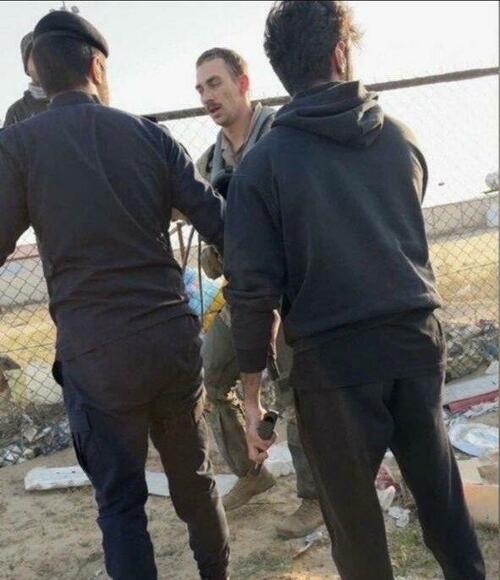
- United States: As of Monday morning, CENTCOM officially confirmed four American troops killed and five others seriously wounded in the operation. This figure, though initially low, is expected to climb as the conflict intensifies and more information becomes available. The F-15E incident, while not resulting in immediate fatalities for the aircrew, contributes to the overall attrition of valuable military assets.
- Israel: The direct Iranian ballistic missile impact near Jerusalem claimed at least 9 civilian lives and wounded dozens, creating a profound sense of insecurity and demonstrating Iran’s intent to inflict direct harm on Israeli society.
- Gulf Nations & European Allies: Unspecified but significant casualties have been reported among Gulf nations’ defense forces and personnel at European bases in the region, underscoring the broad impact of Iran’s retaliatory strikes.
- Iran: The US-led operation has reportedly "decimated" Iranian top leadership, with over 40 top officers confirmed killed. While this represents a severe blow to Iran’s military command structure, analysts caution that Iran possesses a deep bench of experienced personnel and is likely capable of rapidly filling these ranks, potentially with more hardline elements.
Beyond the immediate military and civilian casualties, the conflict carries the looming threat of a humanitarian crisis. Large-scale military operations inevitably lead to displacement, damage to critical infrastructure, and disruption of essential services, impacting millions of civilians across the region. The spread of war to the Israel-Hezbollah theater in Lebanon, as highlighted by political commentator Glenn Diesen, signals a "dangerous delusion" of escalation control, potentially leading to widespread suffering.
Washington’s Internal Discord: Pentagon Warnings and White House Narrative
Behind the scenes in Washington, deep "paranoia" and "anxiety" are reportedly gripping the Pentagon and national security council ranks. Military leaders are sounding the alarm about the potential for ‘Operation Epic Fury’ to spiral out of control, particularly if the conflict adheres to President Trump’s initial, optimistic timeline of "several more weeks."
Sources within the Pentagon, speaking anonymously to major news outlets like The Washington Post and CNN, revealed significant concerns:
- Resource Depletion: A prolonged, high-intensity conflict could "exhaust air-defense munitions and other limited-supply items," which are crucial not only for protecting US forces but also for safeguarding regional partners like Israel against Iranian retaliation. This depletion of stockpiles, particularly for advanced air defense systems such as Patriot or THAAD, could severely compromise US readiness for other potential future conflicts, notably with China.
- Military Strain: The operation is described as one that could "stretch the military thin" and leave forces "overtaxed," impacting troop morale, maintenance schedules, and overall operational effectiveness.
- Intelligence Discrepancy: Most critically, Pentagon briefers acknowledged to congressional staff that Iran had not been planning to strike US forces or bases in the Middle East unless Israel attacked Iran first. This directly undercut the administration’s public argument that the US chose to attack Iran preemptively due to an "imminent threat" of missile attacks against US bases. CNN had previously reported that there was "no intelligence to support the administration’s claim," further fueling internal dissent and raising questions about the casus belli.
These revelations suggest a significant disconnect between the White House’s public justification for the war and the intelligence assessments provided by the military establishment. Such internal discord can erode public trust, complicate military planning, and create political vulnerabilities for the administration.
Strategic Concerns: Resource Depletion and Global Implications
The warnings issued by General Dan Caine, Chairman of the Joint Chiefs of Staff, prior to the operation, now appear prescient. As reported by The Wall Street Journal and widely paraphrased, Caine had explicitly cautioned against a large-scale strike on Iran, outlining several critical risks:

- Significant American and Allied Casualties: A multi-day campaign carried a high risk of substantial losses.
- Exhaustion of Air-Defense Munitions: An intensive operation would deplete crucial air-defense systems and other limited-supply items.
- Impact on China Readiness: Depleting stockpiles in the Middle East would compromise US readiness for a potential future conflict with China, a primary strategic concern for the Pentagon.
- Military Overstretch: The campaign would "stretch the military thin" and leave forces "overtaxed," affecting global posture and response capabilities.
- Lack of Guarantees: Caine was unable to provide "high likelihood of success" reassurances for a major operation against Iran, unlike his confidence in the earlier (fictional) January 2026 mission to apprehend Nicolas Maduro.
These warnings underscore a broader geopolitical chessboard where the "Iran question is all about China." The US military’s strategic doctrine has increasingly focused on great power competition, particularly with China, and a prolonged engagement in the Middle East risks diverting critical resources, attention, and strategic capabilities away from this primary objective.
Economic Repercussions: Costs and Market Impact
Beyond the human cost and military strain, ‘Operation Epic Fury’ is quickly becoming an economic burden. The costs are projected to enter the billions, encompassing military expenditures, reconstruction efforts, and the broader impact on global markets. Iran’s economy, already brought to its knees by years of crippling sanctions that had seemingly pushed Tehran to the negotiating table in Geneva, now faces further devastation.
The conflict’s expansion to major international airports in the Gulf and attacks on vital shipping lanes, if sustained, threaten to disrupt global oil supplies and international trade, potentially leading to spikes in energy prices and broader economic instability. The long-term economic fallout for the region and the global economy could be severe, adding another layer of complexity to an already intractable conflict.
Uncertainty Ahead: The Elusive Endgame
President Trump’s initial assessment that the conflict would take "up to four weeks" now seems increasingly unrealistic, with many drawing parallels to the "years" that the Iraq War consumed. There is "no clear endgame" defined for ‘Operation Epic Fury,’ leaving observers and participants alike wondering about the ultimate objectives and exit strategy.
While the US operation has reportedly decimated Iran’s top military leadership, Iran’s ability to rapidly replenish these ranks and its continued demonstration of retaliatory capabilities suggest that a swift victory or capitulation is unlikely. The conflict has unleashed forces that appear to be spiraling beyond initial expectations, validating the warnings issued by military strategists and policy experts. As Glenn Greenwald succinctly summarized, the dream of Israeli Prime Minister Benjamin Netanyahu and American neoconservatives for a US-led regime-change war against Iran has "finally been realized," but at a rapidly escalating and unpredictable cost. The coming days and weeks will be crucial in determining whether ‘Operation Epic Fury’ can be contained or if it will indeed become a quagmire far more complex and costly than any previous engagement in the region.