
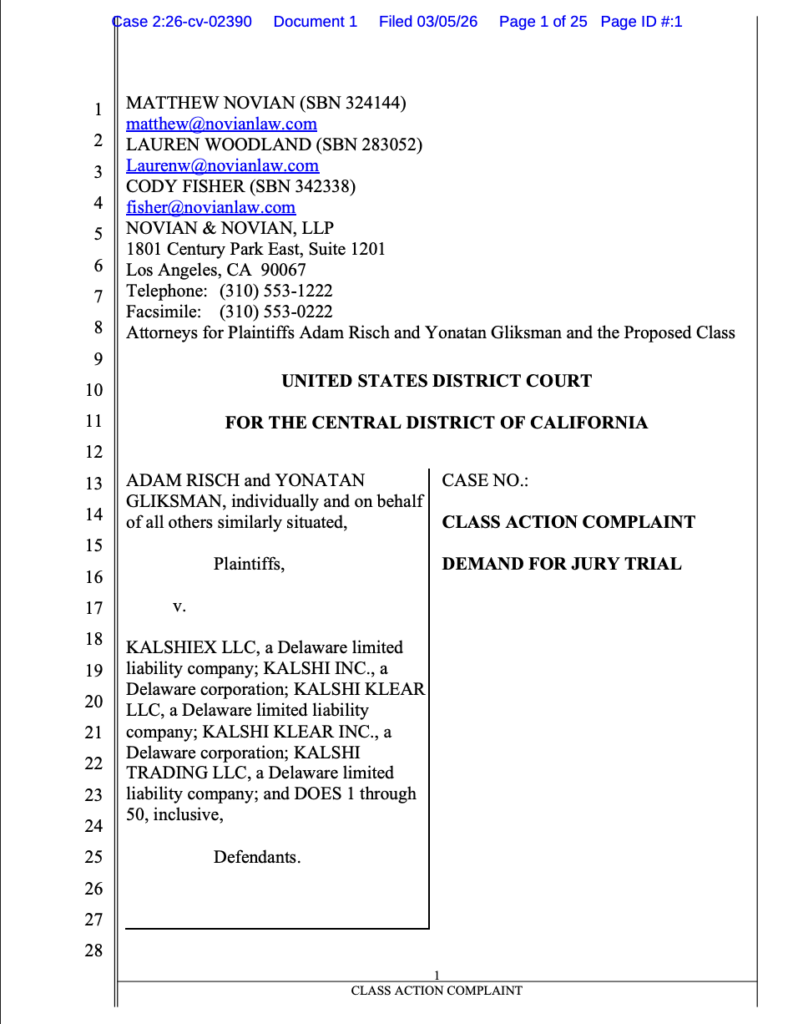

A class action lawsuit has been filed against the prediction market platform Kalshi, alleging deceptive practices and failure to properly disclose terms related to a market designed to predict the ouster of former Iranian Supreme Leader Ali Khamenei. The plaintiffs contend that a critical "death carveout" policy, which voided trades upon Khamenei’s death, was not clearly communicated to users, leading to financial losses and a breach of trust. This legal challenge comes as prediction markets experience a surge in popularity and volume, raising questions about transparency and user protection in this evolving financial landscape.
The Genesis of the Dispute: A Market on Khamenei’s Ouster
The controversy centers on a specific prediction market offered by Kalshi, titled "Ali Khamenei out as Supreme Leader." This market allowed users to bet on whether Khamenei would cease to be the Supreme Leader of Iran. The market’s resolution criteria, as initially understood by many participants, likely encompassed various scenarios of leadership change. However, unknown to many, Kalshi had an internal policy, termed a "death carveout," which stipulated that if the event of leadership change occurred due to the death of the individual, the market would not resolve as "yes." Instead, it would be voided, and trades would be settled based on the last traded price prior to the confirmation of death.
The plaintiffs argue that this policy was a significant departure from what a reasonable consumer would expect when engaging with a prediction market. They assert that this crucial detail was not prominently displayed or integrated into the user-facing rules summary, leaving many investors unaware of the potential for their winning trades to be invalidated. This lack of transparency, they claim, constitutes a deceptive business practice, especially given the sensitive nature of the event being predicted.
Allegations of Deception and Predatory Practices
The lawsuit, filed in the relevant jurisdiction, details the plaintiffs’ claims that Kalshi’s "death carveout" was not only undisclosed but also inherently predatory in the context of the Khamenei market. The plaintiffs’ legal filing emphasizes the geopolitical climate surrounding Iran and the age of its aging Supreme Leader. They argue that, with the considerable presence of an American naval armada in the region and a palpable sense of impending conflict, the most foreseeable and realistic pathway for Khamenei to "leave office" was through his death. Consumers, therefore, reasonably believed that a "yes" outcome on the market would reflect this eventuality, or other forms of ouster.
The lawsuit quotes the plaintiffs as stating: "With an American naval armada amassed on Iran’s doorstep and military conflict not merely foreseeable but widely anticipated, consumers understood that the most likely, and in many cases the only realistic, mechanism by which an 85-year-old autocratic leader would ‘leave office’ was through his death. Defendants understood this as well." This assertion suggests an intentional withholding of information by Kalshi, leveraging the predictable nature of the event for their own undisclosed policy.
The plaintiffs further characterize the carveout policy as "deceptive," "predatory," and an "unfair" business practice. They contend that Kalshi’s later acknowledgment of its disclosures being "grammatically ambiguous" further bolsters their claims of deliberate obfuscation.
The Confirmation of Khamenei’s Death and Kalshi’s Response
The situation escalated following the confirmed death of Ali Khamenei. As per Kalshi’s internal policy, the "Ali Khamenei out as Supreme Leader" market did not resolve to a "yes." Instead, Kalshi voided the open trading positions. This decision meant that investors who had bet on Khamenei’s ouster, anticipating a payout upon his death, found their trades invalidated.

Tarek Mansour, co-founder of Kalshi, publicly addressed the situation and the platform’s policy. He stated that Kalshi does not list markets directly tied to death and aims to prevent users from profiting from such events. Mansour explained, "We don’t list markets directly tied to death. When there are markets where potential outcomes involve death, we design the rules to prevent people from profiting from death." This statement, while asserting a moral stance, did little to appease the users who felt their investments were unfairly nullified.
Following the outcry and the subsequent lawsuit, Kalshi announced a reimbursement plan for users affected by the carveout policy. The reimbursements were to be calculated based on the "last traded price" for the market immediately before Khamenei’s death was confirmed. However, this reimbursement policy itself faced significant pushback.
Lack of Transparency in Reimbursement Calculations
The plaintiffs in the class action lawsuit also highlighted a lack of transparency surrounding the reimbursement process. They specifically pointed out that the methodology and precise timestamps used to determine the "last traded price" for the market were not disclosed to users. This ambiguity in the reimbursement calculation further fueled user dissatisfaction and reinforced the perception that Kalshi was not being fully transparent in its dealings. The absence of clear, verifiable data regarding the calculation of these reimbursements left room for suspicion and the belief that the platform might not be offering fair compensation.
Kalshi’s Defense: Adherence to Policy and No User Losses
In response to the lawsuit and the broader criticism, Kalshi co-founder Tarek Mansour reiterated the platform’s commitment to its policies. He maintained that Kalshi was adhering to its established rule against "death markets" and that the policy was indeed clearly stated within the market’s rules. Mansour emphasized that Kalshi did not profit from the situation and, in fact, reimbursed all user losses out of pocket. He stated, "Kalshi made no money here and even reimbursed all losses out of pocket. Not a single user walked away losing money from this market."

This defense hinges on the assertion that the policy was technically available to users who diligently reviewed the detailed market rules. However, the plaintiffs’ core argument revolves around the practicality and visibility of these rules for the average user, particularly in a market that appears to be directly linked to a predictable, albeit sensitive, outcome.
Broader Implications for Prediction Markets
The Kalshi incident raises significant questions about the regulatory landscape and ethical considerations surrounding prediction markets. These platforms, which allow users to bet on the outcome of future events, have seen a dramatic surge in trading volumes, reaching record highs in recent years. This growing popularity necessitates a closer examination of how these markets are operated and regulated.
Key implications include:
- Transparency and Disclosure: The lawsuit underscores the critical need for absolute clarity in market rules and terms of service. Any policy that can significantly impact user payouts, especially those related to sensitive or predictable events, must be prominently displayed and easily understood by a reasonable consumer.
- Consumer Protection: As prediction markets become more mainstream, robust consumer protection mechanisms are essential. This includes clear dispute resolution processes, transparent pricing and settlement methodologies, and safeguards against deceptive practices.
- Regulatory Scrutiny: The increasing volume and financial stakes in prediction markets are likely to attract more regulatory attention. Jurisdictions may need to consider specific regulations for these platforms, similar to those governing traditional financial markets, to ensure fairness and prevent manipulation.
- Ethical Considerations: The "death carveout" policy, while potentially intended to uphold ethical principles, highlights the complex ethical dilemmas inherent in markets that involve human life or sensitive geopolitical events. Platforms must navigate these issues with extreme care and prioritize user understanding and trust.
- Market Design: The incident prompts a re-evaluation of how prediction markets are designed. Should markets be allowed to be structured around events that are inherently sensitive or predictable in a morbid way? The design of resolution criteria and associated policies requires careful consideration of potential user interpretations and ethical implications.
The legal battle between the plaintiffs and Kalshi is likely to set a precedent for how prediction market disputes are handled and may influence the future operational standards of such platforms. As prediction markets continue to evolve, the industry faces a crucial juncture in demonstrating its commitment to transparency, fairness, and robust user protection. The outcome of this lawsuit could significantly shape the future trajectory of prediction markets and their integration into the broader financial ecosystem.