
The United States government, on April 23, imposed comprehensive sanctions on Cambodian Senator Kok An, a prominent political figure and wealthy businessman, for his alleged involvement in orchestrating sophisticated crypto-romance scam centers that have defrauded millions of dollars from U.S. citizens. This decisive action by the U.S. Treasury Department’s Office of Foreign Assets Control (OFAC) marks a significant escalation in the international fight against industrial-scale cybercrime, particularly those operations exploiting vulnerable individuals through online deception and forced labor. The sanctions extend beyond Senator Kok An, targeting an extensive network of 28 individuals and entities believed to be integral to these illicit operations.
Kok An, 71, is a well-known ally of Hun Sen, who held the position of Cambodian prime minister for 25 years before transferring power to his son, Hun Manet, in 2023. Hun Sen now serves as the president of the Cambodian Senate, a body in which Kok An also holds a seat, underscoring the political gravity of these sanctions. The U.S. Treasury’s move highlights a growing concern over the nexus between political influence, organized crime, and emerging technologies like cryptocurrency, which are increasingly exploited for illicit gains.
As reported by The Epoch Times, U.S. Treasury Secretary Scott Bessent articulated a firm stance against such criminal enterprises, stating, "Eliminating fraud is a top priority for the Trump administration. Treasury will continue to target fraudsters and scam centers that steal billions of dollars from hardworking Americans, no matter where they operate or how well-connected they are." This statement underscores a consistent and determined effort by U.S. authorities to dismantle these financially devastating networks.
The Rise of Industrial-Scale Cybercrime in Southeast Asia
The phenomenon of industrial-scale cyberscamming, particularly prevalent in regions such like Burma (also known as Myanmar) and Cambodia, has evolved into a highly lucrative enterprise for transnational organized crime groups. These operations are characterized by their sophisticated methodology, vast scale, and often, their reliance on human trafficking. The U.S. Treasury Department’s statement revealed that operators within Kok An’s network "stole millions of dollars from U.S. victims while operating under the protection of Kok An and his political connections," suggesting a deep-seated institutional complicity enabling these illicit activities.
These criminal networks employ highly deceptive tactics, primarily focusing on "pig butchering" scams, a term derived from the Chinese phrase "sha zhu pan." This refers to a long-term fraud strategy where scammers "fatten up the pig" (the victim) before "slaughtering" them (taking all their money). The Treasury department detailed how fraudsters meticulously construct fake personas, using "the lure of friendship or romantic relationships" to cultivate trust with vulnerable Americans. Once a strong emotional bond is established, victims are gradually coaxed into transferring their savings, often in the form of digital assets, under the guise of lucrative investment opportunities with guaranteed high returns.
Matthew Hogan, a detective with the Connecticut State Police and an officer on the Secret Service’s Financial Crimes Task Forces, explained to The Epoch Times last year that "pig butchering" represents the biggest growth area in long-term scams. These schemes are elaborate, often involving multiple individuals playing different roles within the scam center, from initial contact to financial advisor, all working to manipulate the victim’s emotions and financial decisions. The emotional and financial toll on victims can be catastrophic, leading to bankruptcy, psychological distress, and in some tragic cases, suicide.
Cambodia’s Role as a Scam Hub and the Human Cost
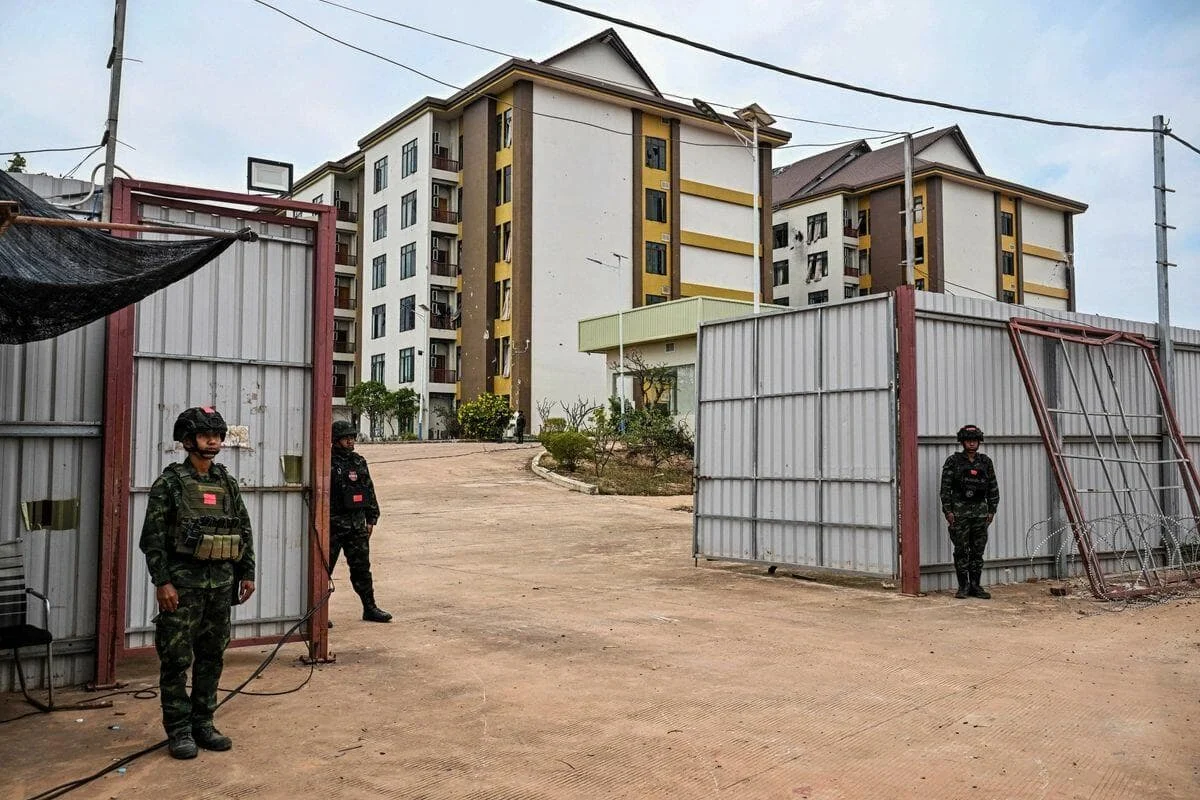
Cambodia, alongside Myanmar, has regrettably become a notorious hub for these industrial-scale scam operations. This proliferation is often attributed to a confluence of factors including weak governance, pervasive corruption, the existence of loosely regulated special economic zones, and a ready supply of labor, albeit often coerced. Senator Kok An’s alleged involvement directly links a high-ranking political figure to the infrastructure facilitating these crimes. The Treasury report specifies that Kok An owns numerous companies, including Crown Resorts, and has reportedly retrofitted casinos and office parks to serve as dedicated scam centers.
Within these compounds, workers – many of whom are victims of human trafficking themselves – are forced to operate the scams. These individuals are often lured from China and other Southeast Asian countries with false promises of legitimate high-paying IT jobs. Upon arrival, their passports are confiscated, and they are subjected to debt bondage, forced labor, and often physical and psychological abuse if they fail to meet daily scamming quotas. They are essentially enslaved, trapped in a cycle of exploitation, compelled to defraud others. The cryptocurrency extorted from victims is then laundered through Kok An’s associates, completing the illicit financial cycle.
The Treasury further asserted a critical link in the money laundering process: "Nearly all major scam compounds in Cambodia are connected to casinos, which serve to launder the proceeds of scams." This highlights the critical role of the gambling industry, particularly in regions with lax oversight, in facilitating vast illicit financial flows. Casinos provide a seemingly legitimate front for converting ill-gotten digital assets into clean fiat currency, obscuring the origins of the funds and making them exceedingly difficult for law enforcement to trace.
Financial Devastation and the Global Scale of Cybercrime
The financial losses incurred by victims of these sophisticated cyber scams are staggering. While specific, comprehensive data on the losses directly attributable to Kok An’s network for U.S. citizens is still emerging, the broader landscape of cybercrime paints a grim picture. According to the FBI’s Internet Crime Complaint Center (IC3) 2023 report, romance scams alone resulted in losses exceeding $1.1 billion for U.S. victims in 2023, with cryptocurrency fraud contributing to billions more in losses. The "pig butchering" variant specifically targets individuals over extended periods, maximizing their financial extraction.
The global scale of cybercrime is even more alarming. In an interview with The Epoch Times, reportedly conducted in April 2025, Andy Jenkinson, a fellow of the Cyber Theory Institute and author of "Stuxnet to Sunburst: 20 Years of Digital Exploitation and Cyber Warfare," provided a stark assessment: "the annual losses to cybercrime globally are over $10 trillion, or put it another way, $32 billion a day." While this figure encompasses all forms of cybercrime, it underscores the immense financial drain these illicit activities impose on the global economy, far surpassing the economies of many nations. The prevalence of these scams highlights a significant challenge for international law enforcement and financial institutions striving to protect citizens and maintain financial integrity.
Tether’s Swift Action and Cryptocurrency’s Role
Hours after the U.S. sanctions against Kok An and his network were announced, Tether, the issuer of the world’s largest stablecoin, USDT, took a significant and coordinated step by freezing $344 million in USDT. This substantial amount was allegedly linked to "sanctions evasion, criminal networks, or other illicit activity." This rapid response demonstrates the growing capacity and willingness of major cryptocurrency entities to cooperate with law enforcement and regulatory bodies in combating financial crime.
Tether publicly affirmed its commitment to a "zero-tolerance policy toward the criminal use of USDT" and stated that it has "long followed OFAC guidelines on sanctioned individuals and entities." The company further clarified its operational stance: "When wallets are identified as connected to sanctions evasion, criminal networks, or other illicit activity, Tether can move to restrict those assets." This action sends a clear message to criminal organizations that stablecoins, despite their perceived pseudo-anonymity, are not immune to scrutiny and intervention when linked to illicit activities. It also highlights the increasing pressure on cryptocurrency platforms to implement robust Anti-Money Laundering (AML) and Know Your Customer (KYC) protocols to prevent their services from being exploited by criminals.
Broader Implications and the Path Forward
The sanctions against Senator Kok An carry significant broader implications, extending beyond the immediate disruption of his alleged criminal network.
Firstly, they exert considerable geopolitical pressure on Cambodia. The U.S. action signals a serious concern over the country’s perceived failure to adequately address the rampant cybercrime and human trafficking within its borders, especially when high-ranking officials are implicated. This could strain U.S.-Cambodian relations and prompt the Cambodian government to demonstrate more concrete efforts in combating these issues, potentially through stricter enforcement, investigations, and cooperation with international partners.
Secondly, the incident further intensifies regulatory scrutiny on the cryptocurrency industry. While Tether’s swift action is commendable, the fact that such a large sum of USDT was allegedly involved in illicit activities underscores the ongoing challenges in regulating digital assets. Regulators globally are increasingly pushing for greater transparency, accountability, and collaboration from crypto exchanges and stablecoin issuers to prevent their platforms from becoming safe havens for financial criminals. This event could accelerate the development and implementation of more stringent global standards for cryptocurrency oversight.
Thirdly, there is a crucial humanitarian impact. The sanctions draw renewed attention to the plight of thousands of individuals trafficked into forced labor in these scam centers. International human rights organizations and governments are likely to increase calls for concerted efforts to identify, rescue, and repatriate these victims, while also prosecuting those responsible for their exploitation. The focus needs to shift not only to dismantling the financial networks but also to addressing the severe human rights abuses that underpin these operations.
Finally, the sanctions serve as a potent reminder of the evolving nature of cybercrime. As law enforcement agencies develop more sophisticated methods to track and disrupt these operations, criminal networks are likely to adapt, potentially relocating or devising new tactics. This necessitates continuous vigilance, international cooperation, and investment in cybersecurity and financial intelligence to stay ahead of these evolving threats. The U.S. Treasury’s commitment to targeting fraudsters "no matter where they operate or how well-connected they are" reflects a long-term strategy to protect American citizens and uphold the integrity of the global financial system against these insidious and destructive criminal enterprises.
Reuters contributed to this report.

