
The acclaimed financial independence blogger, known as Mr. Money Mustache (MMM), has publicly detailed his nine-month entanglement with Amazon Vine, an exclusive, invite-only program that offers participants free products in exchange for honest reviews. What began as a seemingly innocuous opportunity to acquire useful items without cost evolved into a compelling case study in behavioral economics, illustrating how sophisticated incentive structures can subtly hijack even the most frugal and self-aware individuals. His experience, spanning from an innocent review last winter to a conscious disengagement this fall, sheds light on the psychological mechanisms driving modern consumerism and the hidden costs associated with seemingly "free" goods.
Genesis of a "Free Stuff" Experiment

The journey into the Amazon Vine program commenced unexpectedly for the blogger last winter. Following a five-star review for a heated vest purchased on Amazon – an item he genuinely appreciated for its utility in combating cold and potentially reducing heating costs – Mr. Money Mustache received an email. The message, an invitation to join Amazon Vine, heralded his selection for writing "helpful reviews." Familiar with the program and its "Vine Voices" participants, who receive complimentary products in exchange for reviewing at least 80% of ordered items, the initial thought was overwhelmingly positive: "Who doesn’t like free stuff?" Especially for someone who had already been contributing product reviews altruistically, the prospect of being rewarded seemed a logical progression.
Without extensive deliberation, the terms and conditions were accepted, and Mr. Money Mustache officially joined the Vine program. The underlying premise was twofold: to save money by acquiring items he would genuinely purchase anyway, particularly for his construction business and the MMM-HQ Coworking space, and to conduct a personal experiment for a future blog article. Indeed, the program did yield tangible financial benefits, saving "at least a few thousand dollars" on essential tools and materials. However, these anticipated upsides soon became intertwined with a surprising and insightful struggle against the very consumerist impulses his philosophy typically advocates against.
The Psychological Hooks of Amazon Vine

Mr. Money Mustache’s experience quickly revealed the potent psychological engineering embedded within the Amazon Vine program, mirroring tactics employed by modern gambling platforms, marketing campaigns, and social media algorithms. Drawing parallels to Michael Easter’s book, Scarcity Brain, the blogger identified how Vine effectively exploits two fundamental weaknesses in human evolutionary programming: the innate drive to avoid scarcity and the pursuit of novelty and unpredictable rewards.
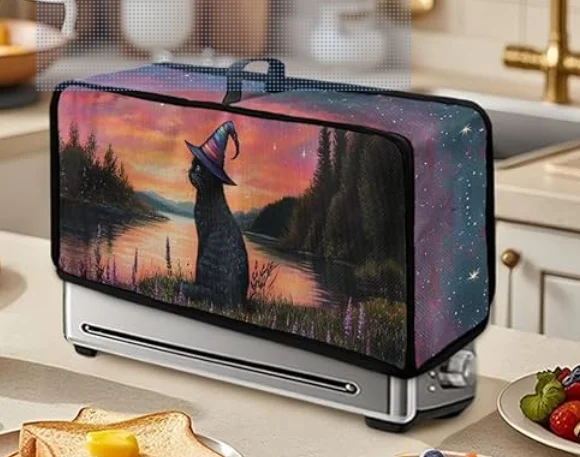
The Vine interface, an exclusive "reviewers only" website, functions much like a digital casino floor. Participants are presented with an ever-changing inventory of products, creating an "infinite scroll" of potential acquisitions. This continuous stream of options, coupled with the variable nature of available items, becomes a powerful psychological trigger. Sometimes, the offerings are largely unappealing – pages of "pink plastic disposable party plates" or a "toaster cover with a cat wearing a witch hat." Yet, interspersed within this deluge of the mundane are genuinely desirable items: high-quality light fixtures, specialized tools, plumbing parts, an EV charger, or even unique clothing items like the "ridiculous Eagle shirt" featured in a Mustachianism music video. This unpredictability, known in behavioral science as a variable ratio reinforcement schedule, is highly effective at driving engagement, as individuals are motivated to keep checking for the next valuable "score." The scarcity element is further amplified by the rapid disappearance of popular items, prompting users to act quickly to secure a desired product before it’s gone.
Unpacking the Behavioral Science: Scarcity and Variable Rewards

The application of "Scarcity Brain" principles within Amazon Vine is a critical aspect of its design. Humans are wired to react strongly to perceived scarcity, a trait that served ancestral populations well in resource-limited environments. In the digital age, this translates into a fear of missing out (FOMO), compelling users to constantly monitor the Vine page lest a coveted item passes them by. The variable reward system, where high-value items are randomly interspersed with less desirable ones, mimics the addictive nature of slot machines. Each login becomes a "pull of the lever," with the occasional "jackpot" of a genuinely useful or expensive item reinforcing the behavior. This cycle of anticipation, occasional reward, and constant searching creates a compelling loop that can consume significant time and mental energy.
The blog post vividly illustrates this addictive pattern: Mr. Money Mustache found himself checking the Vine page daily, even when he had no specific need. The infrequent but significant "scores" – such as super-realistic artificial plants for the MMM HQ courtyard or a contractor-grade extension cord – were just enough to sustain the habit, despite the overwhelming majority of items being irrelevant or even absurd. This mechanism proved potent enough to "hijack my frugality instincts" and divert his time towards activities that were not genuinely aligned with his core values or productive goals.
The Unseen Costs: Time, Environment, and Integrity

The "free" label of Amazon Vine products proved to be a significant illusion, masking substantial hidden costs. Foremost among these was the expenditure of time. The process of browsing, ordering, unpacking, photographing, and batch-writing reviews became a weekly chore. This was time that Mr. Money Mustache openly admitted he would rather have spent on activities that bring him more profound satisfaction, such as his daily workouts, progress on construction projects, or creative writing. The allure of "free stuff" inadvertently led to a less fulfilling allocation of his most valuable resource: time.
Beyond time, the environmental impact became a stark contradiction to his lifestyle philosophy. The constant stream of packages resulted in an "overflowing" recycling bin, highlighting the manufacturing and packaging waste generated by the acquisition of numerous items, many of which were of questionable utility. This direct conflict with his foundational values – promoting financial independence and sustainable living – underscored the insidious nature of the program’s pull. The article also touches on a subtle erosion of integrity, as the blogger found himself "discreetly tucking away the boxes" of frivolous purchases to avoid the scrutiny and laughter of his son and girlfriend. This act of concealment speaks to a deeper discomfort with the consumerist binge.
Moreover, the "reviewer-unfriendly" features of the Vine program further exposed its true nature. The notoriously poor search functionality and the complete absence of filtering or sorting options were not mere oversights; they were deliberate design choices. This forces reviewers to scroll through endless pages of irrelevant items, maximizing exposure for sellers and reinforcing the "casino effect," while devaluing the reviewers’ time. The "hilariously bureaucratic AI-based evaluation system" that would arbitrarily flag factual reviews further emphasized that Vine Voices were not VIPs but rather cogs in a larger, somewhat inefficient, machine.

Financial Reckoning: The Tax Implications of "Free"
A crucial "gotcha" of the Amazon Vine program, and a significant point of clarification for participants, is the tax implication. The "free" items are not truly free in the eyes of the Internal Revenue Service (IRS). Amazon tracks the retail value of all products received by Vine Voices and issues a 1099-NEC form at the end of the year, declaring this value as taxable income. For Mr. Money Mustache, with a marginal tax rate of approximately 25%, an estimated $7,000 worth of items initially suggested a tax liability of up to $1,750.
However, a subsequent "exciting update" from wise readers revealed a crucial nuance: in many cases, this estimated value can be marked down by 80% before declaration. This reduction acknowledges that opening and reviewing a product significantly diminishes its resale value, effectively making the tax burden more manageable. Applying this "50/200 rule" (a common guideline in the Vine community for reducing tax liability), Mr. Money Mustache’s tax bill on the "pure nonsense" items, initially estimated at $250, was reduced to a mere $50. This clarification highlights the importance of understanding tax regulations, even for seemingly trivial gains, and underscores the complex financial landscape surrounding "free" product review programs.

Despite the tax reduction, the analysis of his $7,000 bounty revealed that approximately 75% of it comprised "construction supplies which I used on jobs or HQ renovations," effectively converting into real income for his business. Other items were genuinely useful for his personal residence, making the tax worthwhile. Yet, about $1,000 worth of purchases fell into the category of "pure nonsense," for which even a $50 tax bill served as "penance for my itchy trigger finger."
Reclaiming Control: A Return to Mustachian Principles
The culmination of Mr. Money Mustache’s Vine experiment was a conscious decision to disengage, not by explicitly canceling his account, but by employing a "Keystone Habit" trick. Recognizing that his daily checks of the Vine page had become a form of procrastination, he remapped that browser bookmark to his "Badassity Tracker," a personal chart of daily habits focused on productive and health-oriented activities. Now, clicking the former Vine bookmark redirects him to a reminder to engage in a quick round of exercise, effectively replacing a detrimental habit with a beneficial one.

This strategic redirection underscores a core tenet of Mustachian philosophy: the deliberate cultivation of habits that serve long-term well-being and financial independence. The blogger’s recovery stage was aided by the inherent frustrations of the Vine program – the endless scrolling through useless trinkets, the poor user interface, and the bureaucratic AI. These "sucky factors" paradoxically made it easier to break the habit, reinforcing the realization that the program demanded too much time and yielded too little genuine value.
Broader Lessons for Financial Independence and Consumerism
Mr. Money Mustache’s Amazon Vine saga extends beyond a personal anecdote, offering profound lessons applicable to broader societal patterns. It serves as a potent reminder of why "Fuck You Money" – the financial freedom to choose one’s work and life path – is so invaluable. The Vine experience, with its prescribed tasks and arbitrary rules, mirrored the feeling of being a "low-wage worker" in a system one cannot influence, akin to his prior "Uber Driving experiment." The ability to opt out of such systems and choose to "be the boss" of one’s time and creative output is a cornerstone of true financial independence.

Furthermore, the addictive nature of Vine provides an insightful parallel to "One More Year Syndrome," a phenomenon Mr. Money Mustache has observed in many financially independent individuals who struggle to transition out of traditional employment. The comfort of routine, the perceived benefits (even if diminishing), and the difficulty of breaking established patterns can keep people tethered to work long after they are financially able to quit. The Vine experiment demonstrated how easily even a financially savvy individual can fall into a similar trap of habitual engagement for diminishing returns.
Ultimately, the article’s core message is a call for continuous self-reflection. It encourages readers to critically examine their own assumptions, habits, and patterns, and to seek feedback from trusted individuals. In a world increasingly designed to capture attention and induce consumption, the ability to question one’s choices and make intentional "course corrections" is paramount. While perfection is unattainable, the consistent effort to align daily actions with long-term values can lead to substantial differences in one’s life trajectory, ensuring that freedom and purpose, rather than passive consumption, remain at the helm.

