
The financial technology landscape across Saharan and sub-Saharan Africa is undergoing a period of rapid institutionalization and infrastructure development, evidenced by a series of high-profile partnerships and capital injections involving global digital asset leaders, international development organizations, and regional banking software providers. This week, the African fintech sector reached several milestones that underscore a shift from basic mobile money services toward sophisticated, internet-native financial ecosystems. Key developments include a strategic alliance between Circle and Sasai Fintech to promote stablecoin adoption, an International Finance Corporation (IFC) partnership with Cashi to enhance digital payments in Central Africa, and a successful $9.4 million Series A funding round for South African startup Littlefish. These movements collectively signal a maturing market where digital assets, interoperability, and merchant-focused infrastructure are becoming the primary drivers of financial inclusion and intra-continental trade.
Circle and Sasai Fintech: Pioneering Stablecoin Utility in African Markets
In a move aimed at transforming the efficiency of cross-border transactions and digital commerce, Circle, the global issuer of the USDC stablecoin, has entered into a strategic partnership with Sasai Fintech. Sasai Fintech operates as a subsidiary of Cassava Technologies, a diversified technology group founded by prominent entrepreneur Strive Masiyiwa. The collaboration is designed to integrate USDC—a digital stablecoin pegged 1:1 to the U.S. dollar and backed by fully reserved assets—into Sasai’s expansive digital payment network.
The partnership arrives at a critical juncture for the African continent, which has become one of the fastest-growing regions for cryptocurrency adoption, driven largely by the practical need for stable value storage and lower-cost remittances. Traditional cross-border payments in Africa remain among the most expensive in the world, often involving multiple intermediary banks and high currency conversion fees. By leveraging the USDC network, Sasai Fintech aims to provide a "programmable" financial layer that bypasses many of these legacy hurdles.
Strive Masiyiwa, Founder and Executive Chairman of Cassava Technologies, emphasized that Africa’s digital economy is entering a new era characterized by a mobile-first generation and the acceleration of regional trade. He noted that integrating with a trusted network like USDC would open transformative opportunities for both retail consumers and enterprise clients. Jeremy Allaire, Co-Founder and CEO of Circle, echoed this sentiment, highlighting that emerging markets are now at the forefront of stablecoin utility. According to Allaire, the collaboration will focus on high-growth payment corridors, providing "always-on" global connectivity that traditional banking hours and systems cannot match.
Sasai Fintech’s reach is significant; headquartered in Johannesburg, the firm has enabled more than 250 million digital wallets and maintains over 85,000 Point-of-Sale (POS) terminals across the continent. By introducing USDC into this ecosystem, the partnership seeks to lower the friction and settlement times associated with intra-African trade, which is a key objective of the African Continental Free Trade Area (AfCFTA).

IFC and Cashi: Expanding Interoperable Payments in Central Africa
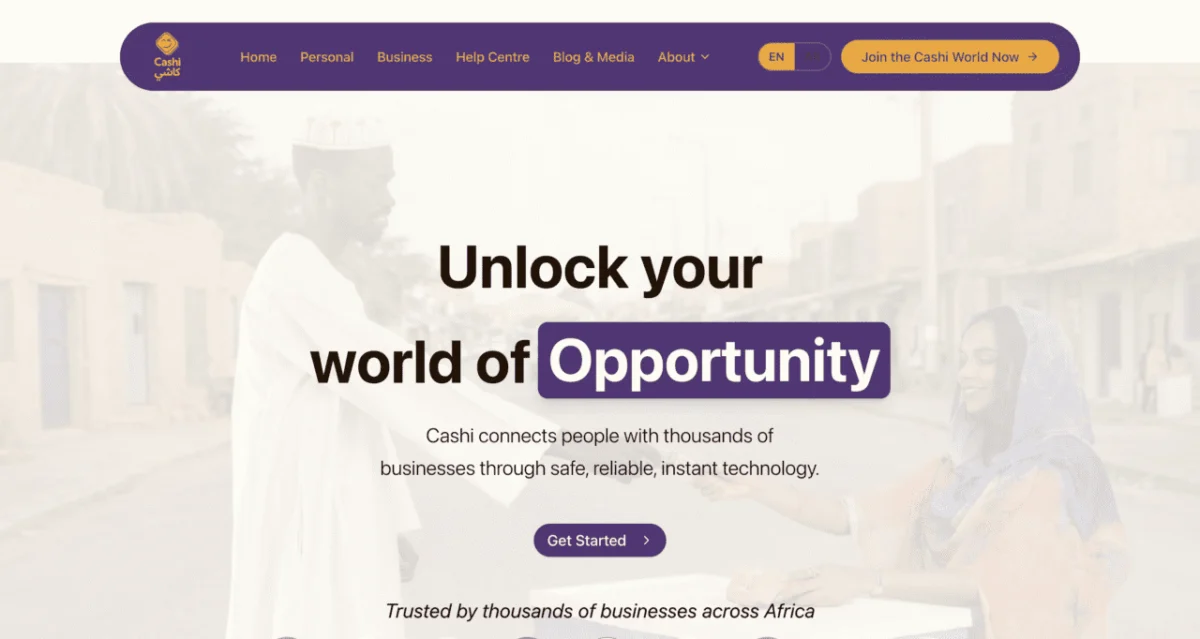
Parallel to the developments in the stablecoin sector, the International Finance Corporation (IFC), a member of the World Bank Group, has announced a partnership with Cashi, a digital payment infrastructure provider focused on Central Africa. Cashi, which emerged from the Sudanese digital marketplace Alsoug.com, provides a platform that bridges the gap between traditional banks, telecommunications companies, and unbanked consumers.
The partnership is structured as an "upstream" engagement, meaning the IFC will provide technical support and strategic guidance to help Cashi adapt its platform to the unique regulatory and infrastructure challenges of Central African markets. Cashi’s technology is particularly notable for its versatility; it allows users to conduct transactions via mobile apps, POS devices, and even SMS-based tools, the latter of which is vital for regions with low internet penetration or inconsistent data connectivity.
Tarneem Saeed, CEO of Cashi, described the platform as "crisis-tested," a reference to the company’s origins in Khartoum, Sudan. Despite significant geopolitical and economic volatility in the region, Cashi has successfully maintained a system that offers instant settlement and high uptime. The collaboration with the IFC is intended to build trust with local merchants and regulators, ensuring that digital tools can replace cash-heavy processes in daily life.
For the IFC, this partnership aligns with its broader mandate to foster financial inclusion in fragile or developing economies. By supporting interoperable ecosystems where different financial institutions can communicate seamlessly, the IFC and Cashi aim to reduce the "digital infrastructure bottleneck" that currently prevents millions of people from accessing formal credit, savings, and insurance products.
Littlefish Secures $9.4 Million to Modernize Merchant Banking Infrastructure
In the southern region of the continent, South African fintech startup Littlefish has successfully closed a $9.4 million Series A funding round. The investment was led by Partech, a global venture capital firm with a strong track record in African tech, and included participation from TLcom Capital, Flourish Ventures, and Proparco. This funding marks a significant vote of confidence in Littlefish’s "bank-led" approach to merchant services.
Founded in 2021 by Brandon Roberts and Miod Davith Kahwa, Littlefish provides a "merchant operating system" designed specifically for traditional banks. While many fintechs seek to compete directly with banks, Littlefish enables banks to offer modern, digital services to their existing small business clients. The platform integrates payments, POS software, Customer Relationship Management (CRM) tools, and various APIs into a single layer that sits atop a bank’s legacy systems.

CEO Brandon Roberts stated that the capital will be used to expand the company’s workforce and scale its operations into East and Southern African markets, including Kenya, Tanzania, Uganda, Botswana, Zimbabwe, and Zambia. Roberts argues that the most effective way to serve Africa’s Small and Medium Enterprises (SMEs) is to work through the institutions they already trust—their banks—rather than trying to circumvent them.
Littlefish already counts major financial institutions such as Standard Bank, First National Bank, and Absa among its clients. By providing these banks with the tools to offer digital-first products, Littlefish helps prevent "customer churn" to independent fintech disruptors while giving small business owners the ability to digitize their inventory management and sales tracking.
Chronology of Regional Fintech Evolution
The events of this week are the result of a multi-year trajectory in African financial services:
- 2020–2021: A surge in seed-stage funding occurred as global investors recognized the potential of Africa’s unbanked population. Littlefish and Cashi were both established or gained significant traction during this period.
- 2022: The focus shifted toward "interoperability." Regulators in countries like Ghana and South Africa began pushing for systems that allow mobile money users to send funds to traditional bank accounts seamlessly.
- 2023: Economic headwinds, including currency depreciation in Nigeria and Egypt, drove a massive spike in stablecoin interest. Businesses began looking for USD-pegged assets to hedge against local inflation.
- 2024 (Present): The current phase is defined by "infrastructure deepening." Rather than launching new consumer-facing apps, the industry is focusing on the "plumbing"—the backend systems that allow payments to flow across borders and between different types of financial providers.
Supporting Data: The Scale of the Opportunity
The strategic importance of these developments is underscored by recent market data. According to the GSMA State of the Industry Report on Mobile Money, Sub-Saharan Africa remains the global leader in mobile money transactions, accounting for over $832 billion in processed value in the last year alone. However, a significant portion of this remains "closed-loop," meaning funds stay within a single telco’s network.
Furthermore, the World Bank’s Remittance Prices Worldwide database indicates that sending $200 to Sub-Saharan Africa costs an average of 7.8%, compared to the global average of 6.2%. The Circle-Sasai partnership specifically targets this discrepancy, aiming to bring costs closer to the UN Sustainable Development Goal of 3%.
In terms of venture capital, while global "funding winters" have slowed investment, African fintech still attracts the largest share of VC dollars on the continent. The Littlefish Series A is a prime example of the "flight to quality," where investors are prioritizing startups that have proven revenue models and partnerships with established tier-one banks.

Analysis of Implications and Future Outlook
The convergence of these three announcements suggests several long-term implications for the African economy. First, the "bank-led" versus "disruptor" debate is moving toward a middle ground. As seen with Littlefish, banks are increasingly willing to adopt third-party fintech infrastructure to remain competitive. This hybrid model likely offers the fastest route to scale for digital services.
Second, the entry of the IFC into the digital payment space in Central Africa indicates that development finance is now prioritizing digital rails as much as physical ones like roads or electricity. Interoperable payment systems are now viewed as "public goods" that facilitate wider economic participation.
Finally, the mainstreaming of USDC via Sasai Fintech could lead to a broader regulatory conversation about digital assets in Africa. While some central banks have been hesitant, the practical utility of stablecoins for trade and inflation hedging is becoming too significant to ignore. If successful, the Circle-Sasai initiative could provide a blueprint for how regulated digital assets can coexist with and enhance traditional financial systems across the continent.
As these partnerships move from the announcement phase to implementation, the focus will shift to execution—specifically how these platforms handle local regulatory compliance, cybersecurity, and consumer education. For now, the momentum in African fintech remains robust, driven by a clear demand for more efficient, transparent, and inclusive financial tools.

