
A prominent figure in the financial independence (FI) community, known as Mr. Money Mustache, has recently detailed his nine-month entanglement with Amazon’s exclusive Vine program, revealing how even a seasoned advocate for frugality and conscious consumption can fall prey to sophisticated psychological nudges embedded in modern e-commerce platforms. His personal experiment, initially conceived to save money and provide blog content, evolved into a cautionary tale about the pervasive influence of "scarcity brain" and "online casino effects" on consumer behavior, prompting broader discussions within the FI sphere and beyond.
The Genesis of an Unforeseen Experiment

The journey began in late 2024, when Mr. Money Mustache, an individual renowned for his disciplined approach to saving and early retirement, posted a five-star review for a heated vest purchased on Amazon. This seemingly innocuous act triggered an invitation to join Amazon Vine, a program that grants selected reviewers—dubbed "Vine Voices"—the opportunity to order products from Amazon for free in exchange for detailed reviews. The core condition: members must review at least 80% of the items they receive.
Initially, the proposition seemed aligned with his frugal philosophy. "Who doesn’t like free stuff?" he recounted thinking, especially since he was already writing product reviews "out of the goodness of my heart." The idea was to acquire items he genuinely needed for his construction business and the MMM-HQ Coworking space, thereby saving money while also generating valuable content for his popular financial blog. With minimal hesitation, he accepted the terms and conditions, embarking on an experiment that would surprisingly challenge his core principles of financial independence and mindful living.
Over the subsequent nine months, this engagement led to a significant accumulation of products, some genuinely useful, others bordering on the absurd. He reported saving "at least a few thousand dollars" on tools, materials, and various items for his business operations. However, this financial benefit came with an unexpected cost: a significant investment of time, a growing sense of obligation, and a direct contradiction of his environmental values due to increased packaging waste.

Understanding Amazon Vine: A Strategic Review Program
Amazon Vine, established in 2007, is a crucial component of Amazon’s strategy to provide customers with unbiased and comprehensive product reviews. The program identifies and invites Amazon customers who have consistently written insightful and helpful reviews, awarding them "Vine Voice" status. These members receive products, typically new or pre-release items, directly from participating vendors at no cost, in exchange for their honest feedback. Amazon states that this system helps customers make informed purchasing decisions by offering early access to reviews from trusted sources. Vendors, in turn, gain early product visibility and feedback, which can be critical for launching new items successfully. The program has expanded globally, involving thousands of products and reviewers across numerous categories, underpinning a significant portion of Amazon’s review ecosystem.
The Behavioral Science Behind the "Scarcity Brain" Effect

Mr. Money Mustache’s experience quickly revealed the sophisticated psychological mechanisms at play within the Vine program, mechanisms he likens to those found in gambling platforms and social media feeds. Drawing parallels to Michael Easter’s book, "Scarcity Brain," he identified two key evolutionary weaknesses exploited by the system: the human brain’s predisposition to seek novelty and its susceptibility to the allure of unpredictable rewards.
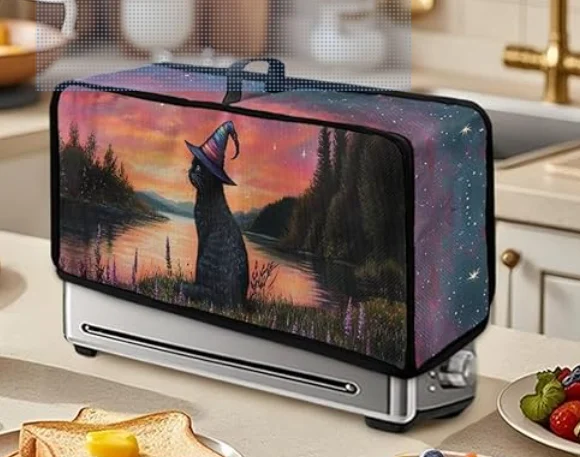
The Vine interface, much like an online casino, presents a constantly refreshing inventory of items. "Every time you log into the exclusive ‘reviewers only’ Vine website, you’ll see different stuff available for the taking," he observed. This creates an environment of artificial scarcity and unpredictable reinforcement. Sometimes, the available items are "almost nothing worthwhile"—pages of "pink plastic disposable party plates" or "a toaster cover with a cat wearing a witch hat." But just often enough, a genuinely valuable item appears: a high-quality light fixture, specialized tools, an EV charger, or even unique clothing items like his "favorite ridiculous Eagle shirt."
This intermittent reinforcement schedule—where rewards are sporadic and unpredictable—is a powerful driver of addictive behavior. It encourages frequent checking and immediate action ("order it before it was too late") to capitalize on fleeting opportunities. The individual acknowledged that this system effectively "hijacked my frugality instincts," leading him to engage in behaviors that were not in his long-term best interest.

A Chronology of Engagement and Growing Discomfort
- Late 2024: Mr. Money Mustache posts a five-star review for a heated vest on Amazon, leading to an invitation to join the Amazon Vine program.
- Early 2025: He accepts the invitation, driven by the appeal of free products for his construction business and MMM-HQ Coworking space, and the desire for blog content.
- Spring/Summer 2025: His engagement deepens. He begins checking the Vine page daily, driven by the "scarcity brain" and "online casino effect." He actively seeks out valuable items, acquiring a range from useful tools and plumbing parts to more whimsical items like artificial plants for the HQ and a "USB rechargeable, magnetic EagLamp."
- Mid-2025: He enlists friends and coworkers to help request and review items, sharing the "bounty" and workload. This period sees him accumulate enough reviews to upgrade his account from "Vine Silver" to "Vine Gold" (a tier he later deemed largely insignificant).
- Peak Consumerism: During the height of his participation, packages arrive almost daily, leading to an overflowing recycling bin and even discreetly tucking away boxes to avoid scrutiny from family members. This marks the nadir of his "consumerism bender."
- Growing Realization and Conflict: He recognizes the time drain involved in unpacking, photographing, and batch-writing reviews. More critically, he confronts the environmental impact of his actions—creating "pollution and trash from its manufacturing and packaging"—which directly contradicts his core life values and the ethos of his blog.
- Bureaucratic Frustrations: He experiences frustration with the Vine program’s "reviewer-unfriendly features," such as poor search functionality and a "hilariously bureaucratic AI-based evaluation system" that flags legitimate reviews without explanation, demanding arbitrary edits. This reinforces a feeling of being a "low-wage worker" rather than a VIP.
- Recovery Stage: Recognizing the habit had become a form of procrastination, he consciously begins to disengage, prioritizing physical activity, construction projects, and creative work over Vine browsing.
- September 2025: He reports his current tax liability and details his disengagement strategy through "Keystone Habits."
The Unexpected Cost: Time, Values, and Taxes
While the program offered undeniable financial savings on certain items, the hidden costs proved substantial. The time spent browsing, ordering, receiving, unboxing, testing, photographing, and reviewing products amounted to a significant time investment, often diverting him from activities he found more fulfilling, such as exercise, creative work, and managing his construction projects.

Beyond time, the experience presented a profound ethical dilemma for someone who champions minimalist living and environmental responsibility. The constant influx of packages and the associated waste directly contradicted his stated values, creating an internal conflict that became increasingly difficult to ignore.
Furthermore, the "free" items were not entirely without cost. Amazon, like other platforms offering non-cash compensation, issues a 1099 form for the retail value of all items received by Vine Voices at the end of the year. This means recipients are liable for income tax on the estimated value of the products. For Mr. Money Mustache, with a marginal tax rate of approximately 25%, an estimated $7,000 worth of goods translated into a potential tax bill of $1,750.
However, a crucial clarification emerged from his readership: in many cases, the estimated value of opened and reviewed products can be marked down by 80% for tax purposes, significantly reducing the taxable income. This "50/200 rule" (referring to various interpretations of IRS guidelines for non-cash income, particularly for items with limited resale value after being opened or used for review) could reduce his tax liability to approximately $50, underscoring the complexities of taxation for such programs and highlighting a frequently overlooked detail for many Vine participants. Even with this reduction, the "pure nonsense" items still incurred a tax burden, serving as a "penance for my itchy trigger finger."

Broader Implications: Work, Autonomy, and "Fuck You Money"
The Vine experience resonated deeply with Mr. Money Mustache’s broader philosophy of "Fuck You Money"—the financial independence that grants an individual the autonomy to reject undesirable work or situations. He observed that the Vine program mirrored many aspects of traditional employment: "You are given a bunch of tasks and a bunch of rules to follow, in a system you didn’t create and don’t get much say in changing." The inability to filter search results effectively, the tedious review process, and the arbitrary AI evaluations all underscored a lack of respect for the reviewer’s time, reminiscent of what he encountered during a past "Uber Driving experiment."
This insight reinforced his preference for "being the boss" and highlighted the value of financial independence in preserving personal autonomy and the freedom to choose how one spends their time and effort. The Vine program, despite its "free stuff" allure, ultimately felt like work that lacked meaning and purpose, illustrating how easily even financially independent individuals can be drawn into systems that subtly erode their agency.

Disengagement and the Path Forward
Recognizing the detrimental impact on his time and values, Mr. Money Mustache embarked on a recovery process. He consciously reframed his engagement with Vine from a useful pursuit to a form of procrastination. Employing a "Keystone Habit" trick, he remapped his browser bookmark for the Vine page to his "Badassity Tracker"—a personal chart designed to encourage daily workouts and productive activities. This simple behavioral intervention effectively redirected his impulse to browse products towards more constructive habits.
His public sharing of this experience, potentially a violation of Vine’s confidentiality terms ("the first rule of Vine is to not talk about Vine"), serves as a testament to his commitment to transparency and education within the financial independence community. He views the experiment as a valuable lesson in habits and addiction, drawing parallels to "One More Year Syndrome"—where individuals, despite having enough savings, continue working due to ingrained habits or external pressures.

Ultimately, the Amazon Vine saga for Mr. Money Mustache is a powerful reminder that self-reflection and continuous questioning of one’s assumptions and patterns are crucial for navigating the complexities of modern consumer culture and maintaining a fulfilling, values-aligned life. Even small course corrections, he emphasizes, can lead to significantly different outcomes on life’s long journey. The experience underscores that true wealth lies not just in financial assets, but in the disciplined management of one’s time, habits, and adherence to deeply held principles.

