

The global financial technology landscape is set to converge in San Diego this May, as FinovateSpring 2026 prepares to highlight a significant shift in industry leadership. In a dedicated effort to commemorate Women’s History Month, the premier fintech event has announced that its upcoming demo lineup will feature twelve female founders and co-founders. These innovators represent a diverse cross-section of the industry, ranging from artificial intelligence and forensic graph technology to stablecoin-powered foreign exchange and legacy system modernization.
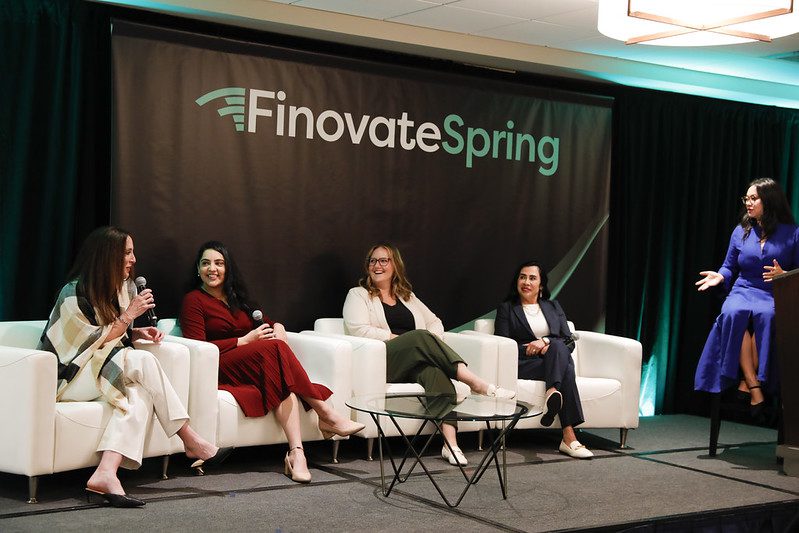
Scheduled to take place from May 5 through May 7, FinovateSpring 2026 serves as a critical barometer for the health and direction of the financial services sector. The inclusion of these twelve leaders underscores a broader institutional push toward diversity, reflecting a market reality where female-led firms are increasingly responsible for the most disruptive solutions in banking, credit union operations, and lending.
The Strategic Importance of Female Leadership in Fintech
The announcement comes at a pivotal moment for the fintech sector. While venture capital allocation to female-founded startups has historically lagged behind their male counterparts—often hovering below 3% of total global funding—the performance of these firms suggests a high level of capital efficiency and resilience. By showcasing these founders on a global stage, Finovate is not merely observing a commemorative month but is actively facilitating the integration of high-impact technologies into the traditional banking ecosystem.

Heather Stowell, Vice President and Director of Demos at Finovate, emphasized the transformative potential of this year’s cohort. According to Stowell, the selection process involved a rigorous search for technologies that offer tangible improvements to how banks and credit unions serve their members. The presence of these twelve women on the San Diego stage is intended to demonstrate that diversity is a driver of technological breakthroughs rather than just a social metric.
A Detailed Analysis of the 2026 Innovators
The twelve companies featured in this year’s lineup address some of the most pressing challenges in modern finance, particularly regarding fraud prevention, deposit growth, and regulatory compliance.

Fraud Detection and AI Governance
In the realm of security and oversight, several female-led firms are introducing sophisticated AI applications. Meenakshy Iyer, Co-Founder and Chief Product Officer of Singapore-based ContexQ, is introducing forensic Graph AI. Founded in 2024, ContexQ focuses on identifying hidden beneficial ownership and money laundering patterns by analyzing the complex relationships between data points—connections that traditional transactional AI often fails to detect.
Complementing this is Socratix AI, led by Co-Founder and CEO Riya Jagetia. Based in San Francisco and founded in 2025, Socratix AI aims to reduce fraud losses and minimize false positives without requiring institutions to increase their operational headcount. Meanwhile, Lisa Pent, Founder and CEO of PentEdge, is tackling the regulatory side of AI. Her company’s AIMS platform provides community banks with an examiner-ready governance framework, specifically designed for institutions with assets ranging from $500 million to $100 billion. This is a critical development as federal AI risk guidance becomes more stringent for mid-tier banks.

Modernizing Onboarding and Deposit Growth
As interest rates and consumer expectations fluctuate, deposit growth remains a top priority for financial institutions. Kathleen Craig, Founder and CEO of Plinqit, has been a staple in this space since 2015. Her latest solution, Business HYS, aims to level the playing field for community banks and small-to-medium businesses (SMBs) seeking better returns on cash reserves.
Onboarding friction is another major hurdle being addressed by this cohort. Zarina Tsomaeva, Founder and CEO of Loquat (founded in 2018), has developed a platform that reportedly cuts review times by 80% for banks and credit unions. Similarly, Ashley Parekh’s Syntex, founded in 2025, focuses on SMB onboarding, reducing the timeline from weeks to days through automated document verification and approval tracking.

Specialized Financial Services and Asset Management
The 2026 lineup also features founders targeting niche but high-value markets. Simmi Sen, Co-Founder of Crebit Pay, is utilizing stablecoins to revolutionize the FX market for international students. By enabling near-instant global payments, Crebit Pay helps credit unions attract a demographic that has traditionally been underserved by local financial institutions.
In the wealth management sector, Anna Joo Fee, Founder and CEO of Goodfin, is democratizing access to institutional-grade investments. Her platform opens doors to private equity and venture capital for clients who do not meet the ultra-high-net-worth threshold. Complementing the advisor experience, Kelly Waltrich’s Intention.ly and Annabelle Lin’s Nextvestment are providing tools to enhance brand building and client engagement, respectively. Intention.ly’s Advisor Brand Builder allows firms to deploy content engines in a matter of days, while Nextvestment focuses on "intent-aware" guidance to help advisors intervene at the optimal moments in a client’s journey.

Chronology of Development: From Legacy to Future-State
The companies presented at FinovateSpring 2026 represent different stages of the fintech lifecycle. While firms like Plinqit and Loquat have established track records, nearly half of the featured female-led companies were founded between 2024 and 2025. This indicates a "new wave" of fintech innovation that is native to the post-pandemic, AI-driven economy.
One of the most technically ambitious projects comes from Caitlyn Truong, Co-Founder and CEO of Zengines. Founded in 2020, Zengines addresses the "mainframe problem"—the reliance of major banks on legacy systems that are decades old. By modernizing these systems without losing critical logic, Zengines allows for digital transformation that satisfies auditors and maintains compliance, ensuring that legacy data does not become a bottleneck for innovation.

Supporting Data and Market Context
The rise of these companies coincides with a maturing fintech market. According to industry reports from 2024 and 2025, financial institutions have shifted their focus from "growth at all costs" to "operational efficiency." The technologies being demoed by these twelve founders—such as Loquat’s 80% reduction in review times and Socratix AI’s headcount-neutral scaling—align perfectly with this institutional demand for efficiency.
Furthermore, the geographic diversity of these founders—spanning Singapore, San Francisco, Miami, and New York—reflects the global nature of fintech. Singapore, in particular, has emerged as a hub for Graph AI and wealth tech, as evidenced by ContexQ and Nextvestment. The San Francisco contingent continues to lead in AI and stablecoin integration, while East Coast firms like PentEdge and Intention.ly are focusing on the intersection of regulation and marketing.

Institutional Responses and Broader Implications
The fintech industry has reacted positively to the curated focus on female leadership. Analysts suggest that the "demo-first" format of Finovate is particularly well-suited for showcasing the technical prowess of these founders. Unlike panel discussions which can sometimes lean toward generalities, the seven-minute live demo requirement forces founders to prove the efficacy of their software in real-time.
The broader implication for the banking sector is clear: diversity in leadership leads to diversity in problem-solving. The inclusion of forensic graph technology to fight money laundering or the use of stablecoins for student FX are solutions born out of a deep understanding of specific, often overlooked pain points.

As FinovateSpring 2026 approaches, the focus remains on how these technologies will be integrated into the existing financial infrastructure. For the banks, credit unions, and venture capitalists attending the San Diego event, these twelve founders represent more than just a celebration of Women’s History Month; they represent the next generation of enterprise-grade financial tools.
Looking Ahead to FinovateSpring 2026
The event is expected to draw thousands of attendees, ranging from C-suite executives at global banks to boutique fintech investors. Beyond the demos, the conference will feature extensive networking opportunities and deep-dive sessions into the regulatory and technological trends shaping the remainder of the decade.

With the backdrop of San Diego’s growing tech scene, FinovateSpring 2026 stands to be a landmark event for the industry. The twelve female founders highlighted in the lineup are not just participants; they are at the forefront of a movement to make financial services more efficient, inclusive, and secure. As the industry moves past the experimental phase of AI and blockchain, the practical, scalable applications developed by these leaders will likely dictate the competitive landscape for years to come.

