
The historic San Lorenzo district in Rome, long known for its vibrant student life, artistic community, and rich history, is currently experiencing a profound crisis of public order. Residents are sounding a vociferous alarm over a significant surge in violence, which they increasingly attribute to groups of homeless migrants. This escalating unrest, punctuated by a recent brutal street attack that left one man hospitalized, has ignited urgent calls for robust security measures and a comprehensive response from municipal and national authorities. The situation has reached a critical juncture, with locals describing their once-lively neighborhood as "unsustainable" and expressing fears for their safety and the future of their community.
The Latest Incident: A Catalyst for Outcry
The immediate catalyst for the renewed outcry occurred recently in Piazza di Porta San Lorenzo. In a shocking daylight incident, a 30-year-old Gambian man allegedly attacked a Moroccan man with a broken bottle. The assailant reportedly struck the victim in the neck and face, leaving him collapsed and seriously injured on the ground. The victim was swiftly transported to Umberto I Hospital, where he remains in serious but stable condition, undergoing treatment for his wounds. Police, utilizing surveillance footage from the scene, were able to quickly identify and apprehend the suspect after he attempted to flee, bringing a swift resolution to that particular act of violence.
However, for the inhabitants of San Lorenzo, this incident is far from isolated. It represents merely the latest chapter in a disturbing and accelerating pattern of disorder and aggression that has gripped their district. The area, they contend, has become increasingly populated by groups of vagrants, often observed to be intoxicated or under the influence of illicit drugs. While these groups frequently engage in internecine conflicts, residents report that their aggressive behavior extends to innocent passersby, targeting men, women, and even children.
A Neighborhood Under Siege: Residents Speak Out
The frustration and fear among San Lorenzo’s residents are palpable. Sofia, a waitress who lives near Piazza dei Caduti, articulated a common sentiment to Il Messaggero, stating, "The problem is that they don’t just fight among themselves, they also attack us residents. Men, women, and even children." This sentiment underscores a fundamental shift in the district’s public safety, where the threat is no longer perceived as abstract but immediate and personal.
In response to the deteriorating conditions, a neighborhood assembly has been urgently convened, bringing together concerned citizens to strategize and demand action. Katia Pace, a leading figure in the local committee organizing the meeting, highlighted the rapid escalation of violence. "Cases have increased visibly in the last two months," Pace noted, recounting a harrowing incident just days prior where "two women were beaten and robbed." These anecdotes paint a grim picture of a community living on edge, where everyday activities are now fraught with potential danger.
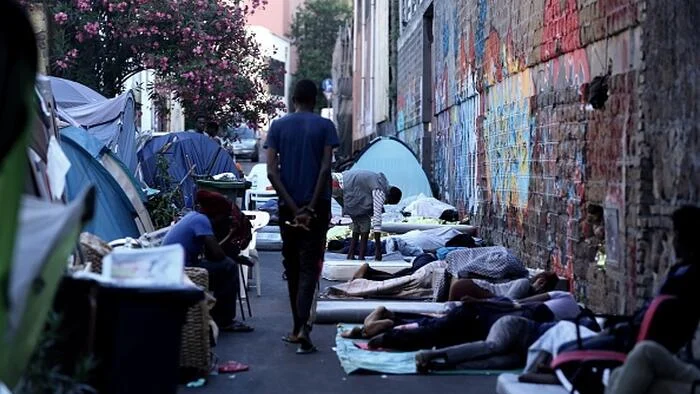
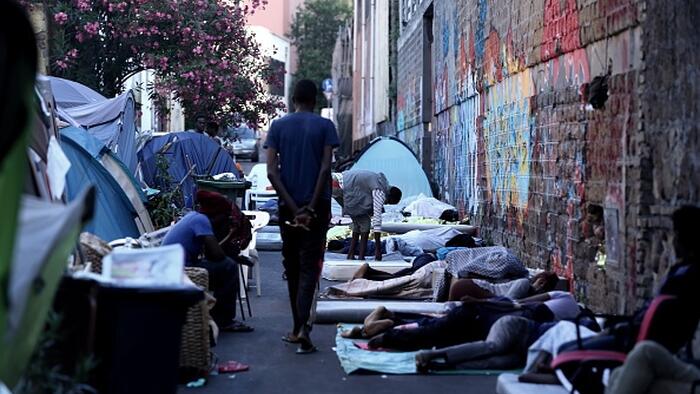
The scenes of disorder are not confined to isolated incidents of violence. Locals report that public spaces, including parks frequented by families and young children, are routinely marred by men sleeping on benches, engaging in heavy drinking, loud arguments, and open urination. This not only creates an intimidating and unhygienic environment but also heightens fears about the safety of children and the general quality of life. Maria, another resident, lamented, "It’s not enough. We can’t live like this anymore," expressing a widespread sentiment that current security measures are woefully inadequate.
Escalation and Vulnerable Victims
A particularly alarming aspect of the escalating violence is the targeting of vulnerable individuals, including minors. In one deeply troubling account, a 12-year-old girl was reportedly assaulted. Another incident saw a Tunisian man arrested after brutally attacking a woman, fracturing her nose and cheekbone. This particular assault, captured on surveillance footage, prompted a cascade of additional complaints from women in the area, many of whom reported similar unprovoked acts of violence. "There have been at least 15 cases," Pace confirmed, emphasizing that those responsible are typically "homeless foreigners" residing in the district, many of whom are believed to suffer from addiction or severe mental health issues.
These concerns are amplified by the visible proliferation of makeshift encampments throughout San Lorenzo. Tents and temporary shelters have become a regular sight along historical landmarks such as the Aurelian Walls and in several central squares, starkly illustrating the growing issue of homelessness and its associated challenges. The patience of the local populace is wearing thin, with one resident telling Il Messaggero, "The patience of those who live here is not infinite," and issuing a veiled warning about the potential for vigilante-style reactions should the authorities fail to restore order.
Broader Context: Migration, Homelessness, and Urban Challenges in Italy
The unrest in San Lorenzo is not an isolated phenomenon but rather a localized manifestation of broader socio-economic and public safety concerns gripping urban centers across Italy. The country has been a primary gateway for migrants entering Europe, particularly from North Africa and sub-Saharan Africa. While many arrive seeking asylum or better economic opportunities, the sheer volume of arrivals, coupled with insufficient integration policies and support structures, has led to significant challenges.
Many migrants, particularly those whose asylum applications are rejected or who face difficulties finding employment and housing, can end up in precarious situations, leading to homelessness, destitution, and, for some, involvement in petty crime or more serious offenses. The lack of adequate mental health services and addiction support further exacerbates these vulnerabilities, contributing to the scenes of disorder now commonplace in districts like San Lorenzo.
Italy’s migratory landscape is complex. According to the International Organization for Migration (IOM), Italy recorded over 157,000 migrant arrivals by sea in 2023, a significant increase from previous years. While many are processed and relocated, a substantial number remain in Italy, often struggling with integration. The process of legal recognition can be lengthy and arduous, leaving many in a state of limbo, susceptible to exploitation, and often forced into informal economies or homelessness.
National Patterns of Crime and Migrant Demographics
The situation in Rome’s San Lorenzo district mirrors concerns raised in other major Italian cities. In Ravenna earlier this year, female railway workers reported persistent harassment by a migrant who continued to frequent the station despite multiple complaints. Union official Manola Cavallaro articulated the workers’ terror, warning that a failure to address the issue could lead to more serious violence.
Similarly, in Milan, a 25-year-old man, Alessandro Briguglio, suffered severe head injuries after being attacked by two Bosnian Muslims for his watch near the city center. His cautionary advice, "Just a word of advice: In Milan, don’t turn towards the Duomo because it’s not safe. I had my head smashed in for a watch," highlighted the perception of insecurity even in prominent urban areas.
Official data has further underscored these concerns. Milan’s police commissioner informed lawmakers that foreigners were reportedly responsible for approximately 80 percent of predatory crimes in the city. While foreign nationals constitute a minority of the overall population, Interior Ministry figures indicate their disproportionate representation in certain violent offenses. Specifically, 44 percent of all sexual offenses in Italy are reportedly committed by foreign nationals, who also account for half of all gang rapes, despite representing only about 9 percent of the total population. These statistics, while requiring careful interpretation to avoid xenophobia and acknowledge the complex socio-economic factors at play, undeniably contribute to heightened public anxiety and fuel debates about immigration and public safety.
Furthermore, the issue of enforcement and judicial outcomes adds another layer of complexity. More than 30,000 foreign nationals are reportedly serving sentences outside prison under alternative measures, raising further questions about the effectiveness of the justice system in managing offenders and ensuring public safety. This reality contributes to a perception among some residents that perpetrators of crime, particularly those without stable addresses or ties to the community, face insufficient deterrents or consequences.
The Paradox of Policy: Integration Efforts Amidst Security Fears
Adding a paradoxical layer to the current climate of fear in San Lorenzo, the Rome city council has simultaneously been promoting initiatives to encourage families to host migrants. In September of the previous year, the council launched a call for proposals, seeking families willing to open their homes to migrants holding valid residence permits for a period of up to three years.
Officials articulate the program’s intent as providing "a welcoming environment geared toward inclusion and autonomy," specifically aiming to assist young adults in gaining independence and integrating into Italian society. This initiative reflects a broader European policy trend to move away from large, centralized migrant reception centers towards more community-based integration models, which are often seen as more humane and effective for fostering long-term societal inclusion.
However, this policy stands in stark contrast to the immediate concerns of residents in areas like San Lorenzo. While the long-term goals of integration and autonomy are laudable, the perceived failure to manage immediate public safety issues creates a significant disconnect. Critics argue that such initiatives, while well-intentioned, do not address the urgent challenges posed by individuals who are already homeless, struggling with addiction, or involved in criminal activity, many of whom may not be suitable candidates for family hosting programs. The divergence between proactive integration policies and reactive security measures highlights a fundamental tension in Italy’s approach to managing its migrant population and the ensuing social consequences.
Implications and the Path Forward
The situation in Rome’s San Lorenzo district carries significant implications, both locally and nationally. For the residents, the immediate future is one of heightened anxiety, a diminished quality of life, and a growing sense of abandonment by authorities. The threat of "vigilante-style reactions," as one resident warned, underscores the potential for social unrest if the perceived vacuum in public order is not decisively filled by state institutions. Such reactions, if they were to materialize, would only further destabilize the community and exacerbate existing tensions.
Beyond San Lorenzo, the crisis reflects a broader challenge for Italy: how to balance humanitarian obligations and integration efforts with the imperative to ensure public safety and maintain social cohesion. The perceived link between rising crime and certain segments of the migrant population, whether statistically robust or driven by perception, fuels anti-immigrant sentiment and complicates the already arduous task of fostering a harmonious multicultural society.
Addressing the situation effectively will require a multi-faceted approach. Enhanced police presence and more effective enforcement are immediate necessities to restore order and reassure residents. However, a sustainable solution must also delve deeper, tackling the root causes of homelessness, addiction, and social marginalization among migrant populations. This would entail investing in better reception facilities, faster and more efficient asylum processing, robust integration programs that include language acquisition and job training, and accessible mental health and addiction support services.
Ultimately, the crisis in San Lorenzo serves as a stark reminder that the challenges of migration extend beyond borders and initial reception. They permeate urban landscapes, testing the resilience of communities and demanding comprehensive, nuanced, and empathetic policy responses that prioritize both public safety and the dignity of all individuals within society. The calls from San Lorenzo are not merely for more police; they are for a functional system that prevents desperation from festering into disorder and violence.

