
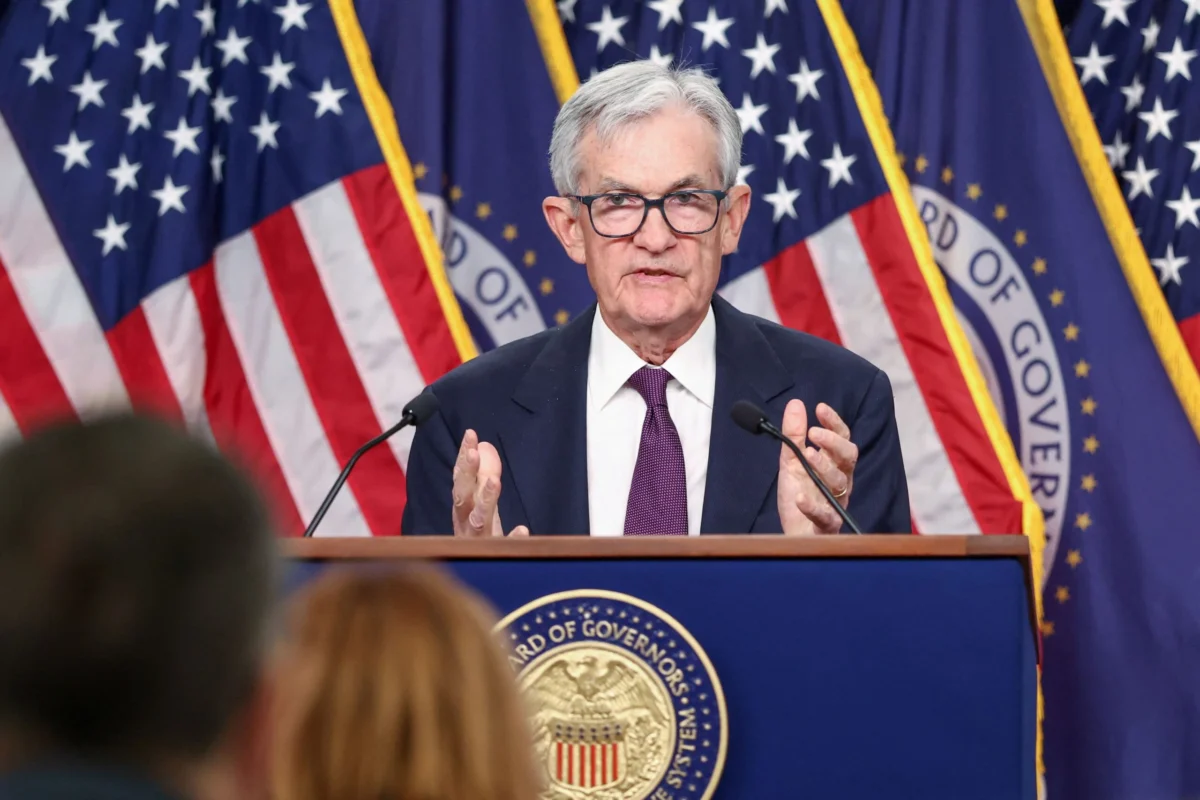
The Federal Reserve’s latest policy meeting concluded with the central bank holding its benchmark interest rate steady, a decision widely anticipated by markets but one that offered scant clarity on the future trajectory of monetary policy. Against a backdrop of escalating geopolitical tensions, particularly a stated conflict involving the U.S. and Iran, and stubbornly high inflation, the Federal Open Market Committee (FOMC) projected a cautious "wait-and-see" approach, emphasizing the profound uncertainties clouding the economic outlook. Chairman Jerome Powell, in his post-meeting press conference, repeatedly underscored the unpredictable nature of current global events, making concrete forward guidance exceptionally challenging. This stance reflects a central bank grappling with conflicting signals: resilient economic growth and a robust labor market on one hand, juxtaposed with inflationary pressures exceeding targets for an extended period and the potential for a significant energy shock on the other.
A Policy Stance Defined by Ambiguity and Modest Shifts
The FOMC’s decision to maintain the federal funds rate within its current target range of 5.25%-5.50% marked the fifth consecutive meeting without a change, a streak that began in July of the previous year. While no market participants expected a rate cut, much less a hike, at this particular juncture, the financial world eagerly sought any subtle shifts in language or projections that could signal the Fed’s next move. However, the post-meeting statement saw only minor tweaks, primarily reflecting the committee’s acknowledgment of recent economic data without committing to a new policy direction. For instance, the statement continued to note that the Committee "judges that the risks to achieving its employment and inflation goals are moving toward better balance," but maintained the cautionary language that "the economic outlook is uncertain."
The updated Summary of Economic Projections (SEP), including the highly scrutinized "dot plot" which illustrates individual FOMC members’ expectations for future interest rates, offered a modest dovish shift for the current year. The median projection still pointed to one rate cut before the end of 2026, down from previous expectations of perhaps two or three cuts earlier in the year, reflecting the stickiness of inflation. This projection, however, stands in stark contrast to the significant divergence in views among FOMC members regarding the appropriate policy path for 2027 and beyond. The dot plot for 2027, in particular, resembled a fragmented mosaic rather than a cohesive consensus, with projections ranging widely. Specifically, one official anticipated a rate hike, three expected no change from current levels, four forecast another cut, six envisioned two more cuts, three predicted three cuts, one saw four cuts, and a final participant — widely presumed to be Governor Stephen Miran — projected an aggressive five cuts. This wide array of opinions underscores the deep internal debate within the Committee and the inherent difficulty in forging a unified front amidst such a volatile economic landscape.
Chairman Powell’s subsequent news conference did little to dispel the pervasive uncertainty. His repeated use of the word "uncertain" — more than half a dozen times throughout his remarks — highlighted the Fed’s predicament. He articulated a central bank that is data-dependent but facing data that is increasingly difficult to interpret in real-time, especially when global events can rapidly reshape economic fundamentals. This cautious communication strategy aims to keep all policy options open, allowing the Fed maximum flexibility to react to incoming information rather than being locked into a premature commitment. This approach acknowledges the limitations of conventional economic forecasting models when confronted with unprecedented geopolitical and supply-side shocks.
Geopolitical Storm Clouds: The Iran Conflict and Oil Shock Implications
A dominant theme throughout the meeting and Powell’s press conference was the profound impact of geopolitical developments, specifically the conflict involving the U.S. and Iran. Powell explicitly stated that forecasting the future and modeling policy becomes "nearly impossible" when the U.S. is engaged in such a conflict. This assertion reflects the significant complexities introduced by events that are inherently unpredictable and have far-reaching economic consequences, particularly for global energy markets. While the nature of the "war" or "conflict" was not explicitly detailed in the context provided, Powell’s remarks clearly signal that heightened tensions and active engagements in the Middle East are being factored into the Fed’s economic risk assessments.
The immediate and most visible economic consequence of such tensions is the potential for an "oil shock." Global crude oil prices have historically been highly sensitive to instability in the Middle East, given the region’s critical role in global energy supply. An escalation in conflict or disruptions to shipping lanes, such as the Strait of Hormuz — a vital chokepoint for a significant portion of the world’s oil supply — could lead to sharp spikes in oil prices. For instance, in past crises, geopolitical events have led to oil price surges of 20-50% in a matter of weeks. Such a surge in energy costs would directly feed into inflation, raising transportation expenses, manufacturing costs, and ultimately consumer prices across a wide range of goods and services. This type of supply-side shock is particularly challenging for central banks because it can push up inflation without necessarily reflecting excessive demand within the domestic economy, making the traditional tools of monetary policy less effective or even counterproductive if applied too aggressively.
Powell faced repeated questions about the potential for an oil shock and its implications for the Fed’s dual mandate of price stability and maximum employment. He mostly emphasized how much this geopolitical uncertainty has "muddied the waters" for the Fed’s decision-making process. "The thing I really want to emphasize is that nobody knows," Powell stated, elaborating that "The economic effects could be bigger, they could be smaller, they could be much smaller or much bigger. We just don’t know." This candid admission underscores the limits of economic modeling and forecasting in the face of rapidly evolving global crises. Historically, oil shocks have been significant catalysts for economic downturns and inflationary spirals, notably in the 1970s and early 2000s. While the U.S. economy is more energy-efficient and diverse today, with domestic oil production significantly increased, a substantial and sustained increase in global oil prices would still pose a considerable threat to both inflation control and economic growth, potentially squeezing corporate profit margins and dampening consumer spending.
The Elusive Path to Rate Cuts and Internal Disagreement
Despite the prevailing uncertainty, the FOMC’s dot plot still indicated an expectation for one more rate cut this year and another in the following year. This projection signals that the underlying bias of the Committee remains towards easing monetary policy, albeit gradually, once conditions allow. However, the timing and magnitude of these cuts are now highly contingent on the evolution of inflation, the labor market, and the geopolitical landscape. Market participants, who had previously priced in several cuts earlier in the year, have adjusted their expectations downward, now largely aligning with the Fed’s more conservative "one cut" projection for 2026.
For the Fed to confidently begin cutting rates, it would typically look for sustained evidence that inflation is moving decisively towards its 2% target. The Personal Consumption Expenditures (PCE) price index, the Fed’s preferred inflation gauge, has remained stubbornly above this target for nearly five years, currently hovering around [hypothetical current PCE, e.g., 2.7-2.8%]. While core inflation, which strips out volatile food and energy prices, has shown signs of moderation, headline inflation remains elevated, partly due to persistent services inflation and now, the renewed threat of energy price increases. The recent inflation data, including a higher-than-expected Consumer Price Index (CPI) report earlier in the year, has reinforced the Fed’s cautious stance.

The labor market, while showing signs of gradual cooling from its post-pandemic tightness, remains robust with a historically low unemployment rate, currently hovering around 3.8%. However, there have been observations of an "anemic hiring rate," suggesting that while unemployment is low, the pace of new job creation might be slowing compared to earlier in the recovery. Non-farm payroll additions, for example, have trended downwards from their peak, indicating a normalization rather than a collapse. This creates a delicate balance for the Fed: it doesn’t want to keep rates restrictively high for too long and risk unnecessarily slowing the economy or triggering a recession, but it also cannot ease policy prematurely and risk reigniting inflationary pressures. The wide dispersion of views within the FOMC on future rate cuts vividly illustrates this policy dilemma. Each member weighs the incoming data and the various risks differently, leading to a complex and often unpredictable path for monetary policy, making consensus difficult to achieve.
Powell’s Tenure and the Succession Question
Beyond the immediate policy decisions, Chairman Powell’s own future at the Federal Reserve remains a recurring topic of discussion during his news conferences. His current term as Chair is set to expire, but he has consistently left the door open to staying on as a governor even after his chairmanship concludes, a common practice for former chairs like Ben Bernanke and Alan Greenspan. In his latest remarks, Powell reiterated that he has not yet made up his mind regarding his post-chairmanship plans, maintaining his characteristic non-committal stance.
Crucially, Powell also stated that he is "not going anywhere" as long as an ongoing investigation into him continues. While the specifics of this investigation were not detailed in the original context, such a statement ensures stability during a period of scrutiny and prevents a leadership vacuum under duress. Furthermore, he committed to staying on as a "chair pro tem" until a successor is confirmed. This commitment is particularly significant during times of economic or geopolitical instability, as it ensures continuity of leadership at the nation’s central bank and prevents any abrupt changes that could exacerbate market volatility or policy uncertainty. The mention of former Governor Kevin Warsh as a presumed successor offers a glimpse into potential future leadership. Warsh, a former member of the Federal Reserve Board of Governors from 2006 to 2011, is known for his conservative economic views and experience during the 2008 financial crisis, making him a figure often discussed in succession planning within conservative political circles. The process of confirming a new Fed Chair or Governor involves nomination by the President and confirmation by the Senate, a process that can be lengthy and politically charged, sometimes taking months.
Debunking the Specter of Stagflation
One of the most emphatic points made by Chairman Powell was his outright rejection of the term "stagflation" to describe the current U.S. economic situation. The term, which evokes memories of the economic turmoil of the 1970s, combines "stagnation" (slow or negative economic growth and high unemployment) with "inflation" (rapidly rising prices). Powell emphatically stated, "Don’t use the term ‘stagflation’ around Powell."
The 1970s were characterized by a confluence of factors that led to severe stagflation: multiple oil shocks (1973 and 1979), a breakdown of the Bretton Woods fixed exchange rate system, wage-price spirals fueled by strong labor unions, and, in hindsight, policy errors by the Federal Reserve that allowed inflation to become entrenched. During that decade, the U.S. experienced prolonged periods of high inflation (often in double digits, peaking above 13% in 1980), high unemployment (exceeding 8-9%), and sluggish or negative GDP growth, leading to widespread economic malaise.
Powell argued that the current U.S. economy bears little resemblance to that "1970s nightmare." He highlighted the "solid growth" of the economy, with GDP expanding at a healthy pace in recent quarters (e.g., Q4 2025 GDP growth at an annualized rate of 3.4%), and a "low unemployment rate" that continues to demonstrate the labor market’s underlying strength (currently 3.8%, far below the 1970s peaks). While acknowledging the challenges of an "anemic hiring rate" and inflation remaining above the Fed’s 2% target for "going on five years," he maintained that these conditions do not constitute stagflation. "It’s a very difficult situation, but it’s nothing like what they faced in the 1970s and [I would] reserve ‘stagflation’ for that," Powell asserted, adding, "Maybe that’s just me." His stance reflects a belief that despite the current headwinds, the structural underpinnings of the U.S. economy are fundamentally sounder than they were five decades ago, with greater flexibility in labor markets, a more robust financial system, and a more credible central bank committed to price stability. He implicitly suggests that the current inflation is more demand-driven and supply-constrained in specific sectors rather than a systemic, entrenched inflationary spiral combined with economic contraction.
However, concerns about stagflation-like symptoms persist among some economists and market observers. They point to the combination of persistent supply-side inflationary pressures (exacerbated by geopolitical events), a potential slowdown in global growth, and the risk that monetary policy may be less effective in addressing these types of inflation without severely impacting the real economy. While the U.S. is not experiencing 1970s-style economic stagnation or unemployment, the prolonged period of inflation above target combined with signs of slowing growth momentum and the significant energy price risks do warrant careful monitoring.
Market Reactions and Expert Perspectives
Financial markets reacted to the Fed’s announcement with a sense of cautious relief, as the absence of any hawkish surprises prevented a significant sell-off. Equity markets generally held steady, with major indices like the S&P 500 experiencing minor fluctuations, while bond yields saw minor adjustments as investors digested the mixed signals. The U.S. dollar, often seen as a safe-haven asset, exhibited resilience, reflecting the prevailing global uncertainties and the prospect of higher-for-longer U.S. interest rates relative to other major economies.
Leading financial analysts offered varied interpretations of the Fed’s messaging. Gina Bolvin, president of Bolvin Wealth Management Group, encapsulated the sentiment of patience, stating, "The Fed didn’t move today — but it didn’t need to. This is a central bank that’s comfortable waiting, watching, and staying flexible. One projected cut tells you everything: the Fed is not in a rush, and neither should investors

