
China’s economy commenced 2026 on a robust note, with key indicators for the first two months of the year surpassing analyst expectations, largely fueled by holiday consumer spending and resilient foreign demand for its industrial output. This early momentum offers a degree of optimism for Beijing’s ambitious growth targets, even as deep-seated challenges in its property sector and an increasingly complex geopolitical landscape continue to cast shadows on the long-term outlook. Data released by the National Statistics Bureau on Monday, March 17, 2026, painted a picture of a nation striving to navigate a delicate balance between growth and stability.
A Surge in Consumer Spending and Industrial Activity
Retail sales for January and February collectively registered a 2.8% year-over-year increase, outperforming economists’ consensus forecast of a 2.5% growth. While this figure represented a notable deceleration from the 4% rise observed in the corresponding period of 2025, it nonetheless underscored a recovery in consumer confidence and willingness to spend. The primary driver behind this consumption momentum was undoubtedly the Lunar New Year holiday, which fell in mid-February this year. This extended festive period traditionally sees a significant uptick in household expenditure, and 2026 proved no exception. Yuhan Zhang, a principal economist at The Conference Board’s China center, highlighted specific areas of strength, pointing to robust gains in sales of tobacco and alcohol, alongside a noticeable surge in spending on gold and jewelry. These categories often serve as bellwethers for discretionary spending and celebratory purchases during festive seasons. The widespread rise in spending across various sectors, from hotel bookings to duty-free shopping, during the holiday period also appeared to temper expectations for imminent large-scale stimulus measures from policymakers, suggesting that current consumer activity might be deemed sufficient for the time being.
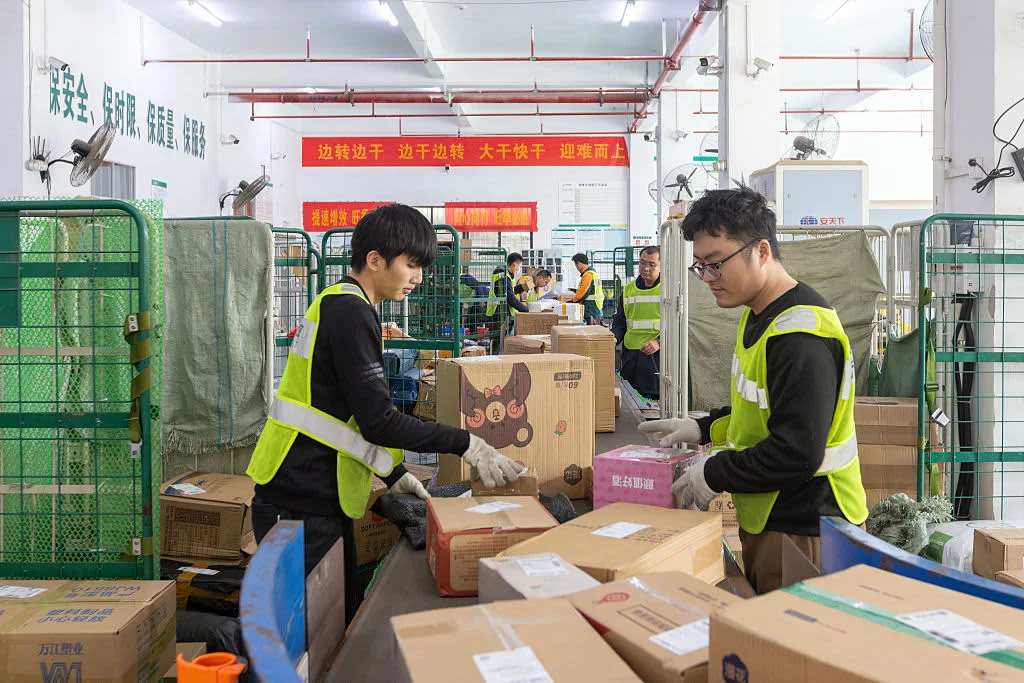
Parallel to the uplift in consumption, China’s industrial output demonstrated remarkable resilience, climbing by an impressive 6.3% year-over-year. This figure comfortably exceeded Reuters’ poll estimates of a 5% jump, marking industrial production as a relative bright spot in the world’s second-largest economy. This strength was largely attributed to robust external demand, particularly from European and Southeast Asian nations, which continued to drive export volumes. China’s export momentum, defying global economic uncertainties and mounting criticism from trade partners regarding its "excess capacity," extended into 2026, with outbound shipments surging by nearly 22% in the first two months of the year. This robust export performance underscores China’s enduring role as a global manufacturing powerhouse, even as its trade relationships face increasing scrutiny and pressure from international partners concerned about market distortions.
The Enduring Shadow of the Property Crisis
While consumption and industrial data offered glimmers of optimism, the persistent challenges within China’s vast property sector continued to weigh heavily on the overall economic narrative. Investment in fixed assets (FAI), a critical component of China’s growth model that encompasses infrastructure, manufacturing, and real estate, rose by a modest 1.8% from a year earlier. This figure, however, surprisingly contrasted with estimates that had predicted a 2.1% drop, suggesting some unexpected buoyancy outside the embattled housing market.
Delving deeper into FAI reveals the stark reality of the property crisis. Investment in real estate development continued its protracted decline, falling by 11.1% in January and February. While this represented a moderation from the steeper 17.2% drop recorded in 2025, it nonetheless underscored the ongoing struggles of developers grappling with liquidity crises, high debt loads, and declining sales. The ripple effects of this downturn extend far beyond developers, impacting local government finances heavily reliant on land sales and eroding household wealth and confidence. The crisis, which began to intensify in mid-2021 with the default of Evergrande, has seen numerous developers teeter on the brink of collapse, leading to unfinished housing projects and a pervasive sense of uncertainty among potential homebuyers.
Further exacerbating the property sector’s woes, separate data released concurrently showed a worsening trend in China’s home prices. Across 70 major cities, new-home prices dropped by 3.2% from a year earlier in February, marking the steepest decline in eight months, according to Reuters. This sustained downward pressure on prices reflects a fundamental imbalance between supply and demand, coupled with deep-seated issues of consumer confidence. Despite various government efforts to stabilize the market – including easing purchase restrictions, providing financial support to developers, and lowering mortgage rates – the sector remains a significant drag on economic recovery.
However, a silver lining emerged within the broader investment landscape. Excluding property development, fixed asset investment rose a healthier 5.2% year-over-year. This growth was primarily supported by robust inflows into infrastructure projects and the manufacturing sector, signaling Beijing’s strategic pivot towards rebalancing its economy away from an over-reliance on real estate. This shift aligns with the government’s long-term vision of fostering "new quality productive forces" driven by technological innovation and advanced manufacturing. The previous year, 2025, had witnessed a historic slump in fixed asset investments, declining 3.8% year-over-year, as the deepening property downturn and tighter constraints on local governments’ borrowing capacity significantly hampered one of China’s traditional growth drivers. The current data suggests a concerted effort to offset property-related weaknesses with targeted investments in other productive areas.
Broader Economic Context and Policy Direction
The economic data for early 2026 arrives shortly after Chinese leadership unveiled its annual economic goals for the year. Just last week, Beijing announced a GDP growth target range of 4.5% to 5%, a figure widely regarded as the least ambitious goal since the early 1990s. This calibrated target reflects a deliberate shift in policy priorities, emphasizing "high-quality development" and structural reforms over sheer speed of expansion. It acknowledges the complex domestic and international environment, signaling a pragmatic approach to economic management. For context, the early 1990s in China were a period of intense reform and opening up, following the political events of 1989, when the economy was navigating significant transitions and aiming for stability before accelerating into a new era of rapid growth. The current lower target suggests a similar focus on foundational stability and sustainable development.

Beyond the headline growth figures, the urban unemployment rate stood at 5.3% in the first two months of this year, a slight uptick from the average rate of 5.2% observed throughout 2025. While seemingly modest, this figure warrants close monitoring, particularly concerning youth unemployment, which has been a persistent concern in recent years. Maintaining stable employment is a key pillar of social stability and a priority for the government, influencing policy decisions related to industrial development, vocational training, and support for small and medium-sized enterprises.
Navigating Geopolitical Headwinds
Despite the immediate resilience reflected in the economic data, government officials openly acknowledged the growing headwinds impacting the economy. These challenges stem from escalating geopolitical tensions and deep-rooted structural problems within China’s growth model that have exerted significant pressure on corporate profitability. "We should be aware that the evolving external environment is exerting a great impact on China and the geopolitical risks keep rising," the Statistics Bureau cautioned in its official statement.
Fu Linghui, a spokesperson for the Statistics Bureau, addressed reporters on Monday, affirming that China’s energy supply capacity remained sufficient to cope with the heightened volatility in global oil prices. He stated that Beijing would closely monitor the impact of these fluctuations on domestic inflation, underscoring the government’s proactive stance on managing potential external shocks. The geopolitical landscape, marked by ongoing trade disputes, technological rivalry with the United States, and broader international uncertainties, continues to influence foreign direct investment flows, supply chain decisions, and the overall business environment for both domestic and international enterprises operating in China. The emphasis on internal consumption and domestic innovation, articulated through strategies like "dual circulation," is partly a response to these external pressures.
The Middle East Shadow: Energy Security and Global Economic Spillovers
A significant geopolitical concern casting a shadow over the global economy is the escalating crisis in the Middle East. While this turmoil has far-reaching implications, data suggests that Beijing may be more insulated from potential disruptions, such as a hypothetical closure of the Strait of Hormuz, than many other major economies. Over the past two decades, China has strategically diversified its energy sources and meticulously built up substantial strategic reserves. As of January, China reportedly held an estimated 1.2 billion barrels of onshore crude stockpiles, a quantity deemed sufficient to meet domestic demand for three to four months.
Furthermore, analyses indicate that seaborne oil imports through the critical Hormuz waterway now account for less than half of China’s total oil shipments. Nomura’s estimates further contextualize this, suggesting that oil flows through Hormuz represent a mere 6.6% of China’s total energy consumption. Rush Doshi, director of China Strategy Initiative at the Council on Foreign Relations, has also highlighted China’s successful efforts in reducing its vulnerability to this particular chokepoint.
Nonetheless, the escalating crisis in the Middle East, even if it does not directly imperil China’s energy supply, could still pose a significant demand shock to its export-reliant economy. Higher global energy costs invariably feed into inflationary pressures worldwide, disrupt intricate global supply chains, and inevitably dampen consumer and business spending across China’s key trading partners in Europe and Asia. Zhiwei Zhang, president and chief economist at Pinpoint Asset Management, articulated this concern, stating, "The turmoil in the Middle East is set to show its impact on the global economy in the coming months." He anticipates that Chinese policymakers will "watch the development closely and respond through fiscal policy if necessary," indicating a readiness to deploy counter-cyclical measures should external shocks translate into significant domestic slowdowns. Such fiscal responses could include increased infrastructure spending, targeted tax cuts, or consumer subsidies to bolster domestic demand.
Expert Projections and Outlook
Reflecting the potential global economic fallout from the Middle East crisis, Goldman Sachs on Friday trimmed its China real GDP growth forecast by 0.1 percentage point. While a reduction, this was notably smaller than the 0.3 to 0.5 percentage point reduction it forecast for other regional economies, underscoring China’s relative resilience. Goldman also revised its annual consumer inflation outlook for China upward to 0.9%, from an earlier forecast of 0.6%, and projected factory-gate prices to rebound by 0.8% this year, primarily due to the pass-through effect of higher oil prices feeding into the supply chain.
The consensus among economic observers is that China’s economy is currently navigating a complex period, characterized by a dual narrative of immediate strength driven by specific sectors and holiday spending, juxtaposed with persistent structural challenges and an unpredictable external environment. The government’s measured GDP target for 2026, alongside its continued efforts to rebalance the economy, suggests a strategic long-term vision. However, the efficacy of ongoing property stabilization measures, the management of local government debt, and the ability to mitigate the indirect impacts of global geopolitical tensions will be crucial determinants of China’s economic trajectory throughout the remainder of 2026 and beyond. Policymakers will likely remain vigilant, prepared to adjust fiscal and monetary levers to ensure stability and sustain a path of high-quality development.
— CNBC’s Evelyn Cheng contributed to this story.

