
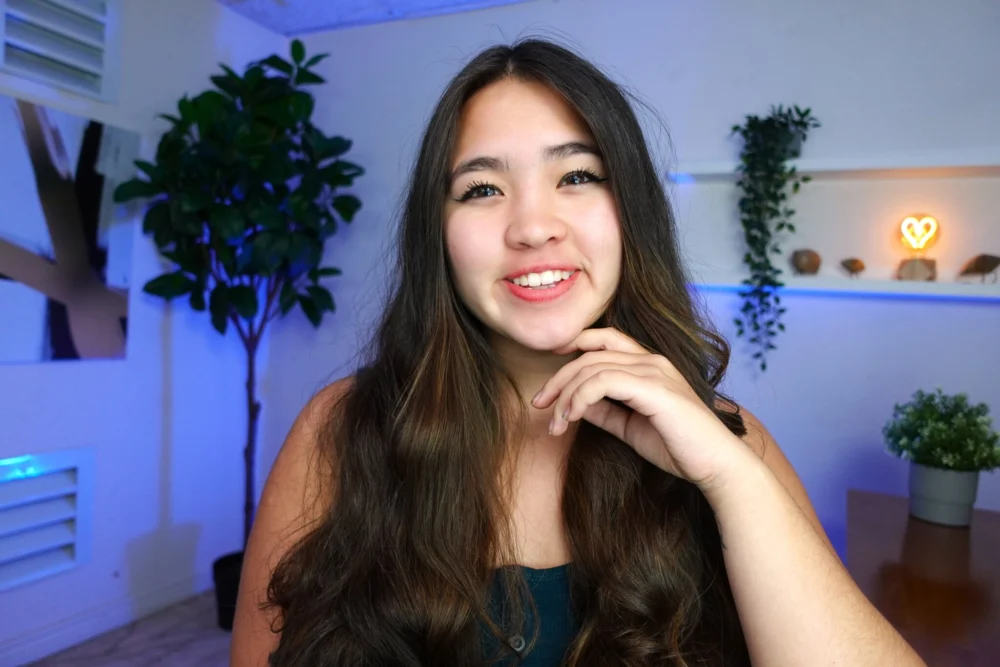
The digital creator economy has witnessed a shift toward hyper-analytical content production, as evidenced by the recent success of independent creator Aprilynne Alter. By leveraging hundreds of hours of forensic research into platform algorithms and viewer psychology, Alter achieved a 1,200% increase in her YouTube subscriber base within a single 30-day window. This growth, moving from a baseline of 1,000 subscribers to over 12,000 in four weeks, serves as a case study in the efficacy of data-driven creative strategies over high-volume output.
As of mid-2024, Alter’s channel has continued this trajectory, surpassing 52,000 subscribers with a catalog of only 24 videos. This performance—where approximately 16% of a channel’s total uploads achieve viral status—highlights a significant departure from the traditional "post daily" philosophy that dominated the platform’s early years.
The Landscape of the Modern Creator Economy
To contextualize Alter’s achievement, it is necessary to examine the current state of YouTube. The platform currently serves as the world’s second-largest search engine and the leading global streaming service. Statistics indicate that YouTube hosts approximately 4.95 billion monthly active users, a figure that dwarfs competitors like Netflix, which maintains a subscriber base of roughly 260 million.
Despite the vast audience, the barrier to entry remains high. SocialBlade data suggests there are over 61 million creators on the platform, yet only a fraction achieve monetization or sustainable growth. The saturation of the market has necessitated a transition from casual content creation to what industry analysts describe as "engineered virality." Alter’s success was not predicated on a background in media or film production; rather, she transitioned from a career in finance, applying a rigorous analytical framework to video performance metrics.
The Chronology of a Viral Pivot
Alter’s journey to 12x growth was preceded by a period of relative stagnation and a failed initial attempt at channel building. Recognizing that her previous methods were insufficient, she embarked on an intensive research phase. This period involved:
- Forensic Deconstruction: Analyzing the top 1% of creators, including high-retention pioneers like MrBeast and Mark Rober.
- Documentation: Compiling 73 pages of detailed notes regarding pacing, visual stimulus, and psychological triggers.
- Strategy Formulation: Developing a four-step framework focused on pre-production rather than post-production.
This research phase culminated in a shift from her first channel to a second, more refined project. The results were immediate. Within the first month of implementing her new framework, four of her twenty-four videos garnered over 200,000 views each, with one standout video exceeding 800,000 views.
The Four-Step Framework for Accelerated Growth
The methodology utilized by Alter is categorized into four distinct pillars: packaging, introductory optimization, audience segmentation, and meticulous pre-planning.
1. The Primacy of "Packaging"
In the context of digital video, "packaging" refers to the three elements a viewer encounters before the content begins: the core idea, the title, and the thumbnail. Alter’s research suggested that packaging accounts for approximately 50% of a video’s potential success.
The psychological basis for this is the Click-Through Rate (CTR). If the packaging fails to convert a "scroll" into a "click," the quality of the video itself becomes irrelevant. Alter noted that many creators spend 99% of their time on production and only 1% on packaging. Her revised approach inverted this, treating the thumbnail and title as the foundational blueprint for the video rather than an afterthought.
2. Introductory Retention and the First Five Seconds
Data from YouTube’s Creator Studio consistently shows that the highest "drop-off" in viewership occurs within the first 30 seconds of a video. Alter’s strategy focused heavily on the first five seconds, ensuring a perfect "match" between the thumbnail’s promise and the video’s opening statement.
To maintain engagement, Alter utilized a technique known as "front-loading the stimulus." By analyzing the editing styles of Mark Rober and MrBeast, she identified a pattern of rapid visual changes. Industry leaders often change camera angles, graphics, or locations every 1.4 to 1.6 seconds during the introduction. This high-frequency stimulus prevents "viewer fatigue" and signals to the audience that the content is high-effort.
Furthermore, she identified the "Setup" as a critical component, involving three psychological levers:
- The Curiosity Gap: Providing just enough information to pique interest without revealing the conclusion.
- Context: Quickly establishing why the viewer should care about the subject.
- Input Bias: Demonstrating the sheer amount of work or time invested in the video, which subconsciously increases the viewer’s perceived value of the content.
3. Comprehensive Audience Awareness
A common pitfall for emerging creators is a narrow focus on their existing subscriber base. Alter’s growth was driven by designing videos that appealed to three distinct tiers of viewers:
- Core Viewers: Dedicated subscribers who watch every upload.
- Casual Viewers: Individuals who have seen the creator before but are not committed followers.
- The "New" Audience: People who have no prior exposure to the creator but are interested in the specific topic.
By ensuring the content was accessible to someone with zero context, Alter allowed the YouTube algorithm to "push" her videos to broader "lookalike" audiences, which is the primary driver of exponential subscriber growth.
4. Pre-production Annotation
The final pillar of the strategy involves a transition from traditional scripting to "annotated pre-planning." Instead of filming raw footage and attempting to "save it in the edit," Alter began mapping every visual element before the camera started rolling.

This process involves line-by-line annotation of the script to determine:
- Which lines are "talking head" shots.
- Where specific B-roll (supplementary footage) is required.
- When screen shares or custom graphics should appear.
- The exact timing of transitions.
This level of preparation reduces the "creativity clip" that often occurs during the stress of filming and ensures that the final product maintains the high stimulus levels required for modern retention.
Data Analysis and Implications for the Industry
The success of this analytical approach suggests a professionalization of the creator space that mirrors traditional television production but with a tighter feedback loop. When examining Alter’s metrics, the "12x growth" is a lagging indicator of high "Average View Duration" (AVD) and "Click-Through Rate" (CTR).
Analysts observing these trends note that the "quantity over quality" era of social media is effectively ending. As the algorithm becomes more sophisticated at predicting viewer satisfaction, creators who produce fewer, higher-quality "banger" videos are seeing better returns than those who produce daily, lower-effort content.
The "Input Bias" identified by Alter is particularly relevant. In an era where generative AI can produce content instantaneously, human creators are finding success by leaning into "proof of work"—showing the 73 pages of notes, the hundreds of hours of research, and the physical effort involved in production. This creates a "moat" around their content that AI cannot easily replicate.
Broader Impact on Small-Scale Creators
The implications of Alter’s rapid growth extend to the broader entrepreneurial community. Her story demonstrates that the "finance-to-creator" pipeline is a viable path, as the skills required for data analysis and market research are directly transferable to platform growth.
Furthermore, the involvement of established entities like Smart Passive Income and industry veterans such as Pat Flynn and Caleb Wojcik in documenting these strategies suggests a growing infrastructure for creator education. These organizations are increasingly focusing on "accountability communities" and "accelerators" to help creators navigate the complexities of the algorithm.
Conclusion
The case of Aprilynne Alter serves as a definitive example of how strategic, research-heavy preparation can bypass the traditional "slow grind" of channel growth. By treating YouTube as a science of human psychology and data patterns rather than a mere hobby, she was able to achieve in 30 days what many creators fail to achieve in years. As the platform continues to evolve, the "Alter Method"—characterized by meticulous packaging, rapid introductory stimulus, and exhaustive pre-production—is likely to become the standard blueprint for those seeking to enter the top tier of the digital creator economy.

