
The global financial landscape has been marked by significant turbulence in early 2025, with the stock market experiencing a roller coaster of historic proportions. Following a robust multi-year climb that culminated in February 2025, markets plunged by a staggering 20% at their lowest point before remarkably recovering to near their previous peaks. This pronounced volatility, characterized by some of the steepest drops and rapid rebounds in recent history, has largely been attributed to a single, overarching factor: the imposition and shifting dynamics of tariffs. As businesses, investors, and policymakers grapple with the implications, the unpredictability of governmental trade policy has become a central point of concern, whipping the financial world around like a circus tent caught in a tempest.
Tariffs: A Re-Emergent Economic Lever and Its Mechanics
At its core, a tariff is a tax levied by a government on goods imported into a country. Functionally, it acts as a sales tax on international trade. These duties are typically paid by the importing entity, whether it be an individual consumer purchasing an e-bike directly from an overseas manufacturer, or multinational corporations like Amazon, Walmart, or Apple importing vast quantities of products. However, the economic burden of tariffs ultimately falls on the end consumer. As the cost of goods increases for retailers and manufacturers due to tariffs, these higher expenses are invariably passed on to buyers through elevated prices, impacting purchasing power across the economy.
Beyond consumer goods, tariffs significantly influence the cost structure for businesses. Construction projects, for instance, face increased expenses when tariffs are applied to imported raw materials such as steel, copper, and lumber. This directly translates into higher costs for infrastructure development, commercial building, and even residential housing. The cumulative effect of widespread tariffs is akin to a broad-based sales tax, leading to higher prices for a vast array of goods and services, thus exerting a dampening effect on economic activity and consumer spending. While the resulting tax revenue flows into government coffers, potentially aiding national budgets or reducing deficits, this benefit must be weighed against the broader economic slowdown. Economic theory generally posits that stable, predictable, and low tax regimes foster an environment conducive to business investment, innovation, and long-term planning, which current tariff policies appear to challenge.
Historical Context and the Shift Towards Protectionism
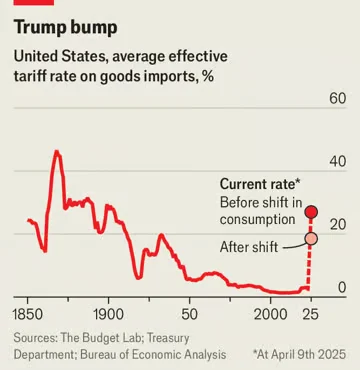
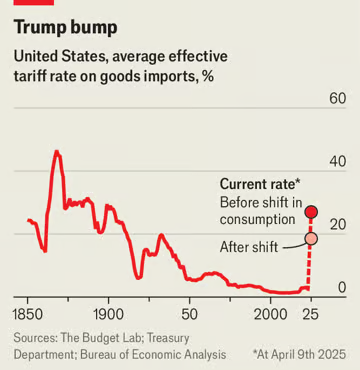
For much of the post-World War II era, the United States, alongside global partners, largely advocated for and benefited from a system of progressively lower tariffs and freer trade. This policy framework, embodied by institutions like the General Agreement on Tariffs and Trade (GATT) and later the World Trade Organization (WTO), aimed to foster economic interdependence, reduce international conflict, and promote global prosperity through comparative advantage. The accompanying chart illustrating 175 years of tariff history typically shows a dramatic decline in average U.S. tariff rates from the high protectionist levels of the late 19th and early 20th centuries to historically low single-digit percentages in recent decades.
The current wave of tariff imposition, initiated by prior administrations and significantly escalated in early 2025, marks a notable departure from this long-standing approach. These new tariffs, now reportedly seven times higher than pre-escalation levels, represent a substantial shift in economic policy. The rationale articulated by proponents, notably by figures like Donald Trump, often centers on protecting domestic industries, compelling foreign partners to negotiate more favorable trade terms, and reducing trade deficits. However, mainstream economic consensus largely warns against the broad application of tariffs, citing their tendency to distort markets, reduce efficiency, and stifle innovation.
The Protectionist Dilemma: Jobs Versus Overall Economic Health
The argument for tariffs often hinges on the promise of safeguarding or creating domestic jobs by making imported goods more expensive, thereby giving local producers a competitive edge. For example, a significant tariff on imported vehicles might boost sales for domestic automakers like General Motors, potentially leading to increased hiring and factory expansion. This immediate, visible benefit, however, often obscures broader, less obvious economic costs. Consumers face higher prices and reduced choice, while other domestic industries that rely on imported components or materials experience increased operational costs. For instance, an increase in the price of commercial vehicles due to tariffs would ripple through the logistics sector, affecting companies like Amazon and leading to slight price increases across their product range.
Furthermore, shielding domestic industries from international competition can diminish their incentive to innovate and streamline operations, potentially leading to slower technological advancement and reduced overall efficiency. While tariffs can be strategically employed for critical sectors like national defense (e.g., aerospace components) or food security, most economists agree that their widespread use typically results in a net decrease in overall employment and a slowdown in economic growth. The decision to impose tariffs on imported solar panel components, for example, has been widely criticized across the political spectrum for hindering access to cheap, clean energy, thereby raising costs for consumers and businesses alike and undermining climate goals.
Political Calculus and Constitutional Scrutiny

The economic rationale for the aggressive use of tariffs has been a subject of considerable debate. Proponents, such as Donald Trump, have often articulated a belief that tariffs can directly enhance national wealth by protecting domestic industries and reducing trade deficits. This perspective often prioritizes first-order effects—like an immediate increase in domestic production—while downplaying the secondary and tertiary impacts on broader economic efficiency, consumer prices, and international trade relations. Market reactions, however, have frequently contradicted this view; announcements of increased tariffs have typically been met with declines in stock prices, reflecting investor apprehension about reduced corporate profits and economic uncertainty. Conversely, hints of tariff reductions or pauses have often triggered market rallies.
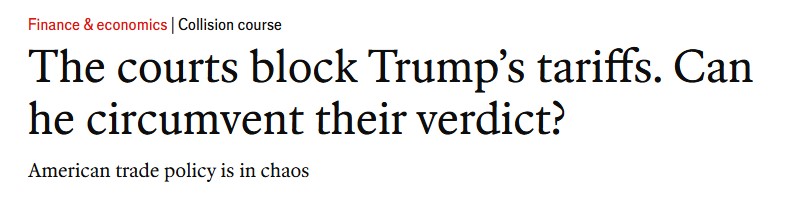
This dynamic has led many observers to speculate that the tariffs are primarily a negotiating tactic, intended to exert leverage over trading partners to achieve specific concessions or to force a restructuring of global trade agreements. The implications of such an approach are significant, placing the stability of the entire economy under the unpredictable sway of executive decisions. This concentration of power raises fundamental questions about the balance of power envisioned by the U.S. Constitution, which delineates distinct roles for the executive, legislative, and judicial branches in shaping economic policy. Recent reports, including those cited in The Economist, indicate that legal challenges to the executive’s expansive use of tariff authority are increasingly finding their way into the court system, testing the boundaries of presidential power in trade matters and potentially setting precedents for future administrations. These legal battles highlight a crucial tension between executive flexibility in foreign policy and congressional authority over commerce.
Navigating Supply Chain Shifts and the Impending Price Lag
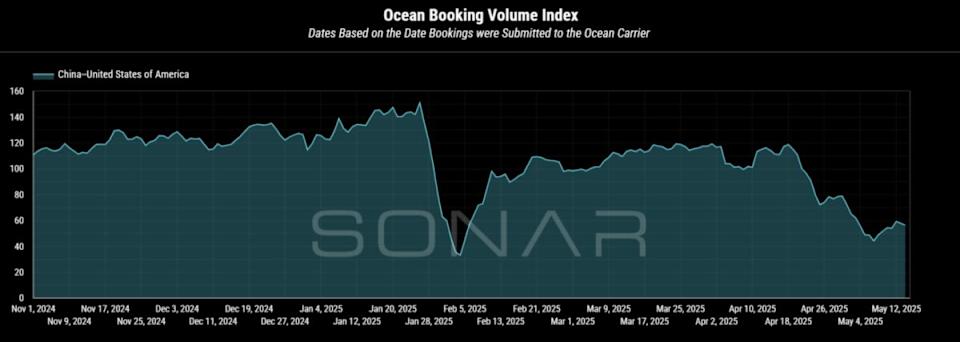
Despite the significant increase in tariff levels, many consumers have yet to experience a dramatic surge in prices. This lag is primarily attributable to the inherent inertia of the global supply chain and strategic business behaviors. The U.S. economy, functioning like a colossal cargo ship, possesses vast inventories of goods, often several months’ worth. In anticipation of tariffs, many importers strategically accelerated their orders, stockpiling goods to circumvent impending duties. This temporary buffer has allowed the market to absorb some of the initial shocks.
However, data from indices like the Freightwaves Ocean Shipping Index (OSI) indicates a significant drop in new imports, suggesting that this stockpile is gradually being depleted without being fully replenished at previous rates. As existing inventories dwindle, analysts predict that consumers will begin to see more noticeable price increases and potential shortages across various product categories in the coming months, likely throughout the summer and fall of 2025. While the absence of certain non-essential "plastic party trinkets" might be negligible, a sustained reduction in the availability of core industrial components, tools, and machinery could have more severe and widespread economic consequences. Businesses would face increased costs for essential operational inputs, potentially hindering productivity and investment.
Two Paths Forward: Scenarios for the Global Economy
The current trade environment presents two primary scenarios for the future, each with distinct economic implications:
1. Sustained High Tariffs and Trade Fragmentation:
Should the current high tariff regime persist, the global economy could witness a fundamental restructuring. The United States might experience an initial surge in domestic manufacturing as businesses seek to avoid import duties, leading to some reshoring of production. However, this would likely come at a considerable cost:
- Inflationary Pressures: Higher domestic production costs and reduced competition from imports would drive up consumer prices across the board, eroding purchasing power.
- Reduced Innovation: Shielded from global competition, domestic industries might become less dynamic and innovative, leading to a decline in product quality and choice over time.
- Economic Isolation: Trading partners would likely retaliate with their own tariffs, creating a fragmented global economy characterized by regional trade blocs rather than a seamlessly integrated system. This could diminish overall global economic growth and heighten geopolitical tensions.
- Currency Fluctuations: The U.S. dollar could face downward pressure as global trade patterns shift, potentially leading to further inflationary spirals.
2. De-escalation and a Return to Lower Tariffs:
Alternatively, if the tariffs prove to be a temporary negotiating tactic that eventually leads to a de-escalation and a return to predominantly low tariffs, the economic outlook would be far more optimistic:
- Market Confidence Restoration: A resolution of trade disputes would likely trigger a surge in investor confidence, stabilizing markets and encouraging long-term investment.
- Supply Chain Normalization: Global supply chains would regain their efficiency, reducing costs for businesses and consumers.
- Increased Trade and Investment: A renewed commitment to free trade would foster greater international collaboration, leading to increased global trade volumes and cross-border investment.
- Consumer Benefits: Lower prices, greater product variety, and enhanced innovation would benefit consumers worldwide, boosting overall economic prosperity.
This latter scenario aligns with the fundamental principle that open borders for goods, services, and even people, when managed collaboratively and respectfully, drive mutual enrichment and global economic growth.
Investor Resilience Amidst Volatility
The market’s journey since April 2nd, 2025, when a significant tariff announcement dubbed "Liberation Day" triggered a major stock market drop reminiscent of 1932, offers valuable insights into investor psychology and market resilience. Despite the initial panic, which led some investors to "lock in" substantial losses by selling during the downturn—a move consistently cautioned against by financial advisors—the market has demonstrated a remarkable capacity for recovery. Over the subsequent two months, stock prices steadily climbed back, with each perceived reduction or pause in tariff threats acting as a catalyst for upward movement.
The fact that the U.S. stock market has nearly returned to its all-time high, even while tariffs remain substantially elevated, suggests a prevailing investor belief that the current trade disputes will ultimately be resolved through a truce and a resumption of more open international trade. This optimism underscores the long-term perspective often emphasized in financial planning: market fluctuations, even severe ones, are often temporary, and patient, diversified investment strategies tend to outperform reactive, fear-driven decisions.
The Imperative of Informed Economic Discourse
The turbulent economic period of early 2025 also serves as a potent reminder of the critical importance of discerning information, particularly in an era dominated by commercial media. Modern news cycles are increasingly driven by algorithms that prioritize engagement through sensationalism, outrage, and fear, often at the expense of nuanced accuracy. This phenomenon is evident in the starkly divergent portrayals of economic events by different media outlets, where headlines can paint entirely different realities depending on their editorial slant.
For individuals seeking to understand complex economic dynamics and make informed decisions, two primary strategies emerge: either to consciously disengage from the constant barrage of news and focus on personal financial fundamentals, or to cultivate expertise in areas of genuine interest. By delving into original sources, data, and foundational economic principles, one can gain a clearer perspective that often reveals the oversimplifications or inaccuracies prevalent in mainstream reporting. Ultimately, a well-informed citizenry, capable of critically evaluating economic narratives, is essential for navigating periods of policy uncertainty and maintaining a stable long-term outlook.

Related:
Why We Are Not Really All Doomed – A foundational article explaining the long-term resilience of economies despite short-term fluctuations.

