

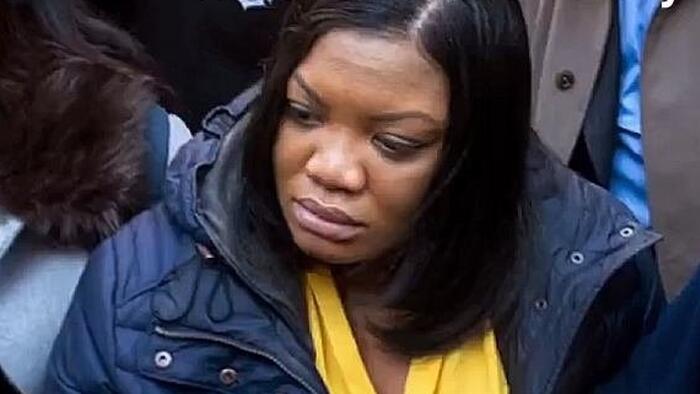
House Oversight Committee Chairman James Comer has significantly intensified the congressional inquiry into the highly controversial death of convicted sex offender Jeffrey Epstein, announcing a subpoena for former prison guard Tova Noel. This decisive action follows new revelations from Justice Department documents, which reportedly detail suspicious financial activity and unusual online searches conducted by Noel just hours before Epstein was found dead in his cell at the Metropolitan Correctional Center (MCC) in August 2019. The move signals a renewed, forceful push for transparency, challenging the long-standing official narrative of suicide and aiming to pierce through what critics describe as years of bureaucratic obstruction that have shielded figures potentially connected to Epstein’s extensive network of abuse.
Renewed Scrutiny and the Call for Accountability
Chairman Comer’s announcement, made during a Fox News interview, underscores the committee’s determination to unearth the full truth surrounding an event that has fueled widespread public skepticism and conspiracy theories. He highlighted recent media reports and previously overlooked Justice Department records as catalysts for the subpoena. These documents, according to Comer, present "red flags that scream cover-up," casting further doubt on the veracity of the initial suicide ruling.
"The recent media reports, what you just said, are very concerning – especially the suspicious activity report on a $5,000 mysterious deposit that she had," Comer stated, referring to Noel. He emphasized the unusual nature of such a report for a sum typically below the $10,000 threshold that often triggers automatic scrutiny. "That’s a mystery there, and that’s something that, according to the DOJ documents, they never looked into – never asked her about," he added, indicating a significant investigative lapse.
The committee’s overarching objective extends beyond the immediate circumstances of Epstein’s death. Comer articulated broader questions that have plagued the public conscience for years: "Because of this, because of the media reports, and because of the fact that, honestly, most people on the committee aren’t confident 100% that Epstein’s death was a suicide, we’re going to ask Ms. Noel to come in for a transcribed interview." He clarified, "Again, no one’s accusing her of any wrongdoing, but we have a lot of questions about Epstein – questions about who else was involved in abusing girls. Why did the government not do a better job of investigating and prosecuting Epstein when they had a chance years before they finally convicted him? Was Epstein a spy? Was our government involved in any way, shape, or form in trying to destroy evidence or hide evidence from any of those four properties?"
The subpoena specifically targets Noel, who was on duty during the critical hours leading up to Epstein’s death. This congressional action serves as a powerful signal that the official investigation into the financier’s demise is far from over, despite previous federal charges against Noel and her colleague, Michael Thomas, for falsifying records related to their duties.
Tova Noel: A Central Figure in the Controversy
Tova Noel’s actions and alleged inactions on the night of August 9-10, 2019, have long been a focal point of suspicion. According to official records and her own admissions, Noel, along with Thomas, failed to conduct mandated inmate checks at the MCC for approximately eight hours. Instead, they reportedly napped and engaged in online activities, subsequently falsifying logs to conceal their dereliction of duty. This profound lapse in protocol occurred while Epstein, a high-profile inmate, was under suicide watch and supposedly under heightened surveillance following a previous alleged suicide attempt just weeks prior.
New details emerging from FBI forensics reports further intensify scrutiny on Noel. Documents reveal that she performed Google searches for "latest on Epstein in jail" at 5:42 a.m. and 5:52 a.m. on August 10, 2019 – a mere 40 minutes before her colleague discovered Epstein’s lifeless body at 6:30 a.m. These searches were reportedly the only notable online activity flagged in a 66-page review of the guards’ computers. Despite this digital evidence, Noel has reportedly denied remembering the searches, labeling the records as "inaccurate."
Beyond the security breaches and suspicious online activity, financial irregularities have now come to light. Chase Bank flagged several suspicious deposits into Noel’s account, including a $5,000 deposit on July 30, 2019 – a mere ten days before Epstein’s death. This sum, as Chairman Comer pointed out, is unusually small to trigger a Suspicious Activity Report (SAR) unless other factors raised alarms. Further examination of bank records indicates a pattern of deposits, with seven transactions totaling $11,880 between December 2018 and July 2019, coinciding with her assignment to Epstein’s unit. Crucially, DOJ investigators reportedly never questioned Noel about these deposits, a significant omission that Comer’s committee aims to rectify.
Another intriguing detail from an FBI briefing identified Noel as an "orange flash" captured on camera approaching Epstein’s cell at 10:40 p.m. the night before his death, allegedly carrying linens or clothing. This was reportedly the last known approach to his tier. Noel has also denied this interaction, adding another layer of conflicting information to the incident.
In 2021, Noel and Thomas entered into deferred prosecution agreements, avoiding jail time. These agreements typically require defendants to admit wrongdoing and comply with certain conditions, with charges dropped after a specified period if conditions are met. While the agreements addressed their failure to perform duties and falsification of records, they did not delve into the broader questions now being raised by the House Oversight Committee regarding the circumstances of Epstein’s death or any potential external influence.
A Chronology of Suspicion and Systemic Failures
Jeffrey Epstein’s journey to the MCC and his subsequent death is marked by a series of red flags and systemic failures:
- July 6, 2019: Epstein is arrested on new federal sex trafficking charges in New York.
- July 23, 2019: Epstein is found semi-conscious in his cell with marks on his neck, leading to an initial declaration of a possible suicide attempt. He claimed his cellmate, Nicholas Tartaglione (a former police officer accused of four murders), had attempted to kill him, extort him, and threatened him. Prison notes reportedly stated, "Denies suicidal. Does not know what happened. Woke up with marks on neck. Cellmate tried to kill him. Cellmate is cop who killed 4 people. Tried to extort him. Threatened him." A prison psychologist recorded, "I have spoken with him. He denies suicidality. He says he doesn’t know what happened. He thinks maybe someone tried to kill him." Tartaglione was later cleared internally of wrongdoing.
- July 29, 2019: Epstein is removed from suicide watch and returned to a general population unit, despite protocol suggesting he should have had a cellmate.
- July 30, 2019: A $5,000 suspicious deposit is made into Tova Noel’s bank account, one of several unusual deposits since December 2018.
- August 9-10, 2019: Tova Noel and Michael Thomas are assigned to guard Epstein’s unit. They reportedly fall asleep, engage in online shopping, and fail to conduct required checks for approximately eight hours, falsifying logs.
- August 10, 2019 (early morning): Tova Noel conducts Google searches for "latest on Epstein in jail."
- August 10, 2019 (6:30 a.m.): Epstein is found dead in his cell. The New York City Medical Examiner later rules his death a suicide by hanging.
- August 14, 2019: Attorney General William Barr states that the MCC had "serious irregularities" and that the FBI and DOJ Office of the Inspector General would investigate.
- November 2019: Noel and Thomas are indicted for falsifying records and conspiracy.
- May 2021: Noel and Thomas enter into deferred prosecution agreements.
- March 2026: House Oversight Committee Chairman James Comer announces a subpoena for Tova Noel, citing new DOJ documents and media reports highlighting suspicious financial activity and online searches.
This sequence of events paints a troubling picture of mismanagement, negligence, and potentially, a more sinister underlying truth.
The Significance of Financial Irregularities and Digital Footprints
The re-examination of the $5,000 cash deposit into Noel’s account and other related transactions is particularly noteworthy. Suspicious Activity Reports (SARs) are crucial tools in combating financial crimes, designed to flag unusual transactions that might indicate money laundering, fraud, or other illicit activities. While a $5,000 deposit might not typically trigger an SAR in isolation, a series of deposits totaling nearly $12,000 coinciding with a sensitive assignment, coupled with other concerning behaviors, could reasonably raise suspicion. The fact that DOJ investigators reportedly overlooked or failed to pursue these financial leads is a critical point for the House Oversight Committee. It suggests either an incomplete investigation or a deliberate decision to avoid certain avenues of inquiry.
Similarly, Noel’s Google searches just hours before Epstein’s body was discovered are profoundly troubling. Her reported denial of these searches, despite forensic evidence, casts a shadow over her credibility and raises questions about her knowledge of the unfolding events. Such an action could be interpreted in multiple ways: mere curiosity, an attempt to gauge public reaction to a developing situation, or even an indication of prior knowledge or involvement.
The Metropolitan Correctional Center: A Troubled Institution
The Metropolitan Correctional Center (MCC) in Manhattan, where Epstein was held, has a long history of security breaches, mismanagement, and allegations of poor conditions. At the time of Epstein’s death, the facility was reportedly understaffed, with guards often working mandatory overtime. This environment fostered conditions ripe for negligence and potential corruption. The fact that two guards responsible for a high-profile inmate could reportedly nap, shop online, and falsify logs for hours without detection speaks volumes about the systemic failures within the institution. The MCC’s reputation further fuels public doubt, making the official suicide narrative harder to accept for many. The facility was eventually closed in 2021 due citing "deteriorating conditions."
Public Skepticism and Broader Implications
The ongoing scrutiny of Epstein’s death resonates deeply with a public that has largely rejected the official narrative. The phrase "Epstein didn’t kill himself" has become a pervasive meme and a symbol of distrust in government institutions and the justice system, particularly concerning powerful elites. Social media reactions to the latest revelations reflect this persistent skepticism.
One X user, responding to the new DOJ documents, articulated a common belief: "Epstein is alive. He was extracted, likely by our own government." This extreme theory, while speculative, highlights the profound lack of faith in the official account. Another user pointed to a "bipartisan cover-up": "The evidence points to a cover-up: Trump’s first AG Bill Barr oversaw the initial Epstein ‘suicide’ ruling amid massive irregularities, Biden’s DOJ continued the stonewalling, and now Trump’s team is doing the same. Epstein was likely a protected CIA/elite asset – too many powerful world leaders, billionaires & influencers were involved in his crimes. The government decided to bury it all to avoid total exposure & chaos." This perspective underscores the perceived bipartisan nature of the alleged cover-up, suggesting that the implications of Epstein’s network were too vast and damaging for any administration to fully expose. A third user captured the widespread frustration, stating: "The richest people in the world did horrible things to thousands of kids, Epstein was clearly and obviously either removed or murdered, Your government refuses to do anything about it while bragging about how awesome they are every day. That’s where we’re at."
These sentiments underscore the critical need for thorough, transparent investigations. The House Oversight Committee’s subpoena of Tova Noel represents a significant step in addressing these lingering questions and attempting to restore some measure of public trust. The implications of this renewed inquiry are substantial: it could potentially lead to new charges, compel further testimony from other individuals involved, or even force a re-evaluation of the official cause of death. Furthermore, it could shed light on the extent of Epstein’s illicit network and the identities of his co-conspirators, which has always been a primary concern for victims and the public. The committee’s focus on whether the government itself played any role in hiding or destroying evidence adds another layer of gravity to the proceedings. The nation watches to see if this new push for answers will finally yield the truth behind one of the most mysterious and controversial deaths in recent memory.

