
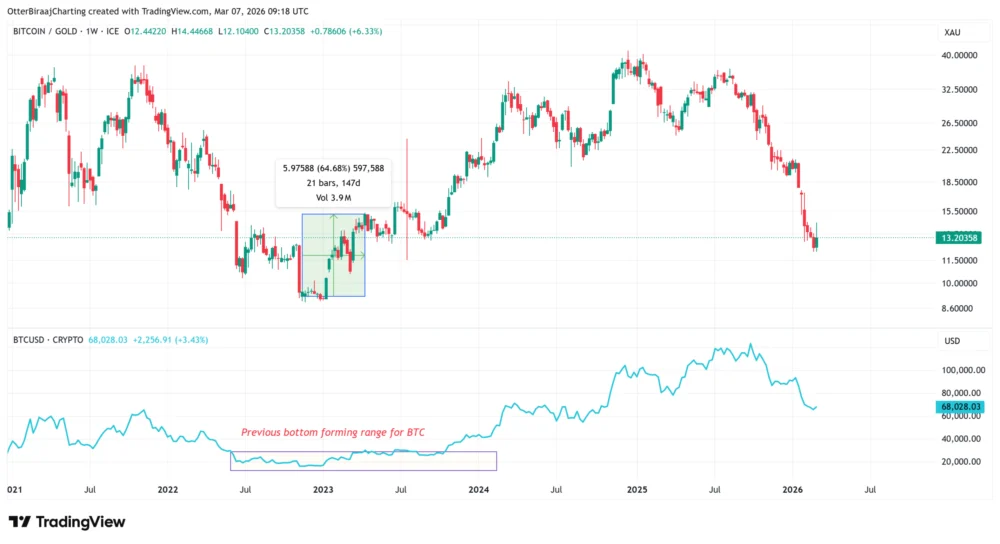
Bitcoin (BTC) exchange-traded fund (ETF) flows have experienced a notable shift, turning net positive over the past 30 days, a stark contrast to the cooling demand for gold ETFs, which have seen their nine-month streak of inflows slow. This divergence in investor sentiment and capital allocation comes even as gold prices have remained elevated, and the broader sentiment surrounding Bitcoin, despite recent inflows, continues to be a subject of keen observation. Analysts are now closely examining this confluence of data, which may indicate a gradual rotation in investor preference between these two traditional and digital safe-haven assets.
ETF Flows Signal a Potential Rotation in Investor Demand
The landscape of ETF inflows and outflows has recently painted a compelling picture of evolving investor behavior. According to data compiled by The Kobeissi Letter, the largest U.S. gold-backed ETF, GLD, experienced a significant $3 billion outflow on a recent Wednesday. This marked the largest single-day withdrawal from the fund in over two years. This substantial outflow followed a sharp 4.4% decline in gold prices, representing the most severe single-day drop since January 30th.
This significant outflow from GLD comes after a period of unprecedented demand for gold ETFs. In January alone, gold ETFs attracted a record $18.7 billion, followed by an additional $5.3 billion in February. This combined $24 billion in the first two months of the year represented the strongest start to a year on record for gold ETF inflows, extending an impressive nine-month inflow streak. The recent, substantial outflow suggests that investors may be taking profits after gold’s remarkable rally throughout the preceding year, which saw its value surge significantly.
In a contrasting trend, Bitcoin ETF flows have moved in the opposite direction over the same 30-day period. Data indicates a shift from a $1.9 billion outflow on February 6th to a net inflow of $273 million by March 6th. This turnaround signifies a renewed interest in Bitcoin as an investment vehicle, as captured by the net flow of capital into Bitcoin-related ETFs.
To further illustrate this divergence, examining the holdings data measured in native units provides a clearer picture, isolating the actual accumulation or distribution of the underlying assets from price fluctuations. Bitcoin ETF balances, when measured in BTC, moved from a net decrease of 42,275 BTC on February 6th to a net increase of 4,021 BTC by March 6th. Conversely, gold ETF holdings, measured in ounces, saw a significant decline from 1.4 million ounces to 621,100 ounces during the same timeframe. Tracking these native units is crucial as it strips away the distortion created by price movements, offering a more direct insight into the real-time demand for the underlying assets themselves.
Joe Consorti, Head of Growth at Horizon, summarized the current trend, observing, "Gold is stalling out while bitcoin is soaring. BTC is set to overtake gold’s % growth over the last month as the U.S. economy accelerates and risk sentiment improves. The anticipated risk-off – risk-on rotation could be underway." This sentiment highlights the potential for a broader market shift, where investors are reallocating capital from traditional safe havens to assets perceived to offer greater growth potential in an improving economic climate.
Historical Precedents: Gold Rallies Preceding Bitcoin Recoveries

The current market dynamics are drawing parallels to historical patterns of asset performance, particularly the cyclical relationship between gold and Bitcoin. Analysts at Fidelity Digital Assets, in their "2026 Look Ahead" report released in late December 2025, noted that gold’s impressive 65% return in 2025 was the fourth-largest annual gain since the end of the gold standard. This performance underscored gold’s role as a significant store of value and a favored asset during periods of economic uncertainty and inflation.
Within this historical context, Chris Kuiper, an analyst at Fidelity Digital Assets, observed that gold’s strong performance in 2025 might indicate it is nearing the late stages of its leadership cycle relative to Bitcoin. He posited that historically, gold and Bitcoin have taken turns outperforming each other. "With gold shining in 2025, it would not be surprising if Bitcoin takes the lead next," Kuiper stated, suggesting a potential handover of market dominance between the two assets.
The transition from gold’s leadership to Bitcoin’s potential ascendancy, however, may not be instantaneous. Market analysis suggests that such rotations can take time to fully manifest. A review of past cycles indicates that Bitcoin often requires a consolidation phase before establishing a sustained trend of outperforming gold. For instance, following Bitcoin’s 2022 market bottom, it took approximately 147 days, or 21 weeks, for the BTC-to-gold ratio to begin trending higher and establish a sustained period of outperformance. This period was characterized by consolidation and a recalibration of investor expectations.
Currently, the BTC-to-gold ratio is trading near a similar consolidation zone observed during earlier rotation phases in 2022-2023. This technical observation further supports the notion that a shift in asset leadership might be in its nascent stages, with the market consolidating before a more pronounced trend emerges.
Underlying Macroeconomic Drivers for Safe-Haven Assets
Both gold and Bitcoin have historically benefited from a confluence of macroeconomic factors that drive demand for assets perceived as safe havens. Persistent fiscal deficits in major economies, ongoing trade tensions between nations, and pervasive geopolitical uncertainty all contribute to an environment where investors seek to preserve capital outside of traditional, and potentially volatile, monetary systems.
The recent escalation of geopolitical tensions, including the ongoing conflicts involving the U.S., Israel, and Iran, has demonstrably reinforced demand for traditional safe-haven assets. Historically, periods of heightened geopolitical stress have often coincided with rallies in gold prices, as investors flock to the precious metal as a hedge against instability and uncertainty. This has provided a supportive backdrop for gold’s recent price strength.
However, the narrative of safe-haven demand is evolving. While gold has long been the preeminent safe haven, Bitcoin has increasingly been viewed by a segment of investors as a digital alternative. Its decentralized nature, limited supply, and growing institutional adoption are factors that contribute to its appeal as a store of value, particularly in an era of increasing digital transformation and potential currency debasement.
Macroeconomic strategist Lyn Alden has expressed a forward-looking perspective, anticipating that Bitcoin is poised to outperform gold over the next two to three years. This expectation follows gold’s significant rally in the preceding months, suggesting that the momentum may be shifting towards digital assets as a more compelling investment opportunity for the medium to long term. Alden’s outlook suggests that as the global economic landscape continues to evolve, the perceived risks and rewards associated with gold and Bitcoin may lead to a rebalancing of investor portfolios.

Broader Implications for Investment Strategies
The observed shift in ETF flows and the historical analysis of Bitcoin-gold performance cycles carry significant implications for investors and financial strategists. For those who have historically allocated a portion of their portfolios to gold as a safe haven, the current data suggests a potential need to re-evaluate their positions and consider the growing role of Bitcoin.
The emergence of Bitcoin ETFs has democratized access to the digital asset, making it easier for a broader range of investors to gain exposure. This increased accessibility, coupled with the growing institutional interest, has contributed to Bitcoin’s increasing integration into mainstream investment portfolios. The sustained inflows into Bitcoin ETFs, even amidst broader market fluctuations, signal a growing conviction among a segment of investors about Bitcoin’s long-term value proposition.
Conversely, the outflows from gold ETFs, while currently modest in the context of their overall inflows, could be an early indicator of a more sustained rotation. Investors who have benefited from gold’s recent price appreciation may be looking to diversify their holdings and capture potential growth in other asset classes.
The potential for a "risk-on" rotation, as suggested by Joe Consorti, implies a broader market sentiment shift where investors are more willing to embrace assets with higher growth potential. As economic indicators improve and geopolitical risks, while still present, become more manageable, capital may flow away from traditional safe havens towards assets that are perceived to offer greater upside.
However, it is crucial to acknowledge that both gold and Bitcoin are subject to their own unique sets of risks and volatilities. While Bitcoin has demonstrated a strong growth trajectory, its price can be subject to significant fluctuations. Similarly, gold prices are influenced by a complex interplay of factors, including central bank policies, inflation expectations, and global demand.
Conclusion: A Dynamic Landscape of Value Preservation and Growth
The recent divergence in ETF flows between Bitcoin and gold represents a compelling narrative in the evolving landscape of investment. While gold has historically served as the primary safe-haven asset, Bitcoin’s increasing maturity as an asset class, coupled with its unique digital characteristics, is challenging this established order. The data suggests that investors are actively reassessing their allocation strategies, potentially seeking to balance the capital preservation offered by gold with the growth potential perceived in Bitcoin.
The interplay between macroeconomic stability, geopolitical events, and investor sentiment will continue to shape the performance of both assets. As the global economy navigates its current complexities, the dynamic between these two distinct yet often complementary stores of value will remain a key area of focus for market participants worldwide. The coming months will likely provide further clarity on whether this observed rotation is a temporary market adjustment or the beginning of a more profound and lasting shift in investor preference.

