
The protracted US-Israeli military campaign against Iran entered a new phase of uncertainty on March 9, 2026, as President Trump offered a surprising assessment that the conflict could be "over soon," contradicting earlier projections and the latest developments from a defiant Tehran. This declaration arrived amidst a week of intense bombardment, a significant leadership transition in Iran, escalating regional retaliatory strikes, and volatile global oil markets, painting a complex picture of a war whose trajectory remains highly contested.
Trump’s Optimism Contrasts with Initial Projections and Iranian Defiance
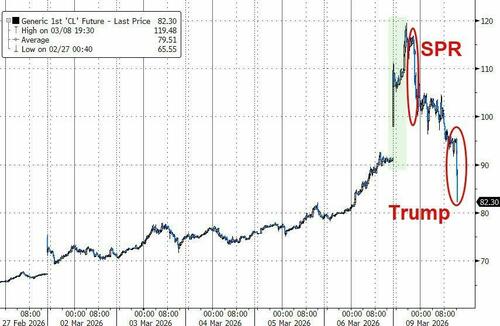
In an unexpected statement to CBS News at approximately 15:45 ET, President Trump asserted that the war was "very far ahead of schedule" and "very complete, pretty much." He detailed a seemingly crippled Iranian military, claiming, "They have no navy, no communications, they’ve got no air force. Their missiles are down to a scatter. Their drones are being blown up all over the place, including their manufacturing of drones. If you look, they have nothing left. There’s nothing left in a military sense." This optimistic outlook sent immediate ripples through the global economy, with oil prices rapidly dropping by 30% from their overnight highs.
Trump’s remarks stand in stark contrast to the initial, more conservative timelines for the conflict, which began with talk of a mere four-day operation, quickly expanding to four or five weeks, and later extending to an eight-week estimate by administration figures like Pete Hegseth. The sudden shift raises critical questions: Is the White House actively preparing for a swift de-escalation and an "off-ramp" from the conflict? This speculation gained traction as observers noted a potential softening in stated US objectives.
Earlier on Monday, however, the narrative from Tehran signaled a resolute defiance. Following a week of heavy US-Israeli bombardment aimed at achieving regime change, Iran showcased governmental continuity and stability. The regime vowed to fight back indefinitely, with analysts emphasizing Iran’s strategic need to inflict a significant cost on the US and Israel to deter future attacks. This resolve was underscored by a critical leadership change.
A Hardline Succession and Iran’s Vow to Endure
The most significant development from Iran was the reported allegiance pledged to Mojtaba Khamenei, 56, who was named on Sunday to succeed his slain father, Ayatollah Ali Khamenei, as the country’s new Supreme Leader. Mojtaba, a military veteran of the eight-year Iran-Iraq war and a figure whose wife, Zahra, was killed in an Israeli airstrike, is widely perceived as a hardliner, even more so than his father. He is reportedly the favored choice of the Islamic Revolutionary Guard Corps (IRGC).
The Wall Street Journal highlighted the ominous implications of this succession with a headline suggesting a "Fight to the End." The elevation of Mojtaba, long associated with the IRGC, indicates that President Trump’s initial efforts to "cow the regime into surrender" have failed, effectively solidifying hardliner control and further marginalizing moderate and reformist factions. Sanam Vakil, director of the Middle East and North Africa program at Chatham House, noted that Mojtaba Khamenei’s ascendance "suggests the continuation of the same old strategy: repression at home and resistance internationally."
President Trump had previously voiced strong disapproval of Mojtaba’s potential leadership, telling Axios that "Khamenei’s son is unacceptable to me" and that he would "have to be involved in the appointment, like with Delcy [Rodríguez] in Venezuela." This assertion, however, was met with direct defiance by Tehran, which proceeded with Mojtaba’s appointment, signaling its refusal to acquiesce to external demands regarding its internal governance.
Shifting War Aims and the Elusive Exit Strategy
The apparent shift in President Trump’s rhetoric also coincided with a noticeable evolution in the publicly stated goals of the US-Israeli mission. A tweet from "Secretary Rubio" (referencing a Department of State account from 2026) outlined clear, albeit seemingly limited, objectives: "Destroy their ability to launch missiles, Destroy factories making these missiles, Destroy their navy." Notably absent from this updated list were explicit mentions of removing the Iranian regime, destroying Iran’s nuclear program, or dismantling its ability to project power via proxy forces.
This omission fueled speculation about a potential "off-ramp" and a politically expedient declaration of victory. However, the alignment of US and Israeli objectives remains a critical, unanswered question. President Trump’s recent remarks underscored this potential divergence, stating, "Iran was going to destroy Israel and everything else around it. We’ve worked together. We’ve destroyed a country that wanted to destroy Israel." He indicated that while he would consult directly with Israeli Prime Minister Benjamin Netanyahu, "I’ll make a decision at the right time." The question remains whether Israel would cooperate with a swift exit if its broader strategic goals, particularly regarding Iran’s nuclear capabilities and proxy networks, are not fully met.
US establishment think tanks are taking note of the administration’s struggle with an exit strategy. The New York-based Soufan Center pointed out that "all layers of Iran’s existing power structure oppose U.S. influence in Iran and the broader region," and "regime officials differ only by degree." The Center also highlighted the narrow opportunities to mimic a transition like that achieved in Venezuela, suggesting the complexity of imposing external leadership changes on Iran.
Intensifying Regional Repercussions and Economic Fallout
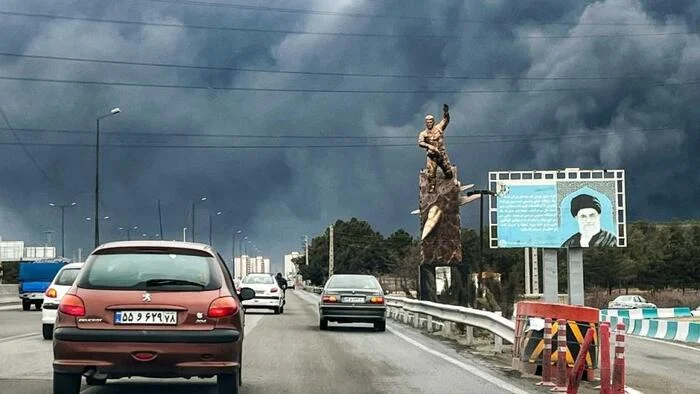
While Washington hinted at a winding down, the conflict continued to rage across the region. The United States and Israel maintained their mass bombing campaign, with explosions reported in Qom and Tehran. Weekend Israeli strikes on oil facilities had already sent toxic smoke and "oil-infused rain" across the Iranian capital, underscoring the environmental and humanitarian toll.
Iranian Foreign Ministry spokesman Esmaeil Baghaei vehemently rejected the notion of an imminent end, stating that the attacks aimed "at partitioning our country to take illegal possession of our oil riches." He referenced the "Syria model," a scenario Israeli policymakers have reportedly considered for decades, involving the fracturing and weakening of a state. Baghaei emphasized, "While military aggression continues, there is little room to talk about anything other than a decisive response." This directly countered President Trump’s earlier demand for "unconditional surrender" from Iran.
The economic impact of the escalating conflict became increasingly apparent. Oil prices surged more than 25% at the start of the week, reaching their highest levels since mid-2022. This spike was attributed to major producers cutting supplies and fears of prolonged shipping disruptions in global markets as the war expanded. Iranian Foreign Minister Abbas Araghchi reiterated on Sunday that Tehran would only consider a ceasefire for a permanent end to the war on its terms, reminding the West of a previous ceasefire that ended a "12-war" in June.
Wider Fronts and Retaliatory Strikes
Iran’s retaliatory attacks continued across the region. Saudi Arabia accused Iran of "baseless claims" and ongoing aggression, including allegations that fighter jets and refueling aircraft stationed in Saudi Arabia were preparing to join the war. Despite an earlier apology from Iranian President Masoud Pezeshkian to Gulf states, promising to halt strikes unless attacks originated from their territory, Saudi Arabia’s Foreign Ministry stated that Iran had "not reflected that statement in practice." This suggested a potential disconnect between Iran’s political leadership and the operational autonomy of the IRGC under emergency war orders.
Elsewhere in the Gulf, thick smoke was observed rising from the Bapco oil refinery in Bahrain following an Iranian drone strike on the island of Sitra, which reportedly injured 32 people overnight. Gulf states consistently reported new strikes, indicating a broad Iranian response to the destruction of its own oil and fuel storage sites.
The conflict’s "second front" in Lebanon also escalated significantly. Multiple Israeli airstrikes targeted the southern suburbs of Beirut, including a financial institution linked to Hezbollah. Furthermore, Hezbollah reported engaging Israeli forces that had landed by helicopter in eastern Lebanon, across the Syrian border – the second such Israeli ground operation since the conflict began. This indicated a widening of the ground war beyond southern Lebanon.
Resilience of the Iranian Regime and Military Strength
Despite the massive scale of US and Israeli firepower, reports suggested the strikes had not dismantled the core structures of the Iranian regime. Experts, including Alan Eyre, a Farsi-speaking former diplomat, observed that the regime’s power structure is "arranged precisely to endure such external shocks and maintain power." Eyre told The Wall Street Journal, "The IRGC and other elites benefit the most from the status quo and would rather fight than switch."
The Islamic Revolutionary Guard Corps, established in 1979 to safeguard the revolutionary system, boasts approximately 190,000 active-duty troops and operates as the elite core defense perimeter, reporting directly to the Supreme Leader and often bypassing Iran’s conventional armed forces. Additionally, the country has a domestic IRGC internal security force comprising roughly 600,000 irregular Basij militia members, capable of rapid mobilization. This substantial, ideologically committed force contributes significantly to the regime’s resilience.
Diplomatic Maneuvers and Future Scenarios
Amidst the escalating violence, whispers of diplomatic efforts emerged. Unconfirmed reports from CNN/News18 suggested Iran was seeking peace talks with the US, with Qatar, Oman, and Italy involved in mediation. Simultaneously, The Washington Post reported that "a few senior officials in Israel are starting to voice concern about the escalating, open-ended attack on Iran – and suggesting possible exit ramps."
Adding to the diplomatic flurry, US envoys Steve Witkoff and Jared Kushner reportedly plan to travel to Israel on Tuesday to meet with Prime Minister Netanyahu, though this trip remains officially unconfirmed. Such high-level engagement suggests a concerted effort to coordinate strategy and potentially explore de-escalation pathways.
The question of "what’s next" remains paramount. Bloomberg reviewed earlier weekend reporting suggesting that President Trump was "weighing the option of deploying special forces on the ground to seize Iran’s near bomb-grade uranium." This indicates a potential pathway to further escalation, particularly if the air campaign fails to achieve certain strategic objectives.
Reports of divergence between Washington and Tel Aviv regarding ultimate war aims persist. One US official, an Israeli official, and a source with knowledge of the matter claimed that Israel’s strikes on 30 Iranian fuel depots on Saturday "went far beyond what the U.S. expected," sparking the first significant disagreement between the allies in eight days. However, some analysts, like Adam Johnson, suggested that such reports of "distance" between the close allies could be a deliberate strategy to create artificial separation between President Trump and a potentially unpopular, prolonged war.
As the conflict enters its ninth day on March 9, 2026, the situation remains precariously balanced between President Trump’s surprising optimism for an early conclusion and Iran’s hardened resolve, regional escalation, and the formidable challenge of an elusive exit strategy. The fate of the region, and indeed global stability, hinges on which narrative ultimately prevails.

