
The initial promise of artificial intelligence in the workplace was one of liberation, a technological ally designed to streamline tasks, reduce drudgery, and ultimately free up human workers for more creative and strategic endeavors. However, a growing body of research and anecdotal evidence suggests a starkly different reality is emerging for many employees. The excessive use and often poorly managed integration of AI tools are leading to a phenomenon now being termed "AI brain fry," a state of mental fatigue that directly contradicts the technology’s advertised benefits of easing job pressures. Instead of a productivity boon, many workers are finding AI to be an intensifier of work, leading to cognitive overload and a range of negative psychological and performance impacts.
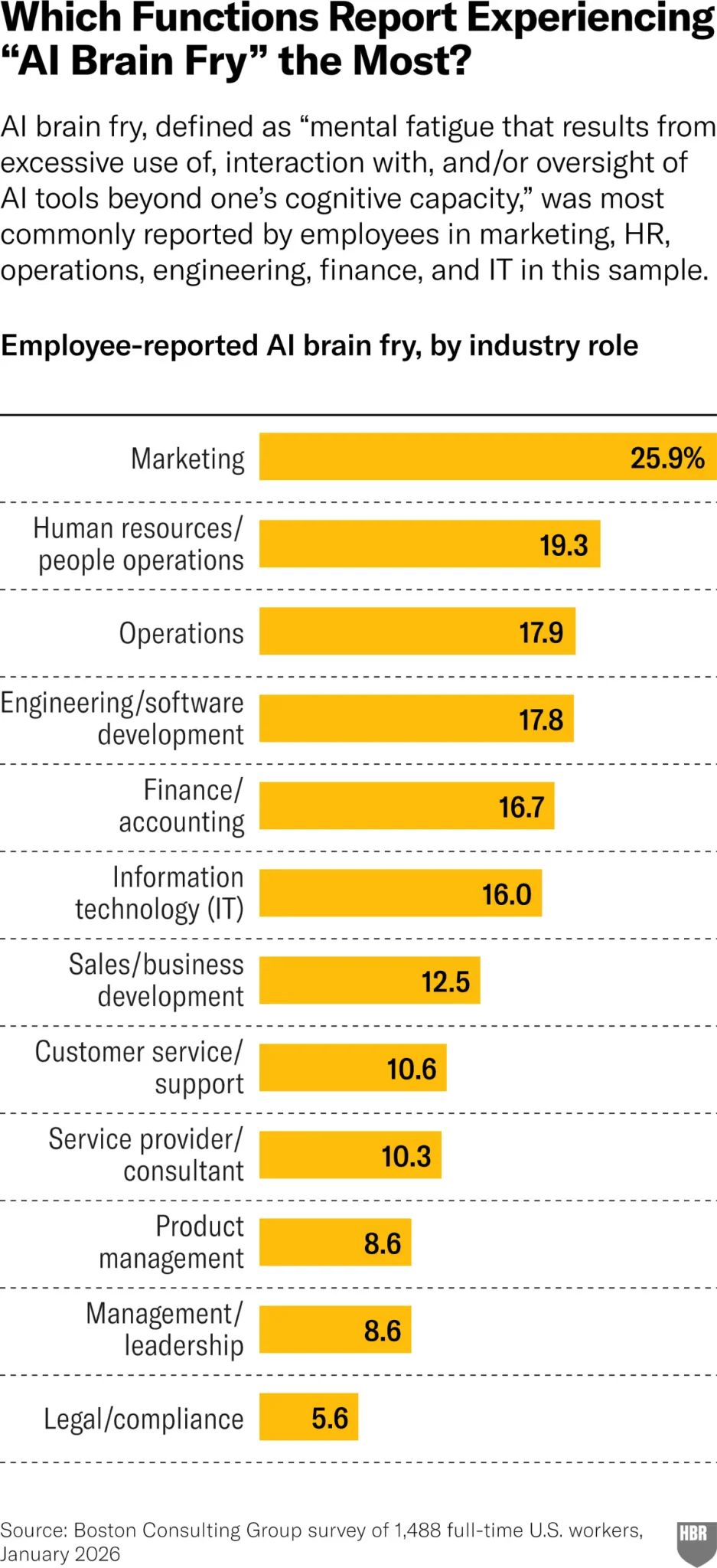
This counterintuitive outcome was detailed in a recent report published in the Harvard Business Review, authored by researchers from the Boston Consulting Group and the University of California. Their study, which surveyed nearly 1,500 full-time employees across the United States, revealed that a significant 14% of respondents reported experiencing "mental fatigue that results from excessive use of, interaction with, and/or oversight of AI tools beyond one’s cognitive capacity." This condition, aptly named "AI brain fry" by the researchers, manifests in a variety of debilitating symptoms. Workers described feeling a "mental hangover," a pervasive "fog" or "buzzing" sensation, and a marked inability to think clearly. These cognitive impairments were often accompanied by physical manifestations such as headaches, a noticeable slowing of decision-making processes, and significant difficulties in maintaining focus.
The disconnect between AI’s marketing and its lived experience in the workplace is particularly acute. AI companies have consistently positioned their products as potent productivity boosters, capable of offloading substantial portions of an employee’s workload. This narrative has been embraced by many organizations, with some even adopting AI usage as a key performance metric. The implications of this pressure are far-reaching. For instance, in the cryptocurrency sector, Brian Armstrong, the CEO of Coinbase, has publicly stated his commitment to AI integration, even going so far as to dismiss engineers who were resistant to its adoption. Last year, Coinbase set an ambitious goal for AI to generate nearly half of the platform’s code, underscoring a corporate culture that prioritizes AI-driven output.
The researchers highlight a critical flaw in the current implementation of AI within many organizational structures: the proliferation of multi-agent systems. As enterprises increasingly adopt diverse AI tools and platforms, employees find themselves constantly "toggling between more tools." This constant context-switching and management of multiple AI interfaces, rather than freeing up mental bandwidth, often results in a state of perpetual multitasking. The promise of having more time to focus on meaningful work is frequently overshadowed by the demanding reality of juggling and overseeing an ever-increasing array of AI-driven processes. This dynamic fundamentally alters the nature of work, shifting the burden from task execution to task management and AI oversight.
The Tangible Costs of "AI Brain Fry"
The consequences of this AI-induced mental strain are not merely anecdotal; they carry significant and measurable economic and operational costs for organizations. The researchers identified a direct correlation between AI brain fry and increased employee errors, decision fatigue, and a heightened intention to quit.
Escalating Decision Fatigue: Employees who reported experiencing AI brain fry exhibited 33% more decision fatigue compared to their counterparts who did not. This heightened susceptibility to fatigue in decision-making can have a cascading effect within a company. For large enterprises, where critical decisions are made daily, this increase in decision fatigue could translate into millions of dollars in financial losses annually due to suboptimal choices, missed opportunities, or inefficient resource allocation. The cognitive load imposed by managing AI systems can impair the very judgment that is crucial for effective leadership and operational efficiency.
Increased Likelihood of Turnover: The impact on employee retention is equally concerning. Workers suffering from AI brain fry were found to be approximately 40% more likely to express an active intent to leave their current positions. This elevated risk of turnover signifies a critical challenge for businesses striving to retain talent. The constant mental exertion and lack of perceived benefit from AI integration can lead to burnout and dissatisfaction, prompting employees to seek environments where their cognitive well-being is better supported. The cost of recruitment, training, and the loss of institutional knowledge associated with high turnover rates can be substantial.
Rise in Major Errors: Perhaps the most alarming finding relates to the impact on work quality. Individuals reporting AI brain fry self-identified making nearly 40% more major errors than those who did not. A "major error" was defined in the study as one with "serious consequences, such as those that could affect safety, outcomes, or important decisions." This statistic is particularly concerning in industries where precision and accuracy are paramount, such as healthcare, finance, or engineering. The cognitive fog and reduced focus associated with AI brain fry can directly lead to mistakes with potentially severe ramifications, undermining the very productivity gains AI is supposed to deliver.

A Nuanced Perspective: AI’s Potential to Alleviate Burnout
Despite the pervasive challenges of AI brain fry, the research also offered a glimmer of hope, indicating that AI can, under certain conditions, serve as a powerful tool to combat burnout. The study found that respondents who utilized AI specifically to automate repetitive and routine tasks reported a 15% lower level of burnout compared to those who did not leverage AI in this manner.
This distinction is crucial. When AI is employed to replace monotonous, time-consuming, and low-value activities, it allows employees to reclaim mental energy and time. This shift enables them to concentrate on more engaging, creative, and intellectually stimulating aspects of their roles. This suggests that the problem lies not with AI itself, but with its implementation and the expectations placed upon its users. The key appears to be the strategic application of AI as a genuine assistant for drudgery, rather than a complex overseer demanding constant cognitive engagement.
Navigating the Future: Recommendations for Organizations
The researchers offered concrete recommendations for company leaders aiming to mitigate the negative effects of AI brain fry and harness its potential benefits responsibly.
Clarifying Purpose and Impact: A fundamental step involves "clearly defining AI’s purpose in the organization." This means articulating precisely how AI tools are intended to function, what problems they are meant to solve, and, crucially, how employee workloads will be reshaped by their integration. Transparent communication about the role of AI can help manage expectations and reduce the anxiety associated with its adoption.
Focusing on Measurable Outcomes: The study emphasized the importance of adhering to "measurable outcomes" for AI implementation. This approach discourages the pursuit of mere AI usage quantity, which can lead to "waste, low-quality work, and unnecessary mental strain." Instead, organizations should focus on the tangible results and efficiencies achieved through AI, ensuring that its deployment genuinely contributes to strategic objectives without overburdening employees.
Strategic Integration and Training: The findings implicitly suggest that organizations need to move beyond a blanket adoption of AI tools. A more strategic approach would involve carefully selecting AI applications that genuinely enhance productivity without demanding excessive cognitive overhead. Furthermore, robust training programs are essential. These programs should not only teach employees how to operate AI tools but also provide guidance on effective interaction strategies, critical evaluation of AI outputs, and techniques for managing cognitive load when working with AI. This includes understanding the limitations of AI and knowing when human judgment is indispensable.
Ethical Considerations and Human-Centric Design: As AI becomes more deeply embedded in the workplace, ethical considerations surrounding its use are paramount. Organizations must prioritize human-centric design principles, ensuring that AI systems are developed and deployed in ways that augment, rather than detract from, human capabilities and well-being. This includes fostering a culture where employees feel empowered to voice concerns about AI integration and where their mental health is prioritized.
The phenomenon of "AI brain fry" serves as a critical wake-up call for businesses and AI developers alike. It underscores that technological advancement, while promising, must be accompanied by thoughtful implementation, clear strategic vision, and a profound respect for the cognitive and emotional well-being of the human workforce. The future of work hinges on finding a harmonious balance between artificial intelligence and human intelligence, ensuring that technology serves as a tool for empowerment and progress, not a source of burnout and mental exhaustion.

