
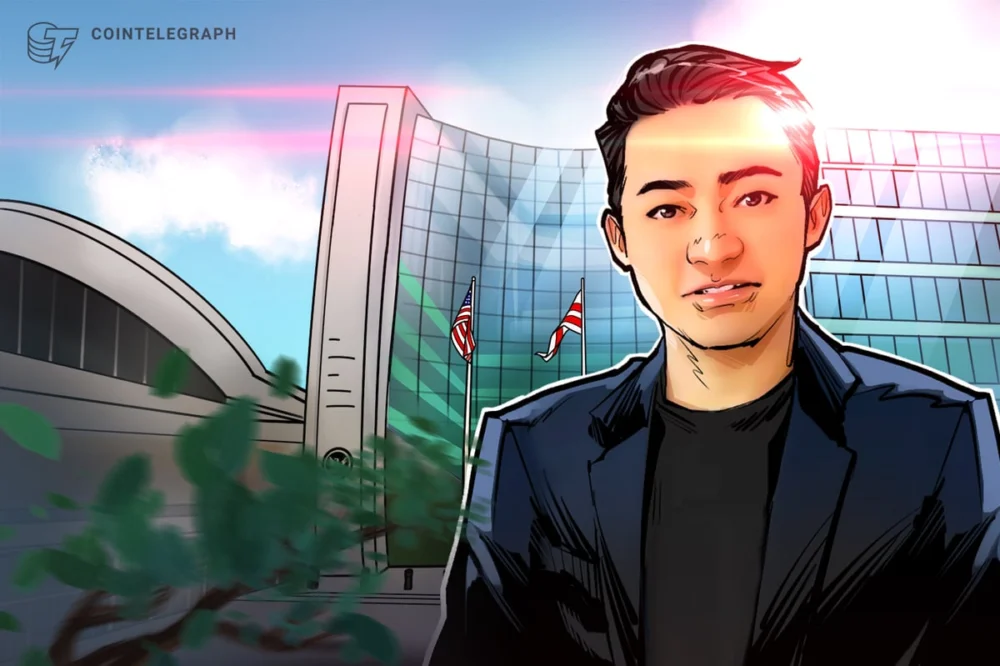
The U.S. Securities and Exchange Commission (SEC) has officially concluded its protracted fraud and securities violation lawsuit against cryptocurrency entrepreneur Justin Sun, agreeing to a $10 million settlement that brings a two-year legal confrontation to a close. The resolution, detailed in a letter filed with a Manhattan federal court on Thursday, sees one of Sun’s companies, Rainberry, agree to pay the substantial fine. In return, the SEC has agreed to drop its claims against Sun himself, as well as his associated entities, the Tron Foundation and the BitTorrent Foundation.
This development marks a significant turning point in a case that has been closely watched by the cryptocurrency industry, raising critical questions about regulatory oversight and the classification of digital assets. The lawsuit, initially filed in March 2023, centered on allegations that Sun and his companies engaged in the unlawful sale of unregistered securities through the Tronix (TRX) and BitTorrent (BTT) tokens. Furthermore, the SEC had accused Sun of orchestrating a scheme of wash trading, a manipulative practice designed to inflate the trading volume of TRX.
Background of the Legal Dispute
The SEC’s action against Justin Sun was part of a broader and increasingly assertive regulatory stance by the agency towards the burgeoning digital asset market. For years, the classification of many cryptocurrencies as either securities or commodities has been a contentious issue, creating a landscape of regulatory uncertainty. The SEC, under the leadership of Chair Gary Gensler, has argued that many initial coin offerings (ICOs) and token sales, including those orchestrated by Sun, constituted unregistered securities offerings, thereby violating federal securities laws.
The lawsuit detailed specific allegations against Sun, claiming that he and his associates profited from the unregistered sale of TRX and BTT tokens. The SEC contended that these tokens met the criteria for securities under the Howey Test, a long-standing legal precedent used to determine whether a transaction qualifies as an investment contract. The Howey Test generally considers whether there is an investment of money in a common enterprise with a reasonable expectation of profits to be derived from the efforts of others.
In addition to the unregistered securities claims, the SEC also accused Sun of manipulating the market for TRX. The complaint alleged that Sun and his associates engaged in wash trading, where they simultaneously bought and sold TRX to create a false impression of active trading and artificially inflate its price. This practice is designed to deceive potential investors into believing that there is greater market interest and liquidity than actually exists.
Chronology of the Lawsuit
The legal saga began to unfold in earnest in March 2023 when the SEC formally filed its complaint against Justin Sun and his affiliated entities. The lawsuit immediately drew significant attention, given Sun’s prominent role in the cryptocurrency space and the substantial market capitalization of the tokens in question.
Following the initial filing, the legal proceedings involved extensive discovery, motions, and negotiations. Both sides engaged in a protracted legal battle, with the SEC seeking to hold Sun accountable for alleged violations of securities laws, and Sun’s legal team mounting a defense against these charges. The duration of the lawsuit, spanning over two years, underscored the complexity of the legal and technical aspects involved in prosecuting digital asset-related fraud cases.
During this period, the cryptocurrency market itself experienced significant volatility, with regulatory developments and enforcement actions by the SEC and other agencies frequently influencing market sentiment. The lawsuit against Sun was one of several high-profile cases that shaped the ongoing debate about crypto regulation in the United States.
The settlement agreement, formalized through a letter to the court, represents the culmination of these efforts. The decision to settle rather than proceed to a full trial suggests a strategic choice by both parties, potentially aimed at avoiding further protracted legal costs, uncertainty, and the reputational risks associated with a lengthy trial.
Key Provisions of the Settlement
The core of the settlement hinges on Rainberry, a company linked to Justin Sun, agreeing to pay a $10 million fine to the SEC. This financial penalty is intended to compensate for the alleged harms caused by the actions described in the lawsuit. Importantly, the settlement includes a provision for the dismissal of all claims against Justin Sun personally, as well as against the Tron Foundation and the BitTorrent Foundation. This means that these entities and Sun himself will no longer face legal jeopardy from the SEC in this specific case.
The SEC’s decision to drop claims against Sun and his foundations, while securing a financial penalty from Rainberry, indicates a pragmatic approach to resolution. It allows the agency to achieve a tangible financial outcome and close the case without the inherent risks and lengthy process of a trial. For Sun and his associated entities, the settlement provides a clear path forward, free from the immediate threat of further litigation from the SEC in this matter.
Supporting Data and Industry Context
The tokens at the center of the lawsuit, Tronix (TRX) and BitTorrent (BTT), represent significant projects within the blockchain ecosystem. Tron, founded by Justin Sun, aims to build a decentralized internet and has developed a robust blockchain network supporting a wide range of decentralized applications (dApps). BitTorrent, a well-known file-sharing protocol, was acquired by Sun in 2018, with the intention of integrating blockchain technology and tokenization into its platform.
The market capitalization of these tokens has historically been substantial, reflecting their widespread adoption and the significant investment by the crypto community. TRX, at its peak, has been among the top cryptocurrencies by market value, and BTT also holds a notable position within the ecosystem. The SEC’s allegations that these tokens were sold as unregistered securities have profound implications for how such digital assets are viewed and regulated in the future.
The settlement amount of $10 million, while significant, is relatively modest in the context of the overall cryptocurrency market and the potential gains that could have been realized from the alleged unregistered securities sales. However, the primary objective for the SEC in such cases is often to establish regulatory precedent and deter future violations.
Reactions and Broader Implications
While official statements from Justin Sun have not been immediately available following the settlement announcement, his legal team has likely advised on the terms and implications. In past instances, individuals and entities facing SEC scrutiny have often issued statements emphasizing their cooperation with regulators and their commitment to compliance.
The broader implications of this settlement for the cryptocurrency industry are multifaceted. Firstly, it reinforces the SEC’s commitment to enforcing existing securities laws in the digital asset space. Even though this case has been settled, it sends a clear message that the agency will continue to pursue alleged violations, particularly concerning unregistered securities offerings.
Secondly, the settlement may provide some clarity, albeit indirectly, on the SEC’s interpretation of what constitutes an unregistered security. While the specifics of the settlement may not set a definitive legal precedent in the same way a court ruling would, the SEC’s willingness to resolve the case suggests a particular view on the nature of the TRX and BTT tokens.
Furthermore, the case highlights the ongoing tension between innovation in the blockchain space and the need for robust regulatory frameworks. Entrepreneurs and developers in the crypto industry will likely continue to grapple with navigating complex securities laws, and this settlement serves as another reminder of the potential regulatory risks involved.
The SEC’s approach to cryptocurrency regulation has been a subject of considerable debate. Some industry participants argue that the agency’s stance is overly aggressive and stifles innovation, while others believe that stronger regulation is necessary to protect investors and maintain market integrity. The settlement with Justin Sun is likely to be viewed through these different lenses, depending on one’s perspective on crypto regulation.
Looking Ahead
As the cryptocurrency industry continues to evolve, regulatory scrutiny is expected to remain a prominent feature. The SEC’s ongoing enforcement actions and its efforts to clarify regulatory guidelines will play a crucial role in shaping the future of digital assets. This settlement with Justin Sun represents a significant chapter in that ongoing narrative, offering a glimpse into the SEC’s strategies for addressing alleged fraud and securities violations in the fast-paced world of cryptocurrency.
The resolution of this lawsuit allows the market to move past a period of significant legal uncertainty surrounding Justin Sun and his projects. It also underscores the importance for all participants in the digital asset space to be acutely aware of and compliant with applicable securities laws, regardless of the novelty or technological sophistication of their offerings. The $10 million settlement, while a resolution for this specific case, is unlikely to signal an end to the SEC’s broader efforts to regulate the digital asset market. The agency’s mandate remains to protect investors, maintain fair and orderly markets, and facilitate capital formation, principles that will continue to guide its actions in the years to come.

