
The United States and Israel are pursuing a rapidly escalating military campaign against Iran, characterized by "shock and awe" tactics that have profoundly destabilized the broader Middle East. What began as an intensive series of airstrikes has quickly morphed into a declared, albeit unofficially acknowledged, regime change operation targeting Tehran, drawing comparisons to previous interventions in the region. The conflict, now spanning multiple fronts and involving a complex interplay of military and diplomatic maneuvers, is pushing global energy markets to the brink and risking a wider regional conflagration.
Escalation of Military Operations and Civilian Toll
Since Saturday, March 1, 2026, the US-Israeli military offensive, dubbed "Operation Epic Fury" by the Trump administration, has claimed the lives of at least 1,230 people, a figure consistently rising as hostilities intensify. The campaign has seen Israeli forces intensify strikes not only within Iran but also across Lebanon, where a ground war with Hezbollah has reportedly commenced. The scale of the aerial assault on Iran is significant, with the Israel Defense Forces reporting that approximately 90 Israeli Air Force fighter jets participated in a recent operation, striking around 40 targets with an estimated 200 bombs in a new wave of attacks around Tehran. Targets have included the headquarters of Iran’s special forces, bases of the Basij paramilitary organization, and other government-linked sites.
Iranian authorities, however, allege that civilian infrastructure has been extensively hit, including residential areas and educational facilities. State media and local health officials reported a devastating airstrike on a girls’ elementary school, killing 175 people, with Iran’s semiofficial Fars news agency further alleging that missiles struck two schools in the town of Parand, southwest of Tehran. Widely circulated images depict debris and destruction within what appeared to be classrooms, alongside significant damage to nearby residential buildings. These reports fuel Iranian charges that more schools are being obliterated, leading to a severe humanitarian crisis amidst the ongoing military operations.
Iran’s Retaliation and Missile Capabilities
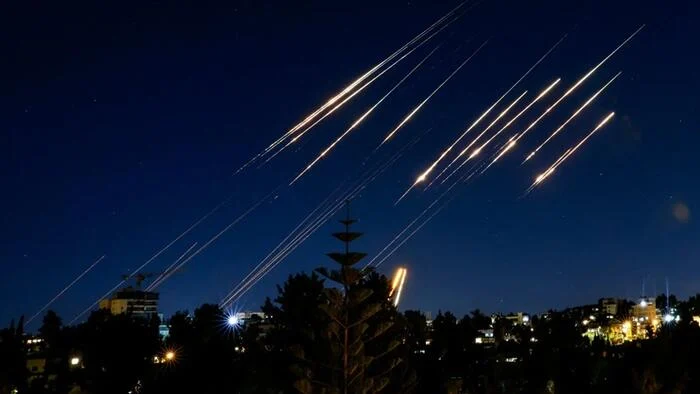
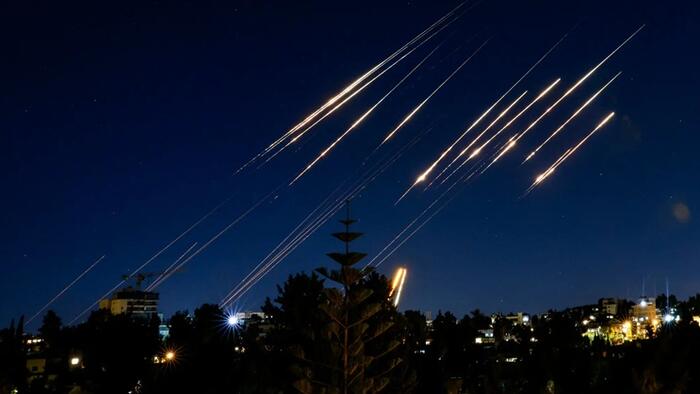
In response to the relentless US-Israeli assault, Iran’s Revolutionary Guards (IRGC) have significantly upped their retaliatory strikes, launching what is described as the 19th wave of missile and drone attacks targeting Israel and US assets across the Middle East. Videos emerging from Tel Aviv overnight on March 5, 2026, depicted dozens of ballistic missiles soaring over the city, with many reportedly evading Israel’s advanced air defenses before hitting targets and erupting in massive fireballs. While Israeli military assessments have downplayed the extent of the damage, claiming only a small number of missiles were launched and no impacts were recorded in residential neighborhoods, ground-level reports and imagery suggest otherwise, confirming that numerous projectiles are successfully penetrating defenses. Medics, however, have reported no injuries following the latest barrages.
The IRGC claimed responsibility for firing ballistic missiles carrying one-ton explosive warheads at Tel Aviv’s Ben Gurion Airport, with one projectile reportedly landing in Bareket, east of Tel Aviv, sending millions of residents across central Israel into shelters overnight. These incidents highlight the growing sophistication and reach of Iran’s missile arsenal. Iranian military sources claim they have only tapped into older stockpiles, hinting at the potential deployment of more advanced, high-tech, and devastating missiles. This raises critical questions for intelligence agencies and military analysts regarding the true depth of Iran’s missile and drone capabilities and how long the Islamic Republic could sustain such a barrage, a question also being posed regarding Pentagon stocks.
The Strait of Hormuz Crisis and Global Energy Impact
A critical dimension of the escalating conflict is its immediate and severe impact on global energy markets, particularly through the Strait of Hormuz. The IRGC had announced the closure of this vital shipping route, throttling oil and gas flows and sending shockwaves through international markets. This chokepoint, through which roughly one-fifth of the world’s total oil consumption passes, is crucial for the transport of crude oil and liquefied natural gas (LNG) from Gulf states to global markets.
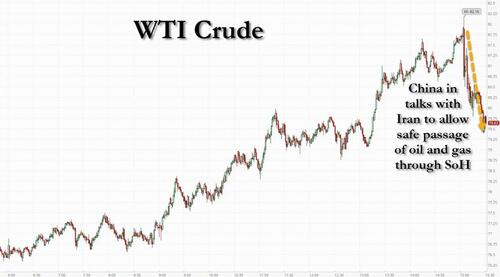
However, a significant development emerged on March 5, 2026, as China reportedly entered direct talks with Tehran to ensure safe passage through the Strait of Hormuz for crude oil and Qatari LNG vessels. Reuters confirmed these diplomatic sources, stating that China is seeking to maintain its energy supply lines as the "U.S.-Israeli war on Tehran intensifies." This initiative by Beijing may immediately nullify the practical effects of a full-scale blockade, which Iran officially denies but has heavily threatened. Speculation has long existed that Iran would permit Chinese and Russian tankers to transit, a move that would fundamentally alter the dynamics of any blockade by unlocking substantial on-water storage capacity. China, being the largest end market for Gulf and Iranian oil output, has a profound vested interest in keeping these channels open. While Iranian military commander Amir Heydari stated on state TV that the Strait of Hormuz isn’t closed, traders and analysts remain skeptical, expecting weeks before oil flows can resume meaningfully without further disruption. This uncertainty has already caused global gas prices to rise and the stock market to wobble, reflecting widespread concern over the economic ramifications of a protracted conflict in such a critical energy region. The US Treasury is also reportedly preparing measures, possibly involving the oil futures market, to combat rising energy prices.
The Expanding Battlefield: Regional Contagion
The conflict is demonstrating a concerning propensity for regional expansion, drawing in neighboring countries and raising fears of a broader conflagration.
Lebanon Front
In Lebanon, the conflict has intensified into a ground war, with reports of the Israel Defense Forces (IDF) deploying tanks against Hezbollah. Since fighting resumed earlier this week, at least 77 people have been killed and 527 wounded, according to Lebanon’s health ministry, underscoring the severe human cost of this renewed engagement.
Azerbaijan and NATO Proximity
The conflict has also spread to Azerbaijan, marking the first time the country has been directly impacted. Iranian drone strikes injured two people and damaged the terminal building of an airport near the Iran-Azerbaijan border. Another drone reportedly fell near a school in Shakarabad, leading Azerbaijan’s foreign ministry to issue a strong condemnation of the attacks "launched from the territory of the Islamic Republic of Iran."
Crucially, the conflict has also brushed against NATO territory. Turkish air defenses intercepted what Ankara described as a missile launched from Iran on Wednesday, March 4, 2026. Although Iranian military leaders denied firing any missile toward Turkey, this incident marked a highly dangerous precedent: the first time NATO forces have shot down an Iranian missile heading toward a member state during this conflict. This event significantly escalates the risk of direct NATO involvement, adding another layer of complexity to an already volatile situation.
Naval Engagements and International Law
At sea, the conflict saw a contentious incident with a US torpedo strike that sank the Iranian warship IRIS Dena off the coast of Sri Lanka on Wednesday. More than 80 people were killed, and several remain missing. Iran’s foreign minister condemned the attack as an "atrocity," warning Washington of future regrets. The incident has drawn international scrutiny, with some Western officials and pundits questioning whether the US Navy fulfilled its obligations under the Geneva Convention to search for and rescue sinking Iranian seamen, "in so far as possible," an action that reportedly did not occur.
US Gulf Allies and Kurdish Uprising
The Iranian military also claimed a drone attack on a US military site in Kuwait, signaling a direct targeting of US assets in the region. Other Gulf countries have reported ongoing drone or missile activity, with projectiles targeting oil and logistical sites, raising concerns about their stability. Simultaneously, in Iran, Foreign Minister Abbas Araghchi warned of "terrorist movements" along Iran’s border with Iraq, calling for stronger security measures amid reports that the United States is in talks with Kurdish forces about arming them to foment an uprising against Tehran. Iranian forces have preemptively launched operations against Kurdish groups based in Iraq’s semi-autonomous Kurdish region, striking positions of "separatist groups" attempting to cross Iran’s western border and claiming heavy losses. The NY Times freshly reported that pro-American, Iranian Kurdish forces based in Iraq are "preparing armed units that could enter Iran," creating a potential new front.
Political Dimensions and Regime Change Objectives
President Trump’s direct and explicit involvement in selecting Iran’s next leader underscores the regime change objective driving "Operation Epic Fury." In an interview with Axios on Thursday, March 5, 2026, Trump stated he "needs to be personally involved in selecting Iran’s next leader — just as he was in Venezuela." He acknowledged Mojtaba Khamenei, son of the assassinated Supreme Leader Ali Khamenei, as the most likely successor but declared this outcome "unacceptable" to him. Trump asserted, "Khamenei’s son is a lightweight. I have to be involved in the appointment, like with Delcy [Rodriguez] in Venezuela," adding, "We want someone that will bring harmony and peace to Iran." He also stated that he refuses to accept a new Iranian leader who would continue Khamenei’s policies, warning it "would force the U.S. back to war ‘in five years’."
This stance by the US President signals a profound and long-term commitment to reshaping Iran’s political landscape, even as the White House’s official list of objectives for Operation Epic Fury appears to have dropped "full regime change" as a specific goal, perhaps realizing the immense commitment of "boots on the ground" it would necessitate. Despite this rhetorical shift, the underlying intent remains clear. The Council of Experts in Iran has officially postponed the announcement of a new supreme leader amidst intense speculation, with an announcement potentially imminent.
International Reactions and Diplomatic Standoff
The international community’s response to the escalating conflict has been mixed, highlighting deep divisions and concerns. The US Senate blocked an effort to curb President Trump’s Operation Epic Fury, voting 53-47 against a procedural motion aimed at limiting the operation, indicating continued political support for the military actions within the US.
In Europe, Iran has decried what it perceives as apathy, with Foreign Ministry spokesman Esmaeil Baghaei warning that European Union countries will "pay the price, sooner or later" if they remain silent over the US-Israeli attacks. Earlier in the week, a few drones were reportedly sent against EU-member Cyprus, targeting a British airbase there, signaling Iran’s willingness to project its retaliatory capabilities beyond the immediate conflict zone. EU foreign policy chief Kaja Kallas urged diplomacy, stating, "There has to be room for diplomacy here to really get out of this cycle of escalation," and adding that "it’s clear wars really end in diplomacy." Kallas also noted that Gulf governments are increasingly "worried about civil war inside Iran" and its potential ripple effects across the region. However, direct diplomatic engagement between Tehran and Washington appears non-existent, with Iran’s Deputy Foreign Minister reportedly stating Iran is focused on self-defense and has sent "no message… to the US" to end the conflict, despite an earlier speculative report about abandoning its nuclear program for a "rewarding alternative offer."
Meanwhile, US allies are gradually being drawn into the conflict. France has allowed US non-combat aircraft to use an airbase on French territory, with assurances that these planes "do not participate in any way in US operations in Iran" and are used only to defend regional partners. Italy announced it would send air-defense support to Gulf countries struck by Iranian retaliatory attacks. Canadian Prime Minister Mark Carney, who had previously stated Canada would not take part, later reversed course, saying he "can never categorically rule out participation" in the US-Israeli war with Iran.
Humanitarian Crisis and Economic Strain
The human cost of the conflict is catastrophic. Beyond the rising death toll, a severe communications blackout has enveloped Iran, with Internet connectivity across the country reportedly at roughly 1% of normal levels for over 120 hours, according to NetBlocks. Iranian authorities are messaging citizens, warning against protests during this emergency.
Economically, the war is proving costly for the US. The New York Times reported that the "opening days of the war in Iran are challenging" President Trump’s assumption of a "quick victory" with "minimal disruption to the economy." Already, six Americans have been killed, Gulf allies are under attack, the stock market has wobbled, gas prices are rising, and the U.S. military is spending, by some estimates, hundreds of millions of dollars per day.
The widening war has also led to a significant humanitarian challenge with tens of thousands of travelers stranded across the region. Roughly 23,000 foreign nationals remain stuck in Middle Eastern countries as commercial flights are disrupted. Several governments, including the United Kingdom, India, France, Germany, Italy, Japan, Australia, and the Czech Republic, are organizing additional flights and safe border crossings for citizen evacuations. The Trump administration, initially criticized for its slow response, has since confirmed it is organizing evacuation flights and other methods for stranded American citizens.
Outlook and Implications
The Pentagon is reportedly requesting additional intelligence officers for at least 100 days, suggesting the war could last "far longer than the initially suggested four-week timeline," with officials now discussing a timeline stretching "through September." Politico reported that planning was limited, with a State Department source noting "too few people were read in on the war plans," which slowed evacuation preparations and travel alerts. A former U.S. diplomat criticized the response as "a completely ad hoc operation… like they woke up on Saturday and decided to start a war." This improvised approach and extended timeline raise serious concerns about a prolonged quagmire, reminiscent of the Iraq war.
Senior US officials warn that American strikes will begin targeting "deeper locations inside Iran" and emphasize that the operation remains in its early stages, implying ongoing heavy long-range bomber raids. The potential for a "WW3-style whole regional and global confrontation" looms large, especially if major powers like Russia or China become directly involved, or if NATO territory continues to be directly impacted, as seen with the Turkish interception. The question of allied participation remains open, but historical precedents of American Middle East adventurism suggest it is often a matter of time.
The conflict’s trajectory remains highly uncertain, with profound implications for global security, energy stability, and the humanitarian landscape of the Middle East. The escalating military actions, coupled with explicit regime change objectives and the expansion of the battlefield, underscore a critical and dangerous moment in international relations, demanding urgent diplomatic intervention that, for now, remains conspicuously absent between the principal belligerents.

