
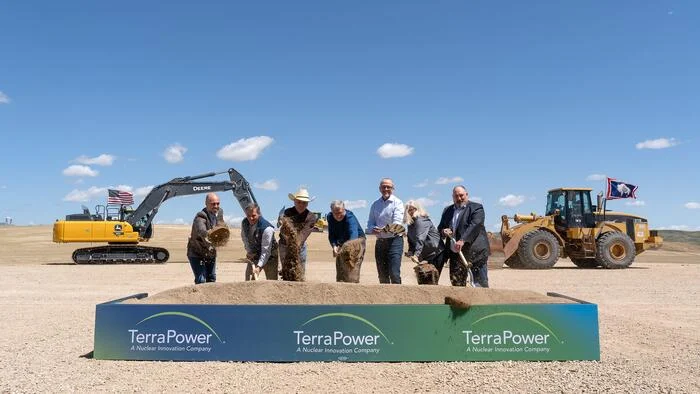
In a landmark decision that heralds a potential revitalization of America’s nuclear energy sector, the Nuclear Regulatory Commission (NRC) has granted TerraPower, the advanced reactor company backed by Bill Gates, the first commercial nuclear construction permit issued in nearly a decade. This pivotal approval, announced on March 4, 2026, paves the way for the construction of the Natrium advanced reactor at the Kemmerer Power Station Unit 1 in southwestern Wyoming, marking a significant departure from the regulatory stagnation that has long characterized the U.S. nuclear industry.
A Decade-Long Hiatus Ends with Groundbreaking Technology
The unanimous approval by the NRC commissioners for TerraPower’s Kemmerer project is more than just an end to a ten-year drought in new nuclear construction permits; it represents a decisive shift towards embracing next-generation nuclear technology. The last such permit was issued for traditional light-water reactors, which have faced significant cost overruns and protracted construction timelines. TerraPower’s Natrium reactor, by contrast, is a sodium-cooled fast reactor with a pool-type design, integrated with a molten-salt energy storage system. This innovative combination allows the plant to provide not only consistent baseload power but also to ramp its output dynamically, much like a natural gas peaker plant, offering unparalleled grid flexibility for a nuclear facility.
The Kemmerer project is slated to begin reactor construction in the coming weeks, a development eagerly anticipated by proponents of carbon-free, dispatchable energy. This step will finally place the United States on the global map of countries actively building new nuclear power plants, a list where it has conspicuously lagged behind nations like China, which currently has 38 reactors under construction, and Russia and India, each with six. For years, the U.S. has maintained a count of zero new reactors under construction, a statistic that underscores the profound impact of this new permit.
Technological Innovation Driving the Natrium Design
The Natrium reactor is distinguished by its use of High-Assay Low-Enriched Uranium (HALEU) fuel, enriched to approximately 15-20% Uranium-235. This higher enrichment level, compared to the 3-5% used in conventional light-water reactors, allows for smaller, more compact, and more efficient reactor cores. The reactor boasts an electrical generating capacity of 345 MWe, with the integrated molten-salt energy storage system capable of boosting output significantly for extended periods, providing critical support during peak demand or periods of renewable energy intermittency. This technological leap directly addresses long-standing criticisms of nuclear power regarding its perceived inflexibility, offering a solution that can complement intermittent renewable sources like wind and solar without requiring vast, economically challenging battery storage installations.
The molten-salt storage component is particularly noteworthy. By storing excess heat generated during off-peak hours, the Natrium plant can discharge this energy when needed, effectively decoupling thermal generation from electrical output. This capability is crucial for modern grids, which are increasingly reliant on variable renewable energy sources and require agile, dispatchable power to maintain stability and reliability.
Accelerated Regulatory Review: A Sign of Shifting Priorities
Perhaps one of the most surprising aspects of this approval is the speed with which the NRC processed TerraPower’s application. Filed in March 2024, the application for the Kemmerer Power Station Unit 1 underwent review by NRC staff in just 18 months, significantly faster than the initial 27-month estimate. This accelerated timeline represents a marked departure from the NRC’s historical pace, which has often been criticized for bureaucratic delays and protracted reviews that have stifled nuclear innovation in the U.S.
Industry observers and policymakers suggest that this newfound regulatory efficiency is a direct response to urgent national energy demands. The burgeoning requirements of Artificial Intelligence (AI) data centers, coupled with the ongoing retirement of coal-fired power plants and the inherent intermittency of renewable energy sources, have created an acute need for reliable, high-capacity, carbon-free power. The rapid review indicates a growing recognition within regulatory bodies that traditional energy sources alone, or renewables without robust baseload support, are insufficient to meet the escalating electricity demands of the 21st century. This permit also marks the first approval for a non-light-water commercial reactor in over four decades, underscoring its historical significance and the breaking of a long-standing technological barrier in U.S. nuclear regulation.
Project Timeline and Economic Footprint
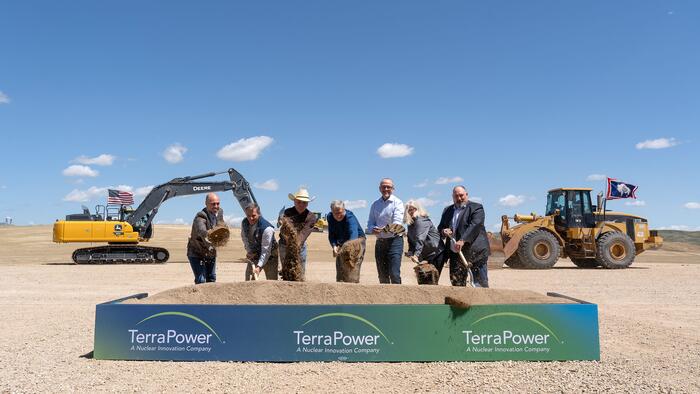
TerraPower CEO Chris Levesque lauded the NRC’s decision, stating, "Today is a historic day for the United States’ nuclear industry." The company has already been engaged in significant preparatory work at the Kemmerer site since 2024, focusing on non-nuclear portions of the plant, including the "energy island" components. These initial activities were made possible by earlier exemptions and state permits granted by Wyoming’s Industrial Siting Council in 2025, demonstrating strong local and state support for the project.
The full commercial operation of the Kemmerer Natrium plant is targeted for 2030. The demonstration plant is estimated to cost up to $4 billion, a substantial investment that is being significantly supported by the U.S. Department of Energy (DOE) through its Advanced Reactor Demonstration Program (ARDP). The ARDP provides up to $2 billion in federal cost-share funding, matched by TerraPower and its partners, showcasing a robust public-private partnership model aimed at accelerating advanced nuclear deployment. This funding mechanism is crucial for mitigating the upfront financial risks associated with first-of-a-kind reactor designs.
Strategic Partnerships and Broader Implications
The momentum generated by the Kemmerer project extends beyond a single demonstration plant. Earlier this year, TerraPower announced a significant agreement with Meta Platforms, Inc., the technology giant, for the potential deployment of up to eight Natrium plants. This partnership highlights the immense and growing demand from the technology sector for reliable, firm, carbon-free power to fuel the rapidly expanding infrastructure of AI and data centers, which are projected to require hundreds of gigawatts of new electricity capacity in the coming years. Bill Gates, a long-time advocate for advanced nuclear energy, has consistently positioned this technology as a scalable pathway to meeting future energy needs and mitigating climate change, and these recent developments appear to validate his long-term vision.
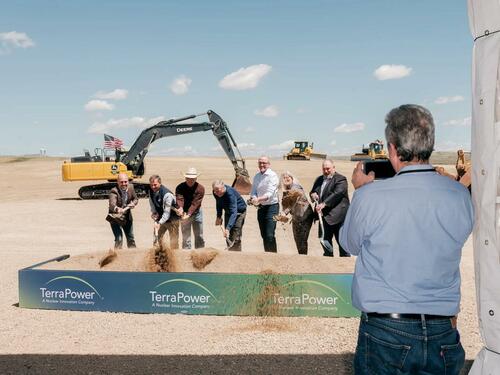
The Kemmerer project is particularly symbolic as it is replacing a retiring coal-fired power plant. This transition exemplifies a strategic move towards decarbonization while simultaneously preserving high-paying energy jobs and economic stability in communities traditionally reliant on fossil fuels. Wyoming, a state historically synonymous with coal production, is actively embracing this transition, seeing advanced nuclear as a viable path to maintaining its energy leadership and economic vitality in a changing global energy landscape.
Addressing Concerns and Looking Ahead
While the Natrium design offers numerous advantages, critics will undoubtedly raise concerns, particularly regarding the use of liquid sodium as a coolant, which is known for its reactivity with air and water. However, advanced reactor designs incorporate multiple layers of passive safety features and robust engineering controls to mitigate such risks, drawing lessons from decades of international experience with sodium-cooled reactors. The "first-of-a-kind" nature of the project also implies higher initial costs compared to mature technologies, but proponents argue that subsequent deployments will benefit from learning-curve effects, modular construction techniques, and streamlined regulatory processes, ultimately driving down costs and accelerating deployment schedules.
The historical context of nuclear construction in the U.S., marked by projects like the Vogtle plant in Georgia, which suffered from billions in cost overruns and years of delays, serves as a stark reminder of the challenges. However, advanced reactor designs like Natrium promise modular construction, enhanced passive safety features, and a greater emphasis on cost and time discipline. This approach aims to avoid the pitfalls of previous large-scale nuclear projects, offering a more predictable and efficient path to deployment.
Beyond TerraPower, other companies like Oklo and Nano Nuclear are also making strides in developing small modular reactors (SMRs) and microreactors, which could play a crucial role in powering "behind-the-meter" data centers and other distributed energy needs. These innovations collectively represent a significant diversification of nuclear energy options, moving beyond the large, centralized power plants of the past.
The Kemmerer project is more than just a single power plant; it is a blueprint for the future of American energy. It demonstrates that with private capital, innovative technology, and a responsive regulatory environment, the U.S. can transition away from intermittent energy sources towards dispatchable, high-density, carbon-free power. This initiative has the potential to redefine America’s energy independence, bolster its climate goals, and stimulate economic growth through technological leadership. As construction commences, the energy establishment is indeed feeling the ground shake, signaling that nuclear power, reimagined for the 21st century, is back on the national agenda and poised for a significant resurgence.

