
BitGo Europe GmbH has officially launched its comprehensive crypto-as-a-service (CaaS) offering across the entire European Economic Area (EEA), a significant move poised to transform how financial institutions in the region engage with digital assets. This new service empowers fintech companies and established banks to seamlessly integrate regulated cryptocurrency custody, trading functionalities, and robust fiat on- and off-ramp solutions, all meticulously designed to comply with the European Union’s pioneering Markets in Crypto-Assets (MiCA) regulatory framework. The expansion makes BitGo’s sophisticated API-based infrastructure accessible in all 30 EEA countries, providing a turnkey solution for institutions seeking to embed digital asset capabilities directly into their existing platforms, including multi-asset wallets and Single Euro Payments Area (SEPA) compliant fiat rails.
The strategic rollout signifies a pivotal moment for digital asset adoption within the EU, as it addresses the growing demand from financial players for secure, compliant, and scalable infrastructure. Previously, institutions often faced the daunting task of developing proprietary solutions or navigating a fragmented regulatory landscape. BitGo’s CaaS offering presents a consolidated and regulated pathway, allowing partners to leverage BitGo’s established expertise and technology without the extensive development overhead. This approach is particularly attractive in a post-MiCA environment, where regulatory clarity, while beneficial, also necessitates adherence to stringent operational and security standards.
BitGo’s CaaS offering is designed to be a holistic solution, encompassing critical components for institutional digital asset operations. The custodial wallets provided are insured up to an impressive $250 million, subject to customary terms and conditions, offering a substantial layer of security and confidence for clients. These wallets are further enhanced by configurable policy controls, allowing institutions to tailor security protocols to their specific needs, and are backed by 24/7 operational support, ensuring continuous availability and responsiveness. The platform facilitates the buying, selling, and holding of major digital assets, including Bitcoin (BTC) and other supported cryptocurrencies, directly within a partner’s existing user interface. This integration means that end-customers can engage with digital assets through familiar banking or fintech platforms, experiencing a streamlined and intuitive process. Crucially, all settlement processes are managed efficiently through BitGo’s robust infrastructure, simplifying back-end operations for financial institutions.
This European expansion mirrors BitGo’s successful model in the United States, where its services have been available through BitGo Bank & Trust. The establishment of BitGo Europe GmbH as a locally regulated entity underscores the company’s commitment to operating within the specific legal and regulatory frameworks of the European Union. This localized approach is essential for building trust and ensuring compliance with MiCA and other relevant EU directives.
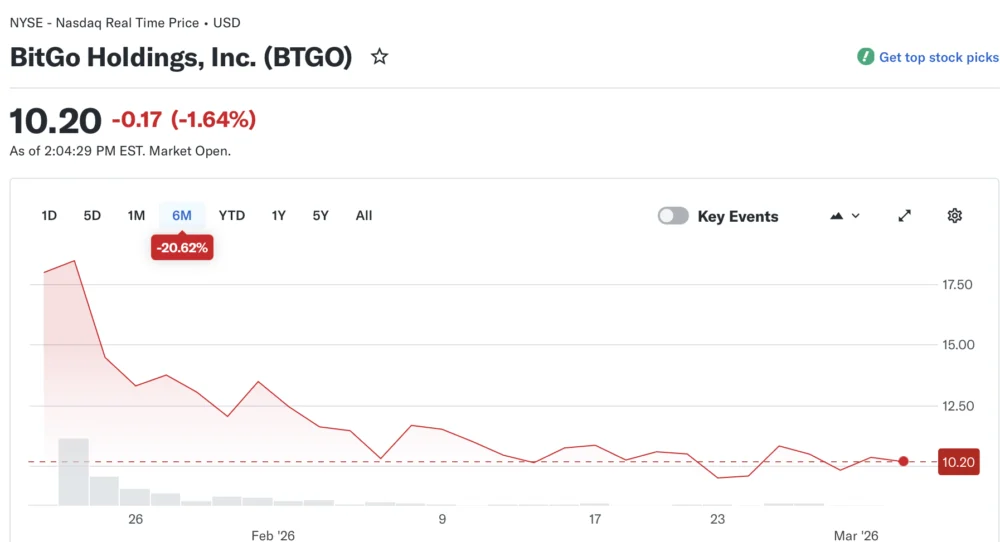
BitGo’s extensive history in the digital asset space, dating back to its founding in 2013, provides a strong foundation for this European venture. The company has cultivated a global reputation for providing a wide array of services to institutional clients, including secure custody, wallet management, staking, trading, financing, stablecoin infrastructure, and settlement solutions. This deep pool of experience and established operational capabilities are now being leveraged to serve the European market. The company’s recent public listing on the New York Stock Exchange (NYSE) on January 22nd, trading under the ticker BTGO, marks another significant milestone, enhancing its visibility and financial capacity. While BitGo stock experienced a slight decline of approximately 1.6% on Tuesday, trading at $10.20, and a roughly 20% decrease since its public debut, as per Yahoo Finance data at the time of reporting, its market presence and ongoing expansion initiatives highlight its strategic ambition in the growing digital asset sector.
Custody Infrastructure Expansion in Europe: A MiCA-Driven Trend
The launch of BitGo’s CaaS offering in Europe is not an isolated event but rather a reflection of a broader and accelerating trend towards the formalization and regulation of digital asset custody infrastructure across the continent. The implementation of the Markets in Crypto-Assets (MiCA) regulation has been a significant catalyst, providing a clear and comprehensive licensing regime that encourages established financial institutions to enter the digital asset space with confidence. MiCA aims to create a harmonized regulatory framework for crypto-assets across the EU, fostering innovation while ensuring investor protection and market integrity. This regulatory certainty has prompted many banks and financial services providers to explore digital asset services, with a notable preference for partnering with specialized crypto companies rather than undertaking the complex and costly endeavor of building in-house custody systems.
This partnership-driven approach has been evident in several high-profile developments. In July, Deutsche Bank signaled its strategic move towards crypto custody. The German banking giant announced collaborations with Bitpanda’s technology unit and Taurus, a Swiss-based digital asset infrastructure provider. This partnership strategy allows Deutsche Bank to leverage specialized expertise and technology to offer custody services, aligning with the evolving demands of its client base.

Similarly, in September, Spain’s BBVA revealed its intention to utilize Ripple’s institutional custody platform to support its Bitcoin and Ether (ETH) trading and safekeeping services. BBVA explicitly cited MiCA compliance as a key driver for this decision, underscoring the growing importance of regulatory alignment in the selection of technology partners. By integrating with Ripple’s established custody solutions, BBVA can offer these services efficiently and securely, meeting the requirements of the new regulatory landscape.
At the market infrastructure level, Clearstream, a key player within Deutsche Börse Group, has also made significant strides. The company announced its intention to offer Bitcoin and Ether custody and settlement services to institutional clients through its Swiss subsidiary, Crypto Finance AG. This move from a major market infrastructure provider signals a further institutionalization of digital asset services, making them more accessible to a wider range of institutional investors.
Other financial institutions are opting to establish their own licensed European entities to directly deliver digital asset custody services. Standard Chartered, for instance, announced in January its plans to launch digital asset custody in Europe following the acquisition of a license in Luxembourg. This strategic move involves establishing a dedicated EU entity, enabling the bank to offer these services directly and maintain greater control over its operations and client relationships within the region.
These developments collectively illustrate a clear pattern: the European financial sector is actively embracing digital assets, but with a strong emphasis on regulatory compliance and the leveraging of specialized expertise. The CaaS model, as exemplified by BitGo’s offering, provides a crucial bridge, enabling financial institutions to participate in the digital asset economy without needing to reinvent the wheel. The availability of insured custody, integrated trading, and compliant fiat on- and off-ramps under a recognized regulatory framework like MiCA is instrumental in driving this institutional adoption.
Implications and Future Outlook
The launch of BitGo’s crypto-as-a-service offering across the EEA under the MiCA framework has several far-reaching implications for the European financial landscape. Firstly, it significantly lowers the barrier to entry for fintechs and banks looking to incorporate digital asset services. By providing a ready-made, regulated infrastructure, BitGo enables these institutions to accelerate their product development and market entry timelines, potentially capturing early-mover advantages in a rapidly evolving sector.
Secondly, it fosters greater competition and innovation within the European digital asset market. With regulated custody and trading services becoming more accessible, a wider array of financial products and services built around digital assets is likely to emerge. This could include new investment products, payment solutions, and decentralized finance (DeFi) integrations, all operating within a more secure and compliant environment.
Thirdly, the emphasis on MiCA compliance is crucial for building mainstream trust in digital assets. As more established financial institutions offer these services, consumers and institutional investors will gain greater confidence in the security and regulatory oversight of digital asset markets. This can lead to increased adoption and integration of digital assets into traditional financial systems.
The success of BitGo’s European expansion will likely depend on several factors, including its ability to onboard a significant number of institutional clients, maintain its competitive pricing, and adapt to any future regulatory adjustments within the EU. The company’s established track record, combined with its strategic alignment with MiCA, positions it favorably to capitalize on the growing demand for regulated digital asset infrastructure in Europe. The ongoing performance of BitGo’s stock will also be a closely watched indicator of investor sentiment and the market’s perception of its growth strategy. As the European digital asset market matures under the MiCA regime, companies like BitGo are poised to play a vital role in shaping its future. The company’s commitment to providing a secure, compliant, and comprehensive suite of services addresses a critical need for financial institutions navigating the complexities of the digital asset revolution.

