
Beijing, China – In a decisive statement underscoring its profound energy security interests and commitment to regional stability, Chinese Foreign Ministry spokeswoman Mao Ning declared at Tuesday’s regular press briefing in Beijing that all parties involved in the unfolding Iran conflict must prioritize and ensure the unimpeded and safe transit of commercial shipping through the strategically vital Strait of Hormuz. The spokeswoman emphasized China’s deep concerns, urging an immediate cessation of military operations to prevent further escalation of tensions in the critical maritime energy chokepoint. "China urges all parties to immediately cease military operations, avoid escalating tensions, and safeguard the safety of navigation in the Strait of Hormuz," Ning firmly stated, articulating a position rooted in both geopolitical stability and economic imperative.
China’s Deep Economic Stake in Hormuz Stability
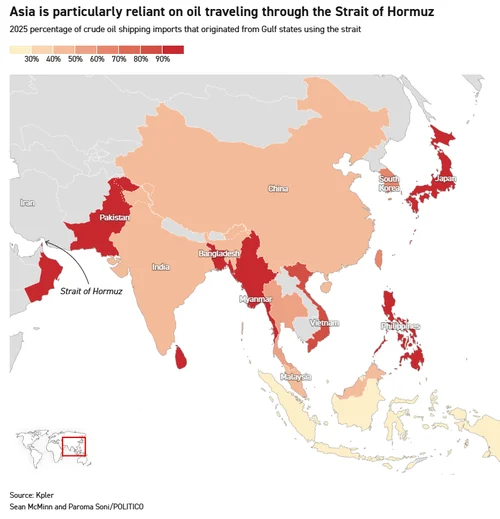
The urgency of China’s appeal is directly linked to its immense reliance on energy flows through the Strait of Hormuz, particularly crude oil imports from Iran. China stands as the single largest recipient of Iranian oil exports, absorbing approximately 80% of the Islamic Republic’s total crude shipments. This translates to an estimated 1.6 million barrels per day (bpd) of Iranian oil destined for Chinese refineries, a lifeline that underpins a significant portion of China’s industrial and economic activities. The Strait of Hormuz, a narrow waterway connecting the Persian Gulf to the open ocean, is arguably the world’s most important oil transit chokepoint. An average of 21 million barrels of crude oil and petroleum products, representing roughly 21% of global petroleum liquids consumption, transited the Strait daily in 2018, according to data from the U.S. Energy Information Administration (EIA). While this figure includes exports from various Gulf producers, China’s dominant share of Iranian oil makes it uniquely vulnerable to any disruption emanating from the ongoing conflict.
Beyond crude oil, the Strait of Hormuz is also a crucial conduit for liquefied natural gas (LNG) exports, particularly from Qatar, one of the world’s largest LNG producers. A substantial portion of Qatari LNG is also destined for Asian markets, including China, further illustrating Beijing’s multifaceted energy dependence on the strait’s unhindered operation. Any blockage or significant disruption would not only send global oil prices skyrocketing but would also severely impact China’s energy supply chain, potentially leading to widespread economic repercussions, from manufacturing slowdowns to inflationary pressures on consumer goods. This profound exposure means Beijing is highly motivated to exert all diplomatic and economic influence at its disposal to preserve this vital energy artery and mitigate any potential blockades.

Escalating Regional Tensions and the Chronology of Events
The Chinese statement comes amidst a rapidly deteriorating security situation in the Persian Gulf region, characterized by a series of escalating incidents. The preceding day, reports emerged of a significant drone strike that forced Saudi Arabia’s largest oil refinery offline. This incident, widely attributed to Iranian-backed entities, marked a substantial escalation. Following this, on Tuesday morning, numerous reports detailed further drone strikes targeting critical energy infrastructure across the Gulf, expanding the scope of the attacks and amplifying concerns about a wider regional conflict.
Adding to the volatility, the commander of Iran’s Revolutionary Guards reportedly issued a stark warning, threatening "fire and destruction" to any vessel attempting to transit the narrow waterway if deemed hostile by Tehran. This rhetoric, coupled with visible paralysis in AIS shipping tracking data from Bloomberg showing reduced vessel movement, underscores the tangible threat to maritime commerce. These threats, whether rhetorical or backed by direct action, create an environment of extreme risk for international shipping, prompting calls for de-escalation from global powers.
Beijing’s Diplomatic Efforts and Geopolitical Calculus
In light of these escalating tensions, Chinese officials have reportedly been actively engaging with Tehran, pressing Iran not to disrupt tanker traffic, damage Qatari gas exports, or target major export hubs, as detailed by Bloomberg. This behind-the-scenes diplomatic push highlights China’s proactive efforts to safeguard its interests and prevent the crisis from spiraling out of control. Beijing’s engagement with Iran is complex, balancing its strategic energy needs with its broader foreign policy objectives, which often involve promoting stability and multilateralism.
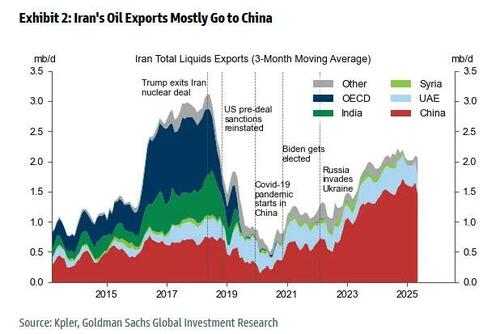
China’s unique position as a major economic partner for Iran, even under international sanctions, grants it a degree of leverage that few other global powers possess. While Beijing has historically navigated a delicate balance between its relationship with Tehran and its interactions with Western nations, the immediate threat to its energy supply mandates a more direct intervention. The potential for the conflict to broaden could also draw in other regional and international actors, creating an even more unpredictable and dangerous geopolitical landscape.
The Broader Geopolitical Chessboard: US-China Relations
The crisis in the Strait of Hormuz is not unfolding in a vacuum but is intricately linked to the broader geopolitical rivalry and trade negotiations between the United States and China. Top U.S. and Chinese trade negotiators are expected to convene in mid-March, ahead of a planned summit between then-President Trump and President Xi Jinping later this month. Against this backdrop, actions taken by the U.S. administration, such as increased pressure on Venezuela and now Iran, can be viewed through a strategic lens. Both Venezuela and Iran are significant, albeit sometimes sanctioned, sources of cheap crude oil for China.
From Washington’s perspective, tightening the screws on these two key suppliers could serve as a negotiating tactic, aiming to exert economic pressure on Beijing ahead of crucial trade talks. If China’s access to discounted crude from these nations is curtailed or made more precarious, it could increase Beijing’s reliance on alternative, potentially more expensive, sources, thereby impacting its economic competitiveness. This geopolitical maneuver adds another layer of complexity to the Hormuz situation, transforming what might appear as a regional conflict into a component of a larger global power struggle. The possibility of these high-stakes trade talks being canceled due to the escalating tensions or other factors further amplifies the uncertainty.
Analysis of Implications: Energy Markets, Shipping, and Global Stability
The implications of a sustained or intensified conflict in the Strait of Hormuz are far-reaching, extending beyond immediate energy prices to global trade, insurance markets, and international security.
- Energy Market Volatility: Any significant disruption to the 21 million bpd transiting Hormuz would trigger an unprecedented surge in global oil prices. Futures markets would react dramatically, impacting everything from airline ticket prices to manufacturing costs. The global strategic petroleum reserves would likely be tapped, but their capacity is finite.
- Shipping and Logistics: The paralysis observed in AIS data is a harbinger of potential larger issues. Increased threats would lead to higher insurance premiums for vessels transiting the region, potentially deterring some shippers or forcing them to seek longer, more expensive alternative routes, such as around the Cape of Good Hope. This would increase transit times and logistical costs for a vast array of goods, not just energy.
- Economic Impact on China: For China, the stakes are exceptionally high. A disruption would directly threaten its energy security, potentially leading to economic deceleration, inflationary pressures, and a strain on its manufacturing sector. Beijing’s efforts to diversify its energy sources have been ongoing, but the sheer volume of Iranian oil cannot be easily or quickly replaced.
- Geopolitical Realignments: The crisis could force a re-evaluation of alliances and strategic partnerships in the region. China’s mediating role, if successful, could enhance its global diplomatic standing. Conversely, failure to de-escalate could expose vulnerabilities in its foreign policy and energy strategy.
- Global Security: A full-blown conflict in the Gulf would have catastrophic consequences for global security, potentially drawing in multiple international actors and destabilizing an already volatile region. The interconnectedness of the global economy means that such a conflict would have ripple effects felt worldwide.
Looking Ahead: Diplomatic Pathways and Potential Scenarios
The immediate future hinges on diplomatic efforts to de-escalate the situation and the restraint exercised by all parties. China’s direct engagement with Iran signals a recognition of its pivotal role and vested interests. The upcoming U.S.-China trade talks and potential summit also present a window for broader discussions on regional stability, though they also introduce another layer of complexity and potential leverage points.
Possible scenarios range from a swift de-escalation through international mediation, maintaining the status quo with heightened vigilance, to a further escalation involving direct military confrontation and a sustained blockage of the Strait. Each scenario carries profound implications for global energy markets, international trade, and geopolitical power dynamics. The world watches closely as China, a nation whose economic engine is heavily reliant on the Strait of Hormuz, endeavors to navigate this intricate and dangerous geopolitical landscape, seeking to safeguard its lifelines and promote a return to stability in a region teetering on the brink. The "Iran question," as underscored by recent analyses, is indeed inextricably linked to China’s core strategic interests, making Beijing’s actions and pronouncements critical indicators of the path forward.

