
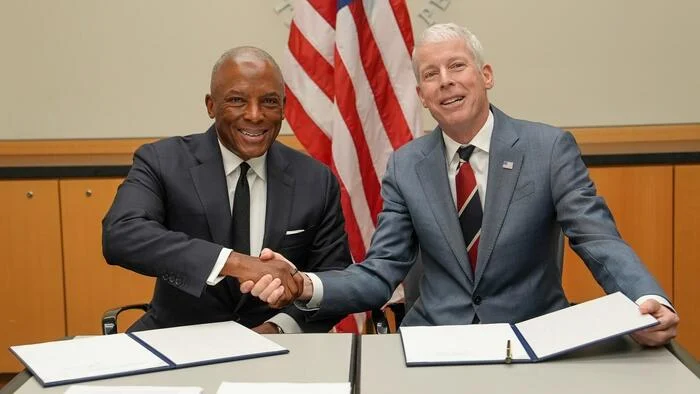
The U.S. Department of Energy (DOE) announced on a recent Wednesday a monumental financial commitment, with its Office of Energy Dominance Financing (EDF) closing a record-setting $26.54 billion loan package. This historic allocation, the largest in the agency’s history, is earmarked for two subsidiaries of Southern Company: Georgia Power, which will receive $22.4 billion, and Alabama Power, slated for $4.1 billion. The substantial investment underscores a critical federal effort to address the burgeoning electricity demand and fortify grid resilience across the southeastern United States, particularly driven by an explosive growth in data centers and advanced manufacturing facilities.
The roughly 30-year loan facilities, which are drawable through September 2033, are designed to finance more than 16.7 gigawatts (GW) of reliable generation and transmission upgrades. This unprecedented scale of federal backing significantly overshadows previous substantial energy loans, such as the $1 billion loan recently secured by Constellation for the restart of operations at Three Mile Island, signaling a profound shift in federal strategic investment priorities. The package is structured as debt rather than a grant, with the Treasury theoretically positioned to break even or even profit compared to Southern Company borrowing at higher private-market rates. DOE officials, including EDF Director Gregory Beard, emphasize rigorous viability reviews for individual projects to safeguard taxpayer interests and the public balance sheet.
The Strategic Imperative: Addressing Unprecedented Load Growth
The decision to channel such significant federal funds into Southern Company’s infrastructure comes at a pivotal moment for the U.S. energy landscape, particularly in the Southeast. The region is experiencing a dramatic surge in electricity demand, primarily fueled by the rapid expansion of data centers and large-scale manufacturing operations. Georgia Power, for instance, has already secured commitments for approximately 7 GW of large-load demand, predominantly from these energy-intensive sectors, and anticipates further substantial growth. This "hyperscaler demand" – referring to the massive energy needs of cloud computing and data storage giants – has presented utilities with an unprecedented challenge. Traditional private capital markets have struggled to finance the necessary infrastructure upgrades at rates comparable to those now offered through federal backing, making government intervention increasingly critical.
The need for robust and reliable energy infrastructure is not merely an economic concern but also a matter of national strategic importance. The continuous operation of data centers, which underpin everything from internet services to artificial intelligence, requires an uninterrupted and stable power supply. Without proactive investments, the existing grid infrastructure risks becoming a bottleneck, potentially hindering economic growth, technological advancement, and national competitiveness. The loan package, therefore, represents a proactive federal strategy to ensure the U.S. remains at the forefront of the digital economy while also supporting domestic manufacturing resurgence.
A Comprehensive Portfolio for Grid Modernization
The $26.54 billion financing package is allocated across a diverse and comprehensive portfolio of energy projects, reflecting a multi-faceted approach to enhancing grid reliability, capacity, and resilience. This strategic mix aims to balance immediate energy needs with long-term sustainability and operational efficiency.
Natural Gas Capacity: Approximately 5.3 GW of the investment is designated for new natural-gas capacity. Natural gas continues to play a crucial role as a reliable, dispatchable power source, capable of quickly ramping up or down to meet fluctuating demand and complement intermittent renewable energy sources. Modern natural gas plants are also significantly cleaner than older coal-fired facilities, contributing to reduced carbon emissions in the near term while ensuring energy security. The inclusion of substantial gas-fired generation underscores a strategy that prioritizes immediate reliability and stability for critical loads like data centers.
Nuclear Power Enhancements: A significant portion, 6.3 GW, is allocated to nuclear improvements through uprates and license renewals at existing plants, including the Vogtle Electric Generating Plant. Nuclear power is a cornerstone of carbon-free baseload electricity generation, providing consistent, high-output power without greenhouse gas emissions. Uprates involve modifications to increase a plant’s power output, effectively boosting its capacity without building entirely new facilities. License renewals extend the operational lifespan of existing reactors, leveraging billions of dollars in prior investments and ensuring decades more of clean energy. The mention of Vogtle is particularly noteworthy, given the plant’s recent completion of two new reactors (Units 3 and 4), representing the first new nuclear units built in the U.S. in decades. Continued investment in nuclear uprates and license renewals signals a federal commitment to preserving and expanding this vital clean energy source.
Hydropower Modernization: Around 1 GW is directed towards hydropower modernization. Hydropower, a renewable and highly flexible energy source, provides critical grid stability and rapid response capabilities. Modernization efforts typically involve upgrading turbines, generators, and control systems to improve efficiency, increase output, and enhance operational flexibility, allowing these plants to better integrate with other renewable sources and respond to grid needs.
Battery Energy Storage Systems: The package also includes significant investment in battery energy storage systems. Energy storage is fundamental to a modern grid, enabling the capture of surplus electricity (e.g., from solar or wind) and its discharge when needed. This technology enhances grid stability, improves power quality, and helps manage peak demand, making the grid more resilient and efficient, especially with the integration of more intermittent renewables.
Transmission Lines and Grid Enhancements: Crucially, over 1,300 miles of new transmission lines and broader grid enhancements are slated for financing. Transmission infrastructure is the backbone of the electricity system, connecting generation sources to demand centers. The existing U.S. grid, parts of which are decades old, is often insufficient to handle the demands of a rapidly evolving energy landscape, including the increased power flow from new generation sources and the concentrated loads of data centers. These upgrades are vital for improving reliability, reducing congestion, minimizing power losses, and ensuring the efficient delivery of electricity across the Southeast.
Financial Implications and the Ratepayer vs. Taxpayer Debate
A core component of the loan package’s design, and a point of considerable discussion, is its projected financial impact. The DOE and Southern Company project that this financing will deliver more than $7 billion in electricity cost savings to customers in Georgia and Alabama over the life of the loans. These savings are anticipated to materialize because the lower, taxpayer-backed interest rate associated with federal loans is expected to cut Southern Company’s annual interest expense by over $300 million once fully drawn.
This mechanism, while providing direct benefits to ratepayers in the form of lower electricity costs, effectively shifts the financial burden from local ratepayers to federal taxpayers. Had Southern Company secured this financing solely through private markets, the higher interest rates would typically be recovered from ratepayers through increased electricity bills. By leveraging federal backing, the cost of capital is reduced, but the underlying risk and the potential for a federal subsidy (if the loan terms are more favorable than market rates and the Treasury’s cost of funds) are borne by the national taxpayer base. This dynamic sparks an ongoing debate about the appropriate role of federal intervention in utility financing and infrastructure development. Proponents argue that critical national infrastructure, especially in energy, warrants federal support to ensure affordability and reliability, as the benefits accrue broadly. Critics, however, may question the fairness of national taxpayers subsidizing regional utility projects, even if those projects have broader economic implications.
A Timeline of Development and Political Context
The journey of this monumental loan package has been shaped by evolving energy demands and policy directives. While the DOE’s official announcement came on a recent Wednesday, the underlying negotiations and restructuring efforts span a period influenced by significant political shifts.
A tweet from zerohedge on November 18, 2025, prophetically noted the "hundreds of billions" in capital flowing into the energy space, foreshadowing the scale of investments to come. This tweet, alongside another from zerohedge on February 25, 2026, quoting then-President Trump on "telling Big Tech they need to provide their own power" and having "negotiated new ratepayer pledge on data center energy," places the official announcement within a specific political and economic window.
The article notes that the loans were "restructured after the election to emphasize additional gas-fired resources alongside nuclear and transmission." This implies that prior to a recent election, the proposed financing structure or project mix might have been different, possibly leaning more towards certain renewable energy sources or different infrastructure priorities. The post-election restructuring, aligning with the "Energy Dominance Financing" philosophy, appears to have prioritized a mix that heavily features natural gas and nuclear power, alongside critical transmission upgrades. This strategic alignment directly reflects the Trump administration’s stated energy policy, which emphasizes affordable, reliable, and secure energy through a diverse "all-of-the-above" approach, often with a focus on traditional baseload sources and domestic fossil fuels, while also supporting nuclear.
Energy Secretary Chris Wright explicitly framed the deal as a direct fulfillment of the Trump administration’s energy policy. "Thanks to President Trump and the Working Families Tax Cut, the Energy Department is lowering energy costs and ensuring the American people have access to affordable, reliable, and secure energy for decades to come," Wright stated. This highlights the political narrative underpinning the federal investment, connecting it to broader economic relief and energy security goals.
Southern Chairman and CEO Chris Womack echoed the sentiment of strategic necessity, stating, "These investments will support the extraordinary and transformative projected growth we’re seeing across our company. These loans will help lower the cost of investments in our grid that will enhance reliability and resilience for the benefit of our customers." His statement underscores the utility’s perspective: the federal financing is not just beneficial but essential for managing unprecedented growth and delivering on their commitment to customers.
Broader Impact and Future Implications
The DOE’s historic loan package for Southern Company subsidiaries carries far-reaching implications for the energy sector, the economy of the Southeast, and the future of federal energy policy.
Economic Catalyst: Beyond direct energy savings, the infrastructure upgrades will serve as a significant economic catalyst for Georgia and Alabama. Construction and modernization projects will create jobs, stimulate local economies, and attract further investment in energy-intensive industries. By ensuring a stable and ample power supply, the region enhances its attractiveness for businesses looking to expand or relocate, particularly in the burgeoning technology and manufacturing sectors.
Environmental Considerations: The portfolio’s mix presents a complex environmental picture. While nuclear and hydropower offer carbon-free generation, the substantial investment in new natural gas capacity raises questions for environmental advocates concerned about greenhouse gas emissions, even if natural gas is a cleaner-burning fossil fuel than coal. However, the modernization of the grid and the inclusion of battery storage systems are critical for integrating future renewable energy sources more effectively, offering a pathway towards a more diversified and sustainable energy future. The emphasis on transmission also supports connecting remote renewable generation to population centers.
Precedent for Federal Intervention: This record loan establishes a powerful precedent for federal involvement in financing critical energy infrastructure. It signals a willingness by the government to step in with substantial capital when private markets are perceived as insufficient or too costly to meet national strategic objectives. This could pave the way for similar large-scale federal financing initiatives in other regions facing rapid load growth or significant infrastructure challenges, potentially reshaping the traditional utility financing model across the country.
Grid Resilience and Security: In an era of increasing climate-related extreme weather events and evolving cyber threats, a robust and resilient grid is paramount. The planned upgrades, particularly in transmission and grid enhancements, will bolster the Southeast’s ability to withstand disruptions, recover more quickly from outages, and ensure continuous power delivery for homes, businesses, and critical national infrastructure, including defense installations and data centers.
The Future of Energy Dominance: The very name of the DOE office facilitating this loan, the "Office of Energy Dominance Financing," reflects a broader strategic vision. It suggests a policy aimed at leveraging America’s energy resources and technological capabilities to secure economic prosperity and geopolitical influence. This loan package is a tangible manifestation of that vision, seeking to fortify domestic energy capabilities and ensure the nation’s energy independence and leadership.
In conclusion, the DOE’s $26.54 billion loan to Southern Company subsidiaries is more than just a financial transaction; it is a strategic investment in the future of American energy. It addresses the immediate challenges of unprecedented electricity demand, particularly from the digital economy, while laying the groundwork for a more reliable, resilient, and economically competitive energy landscape in the Southeast. While questions persist regarding the distribution of financial burden and the environmental mix, the initiative undeniably marks a significant chapter in federal energy policy and infrastructure development.

