
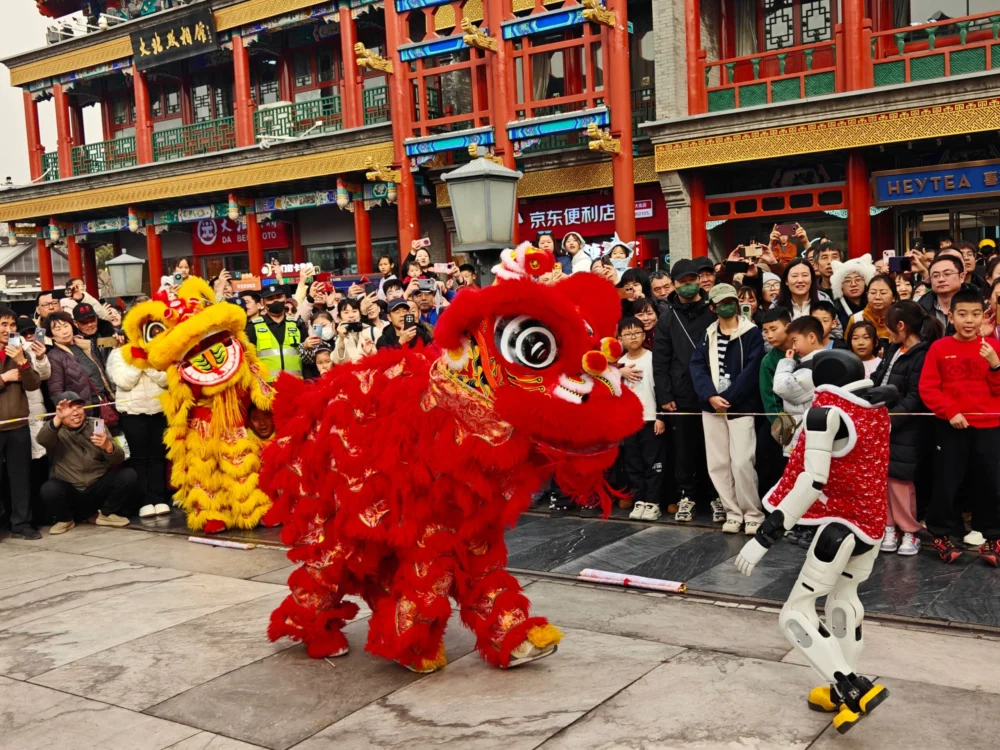
BEIJING – China’s consumer market has demonstrated a notable rebound following the nine-day Lunar New Year holiday, which concluded on Monday, February 17, 2026. This resurgence, marked by a steady rise in spending across various sectors from hotel bookings to duty-free shopping, suggests that the nation’s consumer landscape is on a path to recovery. However, the nature of this recovery—characterized by a strong preference for experiential spending and persistent price-consciousness—indicates that policymakers are likely to favor targeted, incremental easing measures rather than the large-scale stimulus packages that many investors had previously anticipated.
The festive period, a critical barometer for domestic consumption, saw unprecedented levels of travel activity. Rail networks, in particular, experienced an extraordinary surge, with a record-breaking over 18.7 million passengers transported in a single day. This figure underscores a profound desire among the Chinese populace to travel and reconnect, a sentiment that had been suppressed during the pandemic years. The overall increase in mobility and associated spending has been interpreted by analysts, including CCB International Securities, as evidence that Beijing’s recent, more focused support measures are proving effective. Their report, released on Tuesday, February 18, 2026, highlighted a broader consumer trend: spending on experiences, such as travel and entertainment, continues to outpace that on traditional goods.
The Lunar New Year Spending Spree: A Deep Dive into Consumption Patterns
The Lunar New Year, or Spring Festival, is the most important holiday in China, traditionally a time for family reunions, travel, and significant gift-giving and consumption. For 2026, the official holiday period was extended by one day compared to the previous year, offering an additional opportunity for leisure and travel. Many individuals also took personal leave around the official dates, further prolonging the festive break and suggesting that official figures might not fully capture the entire scope of holiday-related spending and activity. This extended break played a crucial role in shaping consumer behavior, particularly by encouraging family-oriented travel.
Travel and tourism statistics released late Tuesday painted a nuanced picture. While nationwide tourism trips per day grew by a robust 5.7% on average from a year ago—a rate consistent with 2025—the growth in associated spending showed a slight deceleration. Spending climbed by 5.5% during the holiday, a dip from the 7% growth recorded in 2025. This divergence points to a significant trend: while consumers were eager to travel and engage in activities, they remained notably price-sensitive. Morgan Stanley Equity Analyst Lillian Lou, in a report issued on Wednesday, succinctly captured this sentiment, stating, "Such trends reflect better sentiment from a longer holiday, but consumers remained budget cautious in general."
Further underscoring this persistent price-consciousness and potential deflationary pressures, CNBC’s analysis of official data revealed a 0.2% drop in average spend per tourist trip compared to the previous year. This metric suggests that while the volume of activity increased, consumers were actively seeking value, opting for more budget-friendly options, or simply curtailing their per-trip expenditure.
Accommodation and Regional Hotspots

The hospitality sector experienced a notable boom, adapting to the evolving demands of holiday travelers. Jihong He, chief strategy officer at H World Group, one of China’s largest hotel operators, observed that the extended holiday "encouraged families to travel together." This shift, He noted, "is driving demand for larger rooms and family-friendly configurations designed for shared experiences." H World, which boasts an extensive portfolio of more than 12,000 hotels across over 30 brands in mainland China, reported strong performance. During the Lunar New Year, the company highlighted that its top 10 destinations, all achieving occupancy rates of 90% or higher, were predominantly located in southern or coastal cities. Sanya, situated in the tropical island province of Hainan, was among these popular choices, benefiting from its appeal as a leisure destination.
Hainan’s allure was further amplified by a strategic policy initiative. In December 2025, China expanded a zero-tariff policy for the island, specifically designed to encourage duty-free luxury goods purchases within the mainland. This policy appears to have yielded tangible results, with official figures indicating that Hainan’s holiday-period duty-free sales surged by an impressive 30.8% from a year ago, reaching 2.72 billion yuan (approximately $400 million). This regional success story illustrates the effectiveness of targeted policy support in stimulating specific consumption categories and regions.
Beyond traditional tourist hubs, online travel platforms also reported significant activity. Fliggy, the Alibaba-owned travel booking platform, announced that bookings for hotel and theme park packages during the holiday season more than doubled compared to the previous year. Intriguingly, more remote and scenic destinations, such as Altay in Xinjiang and Pu’er in Yunnan, also saw their bookings more than double, indicating a growing appetite among Chinese consumers for diverse and off-the-beaten-path travel experiences. This trend aligns with the broader shift towards experiential consumption, where unique adventures and cultural immersion are prioritized.
Policy Landscape and Future Directives
China’s consumer market recovery since the pandemic has been a gradual process, distinct from the trajectories observed in other major economies. Unlike countries such as the U.S., which deployed direct cash handouts to consumers, Beijing has adopted a more cautious and targeted approach, primarily offering trade-in programs and consumption vouchers. This strategy reflects a deliberate policy choice, aimed at stimulating demand without triggering excessive inflation or burdening the national balance sheet with direct transfers. While Chinese authorities have increasingly emphasized the critical need to boost consumers’ incomes as a fundamental driver of sustainable consumption, concrete details on how this will be achieved comprehensively have yet to be fully articulated. Analysts suggest this approach is unlikely to undergo a significant change in the immediate future.
The better-than-expected holiday data provides a crucial backdrop for the upcoming "Two Sessions"—the annual parliamentary meetings comprising the National People’s Congress and the Chinese People’s Political Consultative Conference—which are set to commence next week. These meetings are pivotal for China’s economic policy, as Premier Li Qiang is scheduled to announce the year’s economic targets and policy priorities on March 5. CCB International Securities analysts anticipate that "policymakers are likely to build on the positive [holiday] momentum and introduce targeted, incremental easing around the March Two Sessions to stabilize expectations and sustain the recovery." This implies a continuation of the current strategy, focusing on fine-tuning existing measures rather than implementing a dramatic shift towards broad-based stimulus.
Government Support and Strategic Shifts
The Chinese government has been actively promoting the development of its growing services sector, recognizing its increasing contribution to economic growth and employment. In a significant methodological change earlier this month, the National Bureau of Statistics disclosed that it was giving more weight to services in its consumer price index than in the previous base period of 2020. This adjustment reflects the evolving structure of China’s economy and its consumption patterns, signaling an official acknowledgment of the rising importance of services over traditional goods.

The effectiveness of government support measures during the holiday period was evident. Local governments across China collectively issued more than 2.05 billion yuan in consumption vouchers and subsidies in the lead-up to the Lunar New Year, according to CCB analysts. These targeted interventions were crucial in "effectively putting a floor under demand," preventing a deeper slump and encouraging consumer participation during the key holiday period.
However, the emphasis on boosting consumption does not necessarily translate into sweeping stimulus measures, as highlighted by Liqian Ren, director of Modern Alpha at U.S.-based fund manager WisdomTree. Ren suggests that Beijing’s strategy appears to be focused more on preventing consumption growth from falling below a certain threshold, likely indicating a desired sector growth rate of roughly 2% to 3%. This cautious approach aligns with the broader objective of fostering sustainable, high-quality growth rather than short-term, debt-fueled expansion.
Bruce Pang, an adjunct associate professor at CUHK Business School, offered a critical perspective, observing that even consumer goods in China are increasingly oriented towards dining and social activities. Pang stressed that the fundamental key to a robust and sustained consumption recovery lies in building confidence in income and employment prospects, rather than relying solely on shopping promotions. He urged policymakers to place greater emphasis on these long-term structural issues, which are essential for fostering genuine consumer confidence and willingness to spend.
China’s top leadership has consistently reiterated its commitment to boosting domestic demand. In the fall of 2025, leaders pledged to bolster consumption over the subsequent five years. More recently, in January 2026, during the World Economic Forum in Davos, Chinese officials reaffirmed the country’s intent to prioritize domestic demand as a cornerstone of its economic strategy. These pronouncements underscore a strategic shift towards rebalancing the economy, moving away from an over-reliance on exports and investment towards a more consumption-driven growth model.
Broader Implications and Challenges Ahead
The Lunar New Year consumption data offers valuable insights into the resilience and evolving preferences of Chinese consumers. The strong showing in travel and experiential spending, coupled with price-consciousness in overall expenditure, presents a complex picture for economic planners. On one hand, it validates the government’s strategy of targeted support and its focus on the services sector. On the other, the lingering deflationary pressures and the slower growth in per-trip spending highlight the persistent challenges of boosting overall consumer confidence and disposable income.
The shift towards an "experience economy" carries significant implications for various sectors. Businesses that can innovate and offer unique, value-driven experiences—from cultural tourism to entertainment and leisure activities—are likely to thrive. Conversely, traditional goods retailers might need to adapt their strategies, potentially by integrating experiential elements into their offerings or by focusing on niche markets.
Looking ahead, the "Two Sessions" will be a critical juncture for clarifying China’s economic policy direction for the year. While broad stimulus appears off the table, the government is expected to continue with structural reforms and targeted measures aimed at enhancing long-term growth potential. This includes efforts to stabilize the job market, improve social safety nets, and further boost household incomes, all of which are essential for cultivating a confident and robust consumer base. The delicate balance between stimulating demand and preventing overheating, while navigating global economic uncertainties, will remain a primary focus for Beijing’s economic architects. The nuanced recovery observed during the Lunar New Year provides both encouragement and a clear roadmap for the strategic adjustments required to sustain China’s economic trajectory.

